
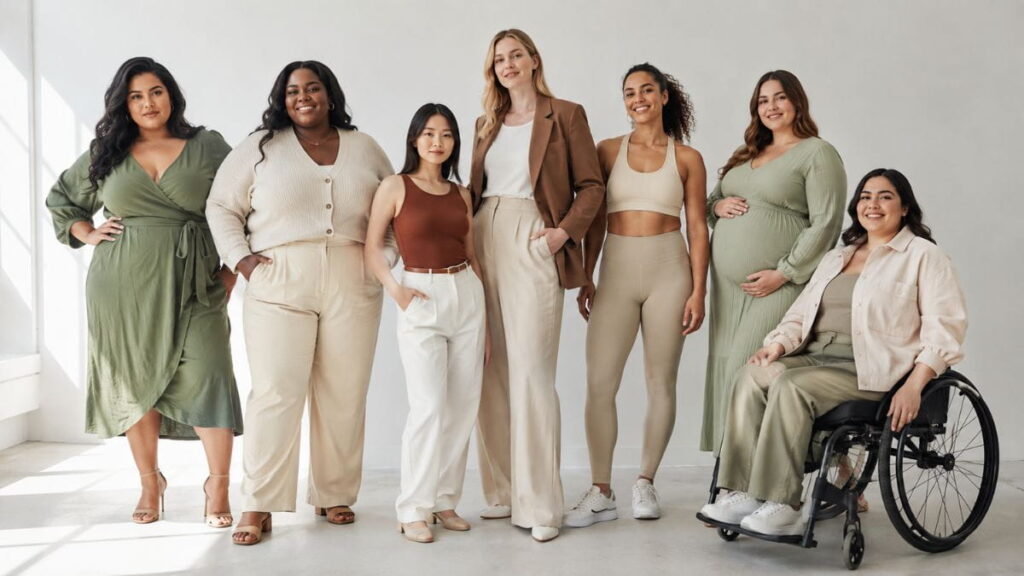
AI fashion prompts for every body type solve a problem that generic prompt guides usually ignore. Type “stylish outfit” into Midjourney or DALL-E without specifying a body type, and most tools default to one narrow silhouette — which isn’t useful if you’re designing, shopping, or creating content for real, diverse bodies.
This guide gives you 40 AI fashion prompts for every body type, organized by silhouette and use case—curvy, plus size, petite, tall, athletic, and more. Copy any prompt, adjust the color or setting, and generate.
Whether you’re a boutique owner building an inclusive lookbook, a designer testing how a silhouette falls on different proportions, or a content creator who wants campaign visuals that actually reflect real customers, these prompts are written to work straight out of the box.
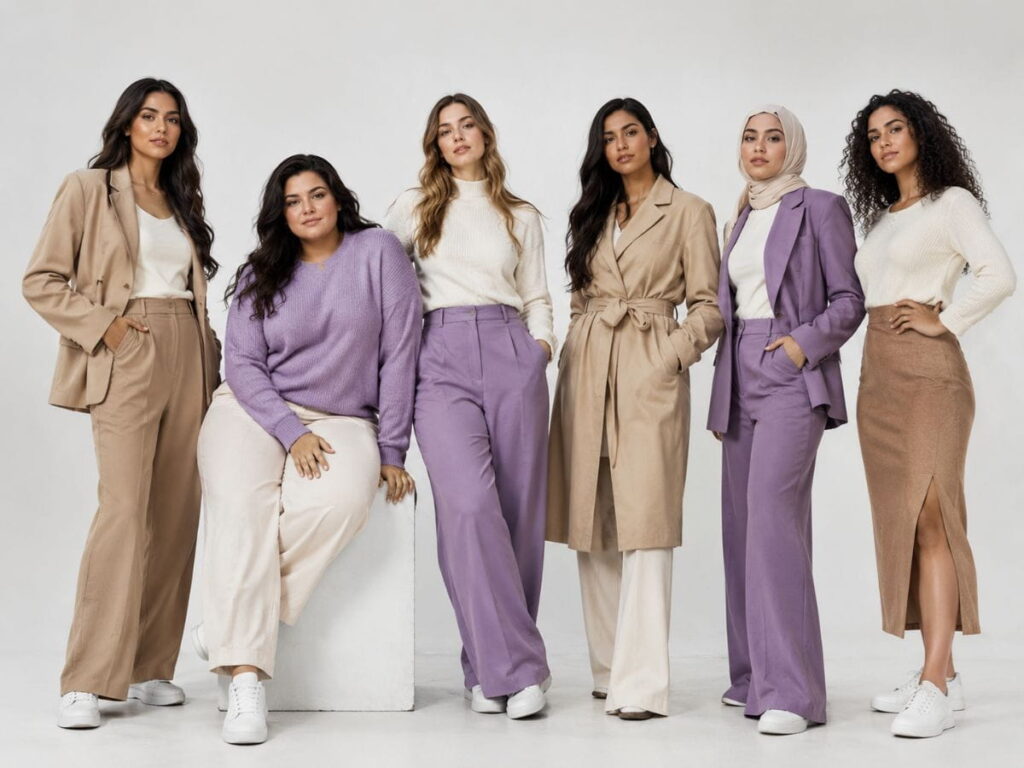
Why Body-Inclusive AI Fashion Prompts Matter
Most AI image generators default to a narrow range of body types unless a prompt says otherwise. This isn’t intentional bias so much as a gap in how specific the average prompt is.
AI fashion prompts for every body type close that gap by naming the body type directly, the same way a stylist would ask a client about fit before recommending a silhouette. Left unspecified, most tools quietly default to one narrow body shape.
For boutique owners and content creators, this matters commercially too. Customers are far more likely to picture themselves in a garment when they see it styled on a body type similar to their own.
For designers, body-inclusive prompts are useful earlier in the process—testing how a silhouette actually falls on different proportions before committing to a pattern or a sample run.
None of this replaces real fit models or real customer feedback. What these prompts do is make the early visualization stage faster and more representative from the start.
The gap exists partly because most AI image models were trained on datasets skewed toward a narrower range of body types than the general population actually has. This isn’t a deliberate design choice by any single tool—it reflects what was easiest to find and label at scale when these datasets were built.
Knowing this helps explain why specificity matters so much here. The AI hasn’t learned to assume diversity by default, so the prompt has to do that work explicitly every time. This is different from something like lighting or fabric, where the AI often makes a reasonable guess even without detailed instruction.
The upside is that once you understand this gap, working around it is straightforward. A well-written body-inclusive prompt is not meaningfully harder to write than any other fashion prompt — it just requires naming something that most people are used to leaving unstated.
How to Write AI Fashion Prompts for Every Body Type
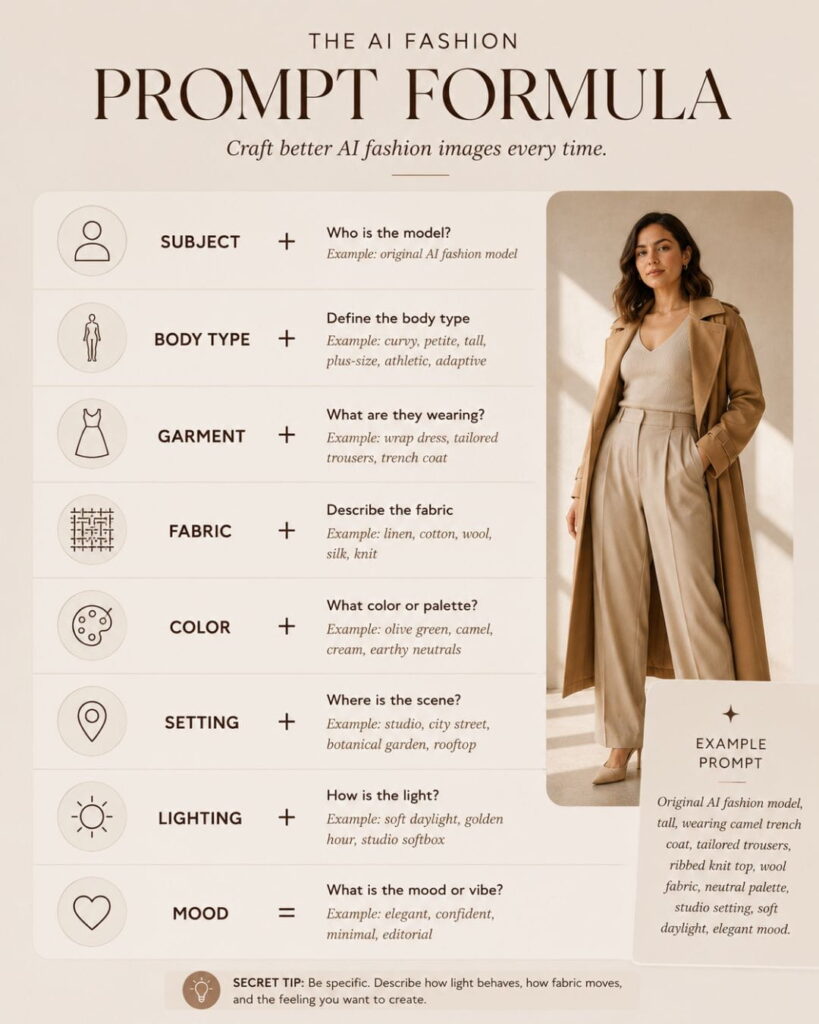
Every strong prompt in this guide follows the same structure:
Subject + Body Type + Garment + Fabric + Color + Setting + Lighting + Mood
For example: “A curvy woman with a full bust and hourglass silhouette, wearing a wrap dress in emerald green jersey, standing in a sunlit studio with soft natural lighting, in a confident editorial pose.”
Naming the body type early in the sentence — not as an afterthought — is what actually changes the output. Tacking “plus size” onto the end of a long prompt is far less reliable than starting with it.
Keep these tips in mind:
- Name the body type specifically. “Curvy,” “petite,” “plus size,” “athletic build,” and “tall frame” each produce noticeably different results.
- Describe fit, not just size. Terms like “fitted through the waist” or “relaxed through the hips” give the AI more to work with than a size label alone.
- Add a confident pose cue. Words like “confident stance” or “natural pose” help avoid stiff, awkward-looking results.
- Reference a photography style. Editorial, campaign, or lifestyle photography each shift the mood.
- Iterate one variable at a time. Change body type or garment fit rather than rewriting the whole prompt.
Save prompt wordings that work well. Body-inclusive prompting is still a newer skill for most people, and a personal reference library speeds things up considerably.
It also helps to think about which details are doing the actual work in a prompt. Body type sets the overall proportions. Fit language shapes how the garment sits against those proportions. Pose and lighting shape how confident and natural the final image feels.
Treating these as three separate layers, rather than one long run-on description, makes it much easier to troubleshoot a result that isn’t quite right. If the proportions look off, revisit the body type wording. If the garment looks awkward, revisit the fit language. If the image feels stiff, revisit the pose.
Now, let’s get into the prompts.
Curvy & Plus Size Prompts
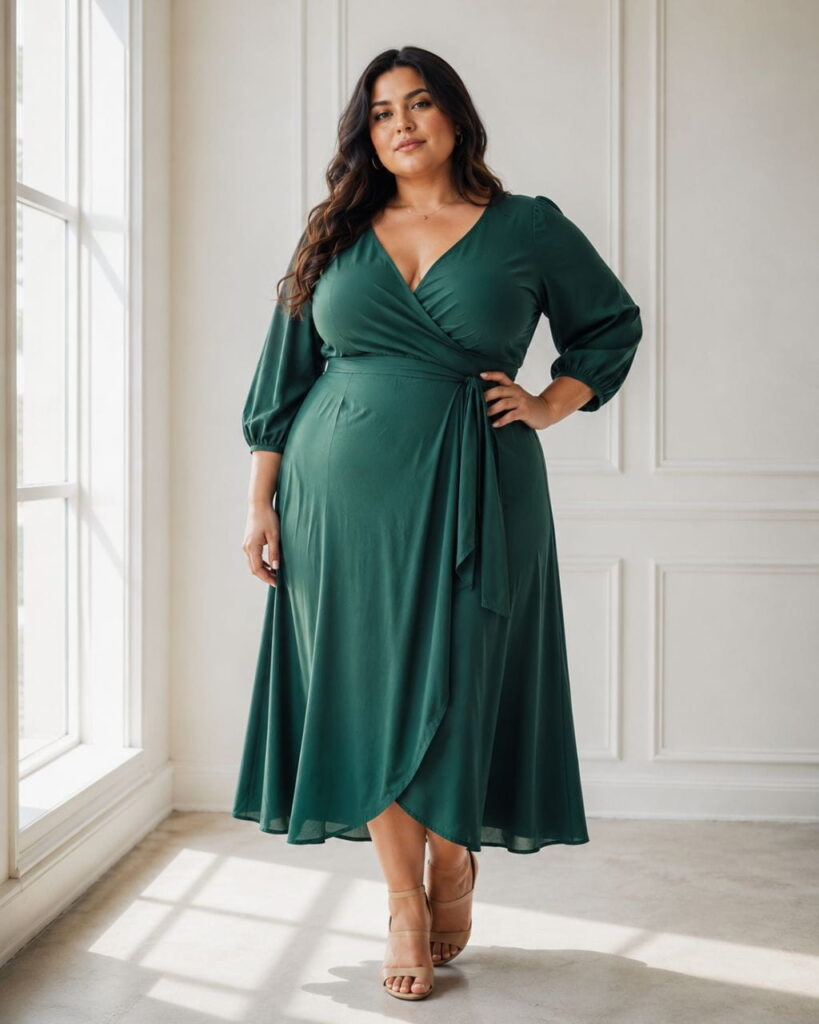
Curvy and plus-size prompts are some of the most requested in inclusive fashion content, and they respond well to specific fit language.
This is also one of the categories where vague prompting fails most visibly among AI fashion prompts for every body type. “Plus size” alone often produces inconsistent results across different generations of the same prompt, while adding fit-specific language tends to stabilize the output considerably.
How to Apply This Prompt
Pair the body description with fit-specific garment language—”fitted through the bodice” and “flared skirt”—rather than relying on the body type alone to shape the silhouette.
Petite Frame Prompts
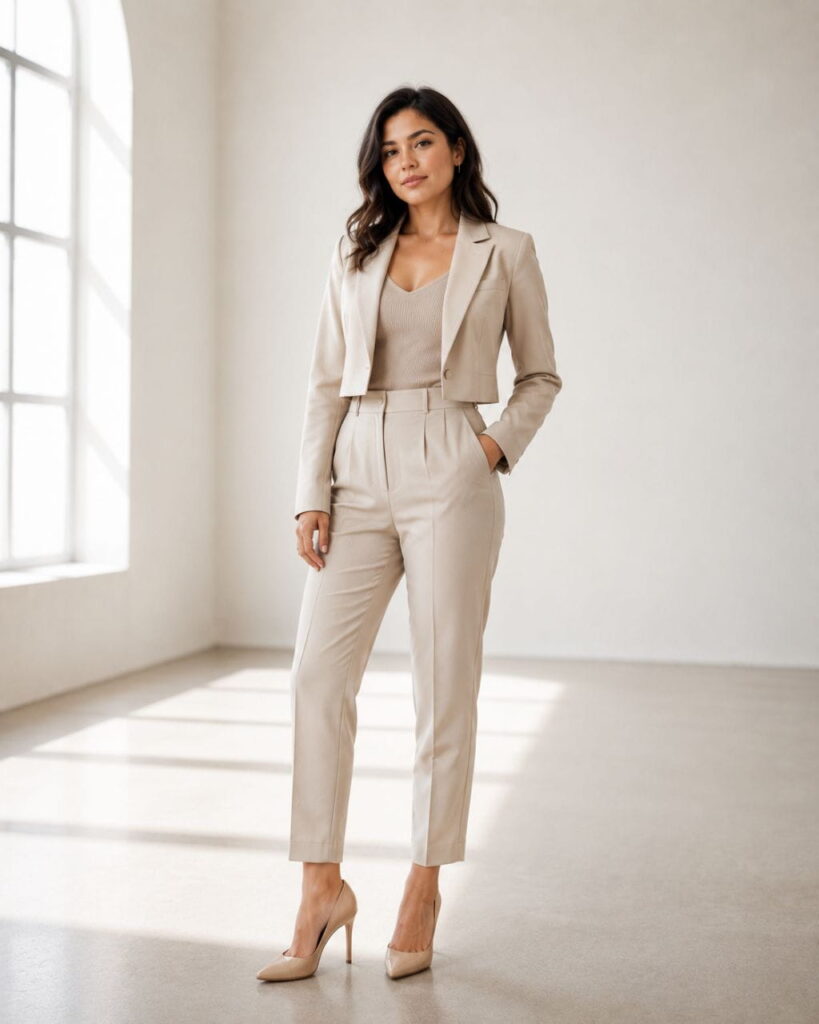
Petite prompts benefit from language about proportion and silhouette balance, since small changes in cut affect a petite frame more visibly than a taller one.
A garment that reads as relaxed on a taller frame can easily look oversized on a petite one if the prompt doesn’t account for proportion. This is why petite prompts lean more heavily on precise length and fit terms than almost any other category in this guide.
How to Apply This Prompt
Mention proportion cues like “high-waisted,” “cropped,” or “vertical lines” to help the AI render a silhouette that reads as intentionally tailored rather than oversized.
Tall Frame Prompts
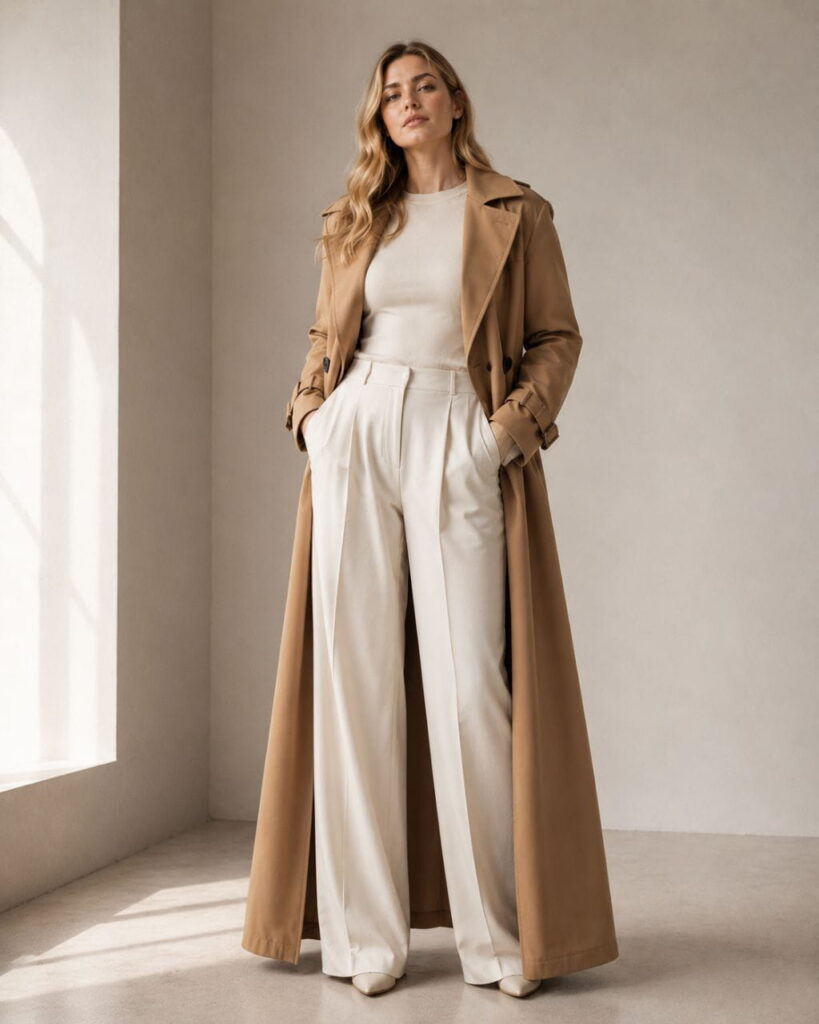
Tall prompts respond well to prompts describing proportion balance and longer garment silhouettes.
Length is the single biggest variable in this part of the guide. The same dress described as “midi length” versus “floor length” can completely change whether a tall silhouette reads as elegant or as if the garment simply doesn’t fit—so this is one category among AI fashion prompts for every body type where precision genuinely changes the outcome.
How to Apply This Prompt
Describe garment length precisely—”floor-length,” “cropped at the ankle”—since tall frames make length choices especially visible in the final image.
Athletic & Muscular Build Prompts
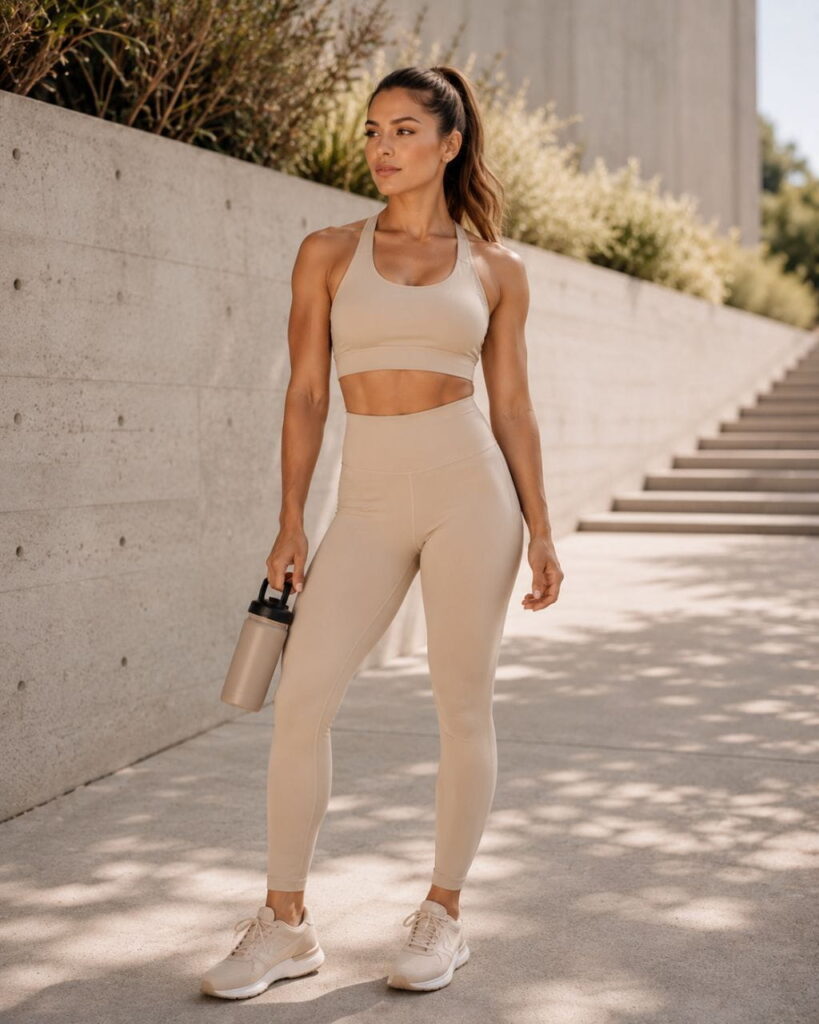
Athletic build prompts are useful for activewear content and campaigns that want to show real muscular definition rather than a generic slim frame.
Generic terms like “fit” or “toned” tend to default to a fairly narrow interpretation across most AI tools. Naming the build more specifically—broad-shouldered, muscular, athletic frame—produces a noticeably wider and more accurate range of results.
How to Apply This Prompt
Name the specific build (“broad-shouldered,” “muscular build,” or “athletic frame”) alongside the garment, since generic terms like “fit” often default to a much narrower body type.
Pregnancy & Maternity Prompts
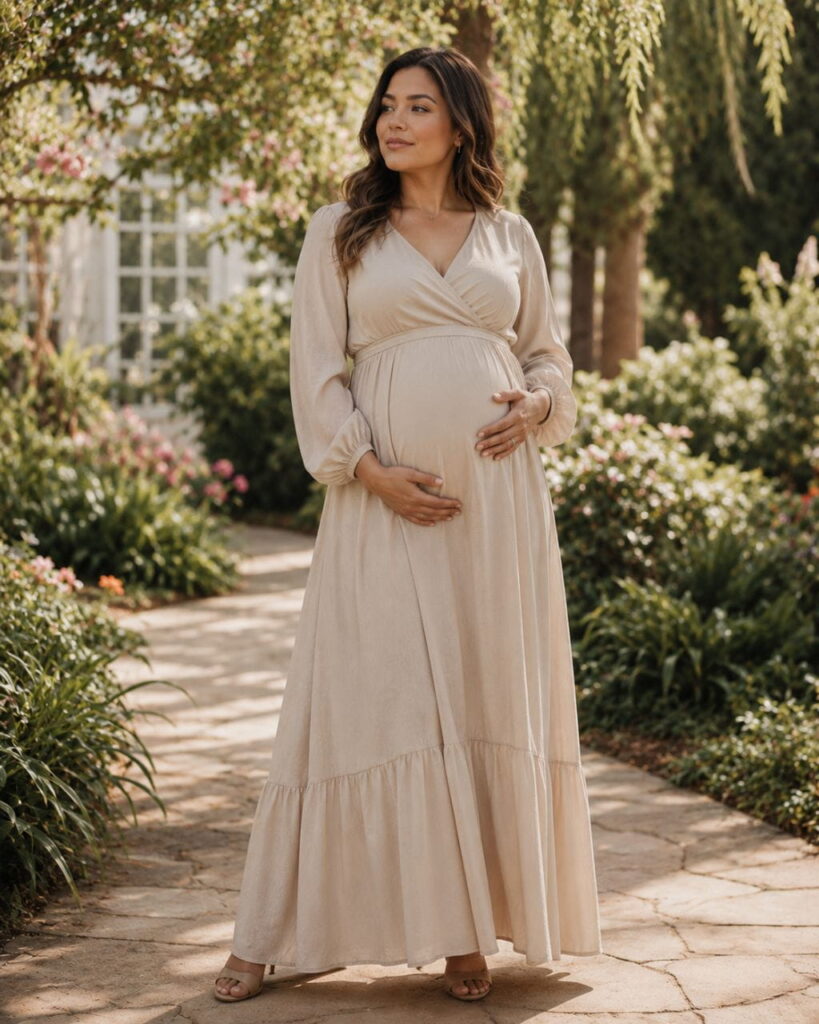
Maternity prompts are consistently underrepresented in fashion prompt guides, despite steady demand from both shoppers and boutique owners.
Part of the reason is that maternity fashion has less visual training data behind it than most other categories of AI fashion prompts for every body type, which means results can be more inconsistent generation to generation. Leaning on precise fabric and fit language helps compensate for that gap.
How to Apply This Prompt
Describe the garment’s stretch and drape (“empire waist,” “stretch jersey”) rather than the pregnancy itself, since fit language produces more accurate, flattering results.
Adaptive & Accessibility-Aware Prompts
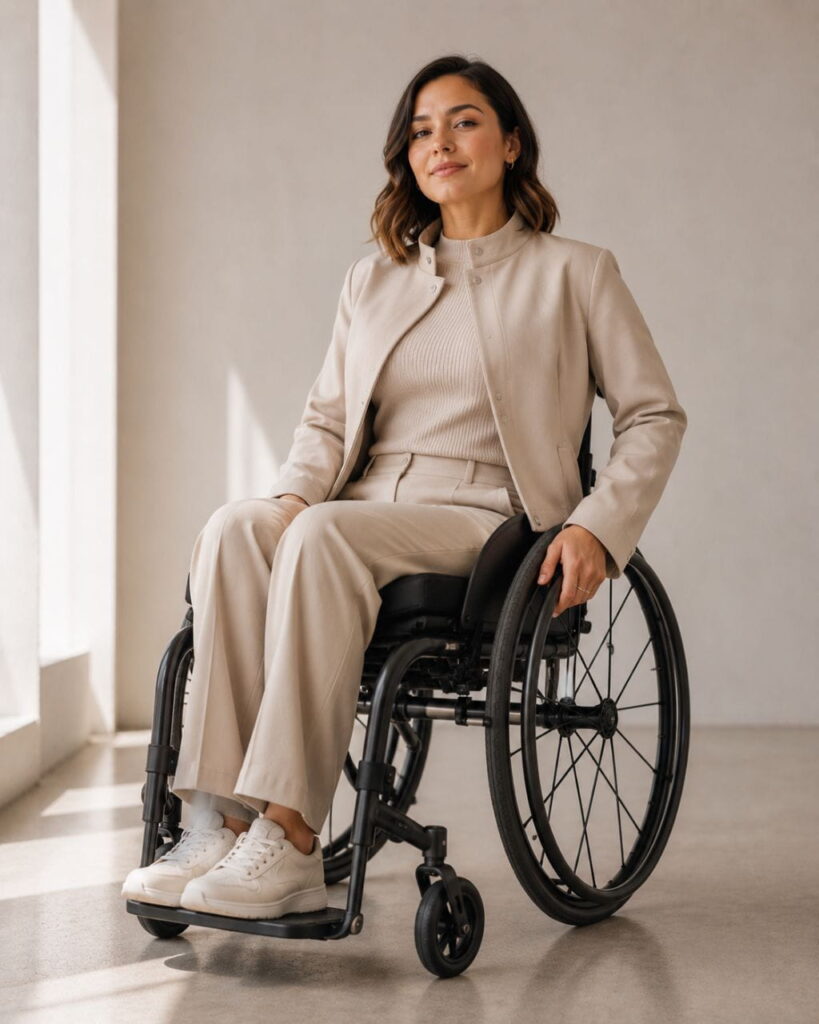
Adaptive fashion prompts describe clothing designed with ease of movement and accessibility in mind, an increasingly requested category among inclusive fashion brands.
This is arguably the least-covered category across most guides to AI fashion prompts for every body type, which makes it a genuine differentiator for a boutique or content creator willing to include it. The functional details — closures, seams, cut adjustments — also tend to make these prompts render with unusually strong accuracy once specified.
How to Apply This Prompt
Focus on functional garment details—”magnetic closures,” “seated-friendly cut,” and “adjustable hem”—which are just as visually distinctive as they are practically meaningful.
Mixed-Body Group & Campaign Prompts
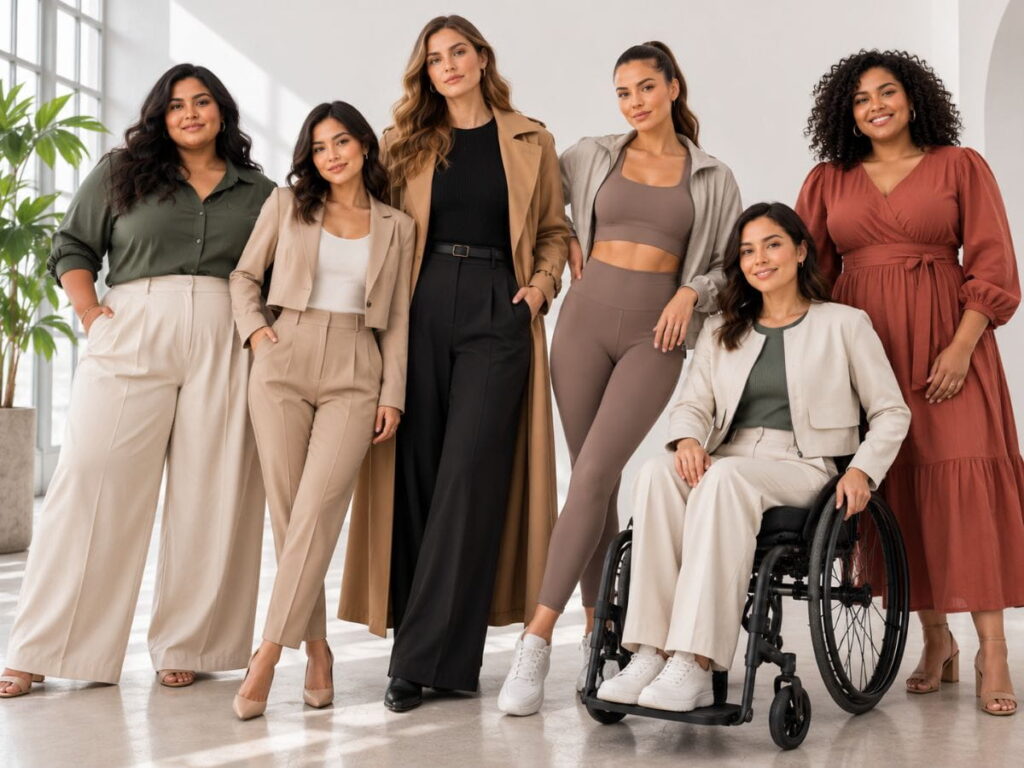
Group prompts are especially useful for boutique marketing, since a single generated image can represent a whole size range at once.
This category also tends to require the most iteration of any in this guide. Getting a group image with genuinely varied, accurate body types across every figure in the frame usually takes a few regenerations, so budget extra time here compared to single-subject prompts.
How to Apply This Prompt
List each body type explicitly within the same prompt rather than describing “diverse models” generically, which tends to produce a much narrower range than intended.
Building a Full Inclusive Lookbook
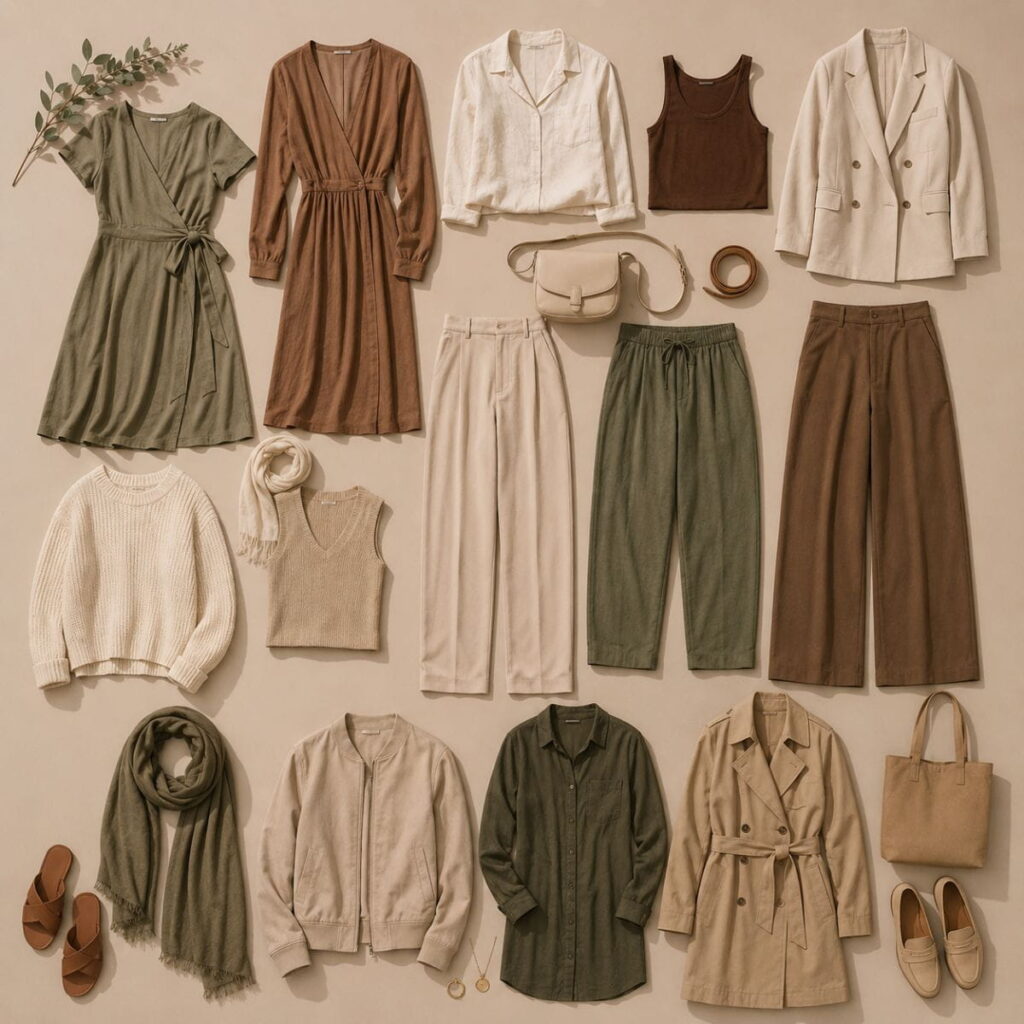
Once you have a handful of favorite AI fashion prompts for every body type, it helps to think about how they’ll work together as a collection rather than as isolated images.
Keep the garment consistent across body types where possible. Generating the same dress or suit styled on a curvy figure, a petite figure, and a tall figure sends a clearer message than generating entirely different outfits for each. This is also the format most inclusive brands actually use in their real marketing.
Vary the setting sparingly. A lookbook built entirely in one studio backdrop can feel flat, but switching settings for every single image makes the collection feel disjointed. Two or three consistent settings—a studio shot, an outdoor lifestyle shot, and a close-up detail shot—usually strike the right balance.
Match lighting across the set. Mixing harsh studio lighting with soft golden-hour lighting in the same collection reads as inconsistent, even if each individual image looks fine on its own. Pick one lighting mood and carry it through most of the set.
Include adaptive and maternity prompts even if they’re a small share of your final collection. These categories are the most commonly skipped in inclusive fashion content, which means including even one or two images here signals genuine inclusivity rather than a narrow interpretation of the word.
Save your prompt library as you go. When a specific combination of body type, fit language, and pose produces a result you like, save the exact wording. This turns a one-off shoot into a repeatable system you can use for every new collection or campaign.
Treating AI fashion prompts for every body type as a system rather than a set of individual images is what separates a collection that reads as intentional from one that reads as a random assortment of generated pictures.
Why This Matters Beyond a Single Shoot
Body-inclusive content isn’t just a one-time campaign decision — it shapes how customers relate to a brand over time. AI fashion prompts for every body type make it realistic to maintain that consistency without the cost of booking multiple fit models for every single collection.
Brands that show a narrow range of bodies in early marketing and then suddenly expand for one “inclusive” campaign often read as performative rather than genuine. Building body variety into the default workflow — rather than treating it as a special one-off project — tends to land better with customers who notice the difference.
This is also where AI fashion prompts for every body type offer a practical advantage over traditional photography. Testing four or five body types for a single garment used to mean booking four or five different fit models and a full shoot day. Now it’s a matter of adjusting one variable in a prompt and regenerating.
That doesn’t mean AI-generated images should fully replace real photography in a finished campaign. Many brands use these prompts at the concept and planning stage, then commission real photography once they’ve confirmed which body types and styling directions work best for a given garment.
Common Mistakes to Avoid
A few habits consistently weaken results when writing AI fashion prompts for every body type.
- Being too vague. “Diverse model” alone rarely produces the range you’re picturing. Name specific body types explicitly.
- Placing the body type at the end. Prompts read more literally at the start, so lead with body type rather than tacking it on as an afterthought.
- Confusing size with fit. A size label alone says less than a fit description like “fitted through the waist, relaxed through the hips.”
- Overloading the prompt. Too many descriptors at once often confuses the model. Pick the few details that matter most.
- Skipping the pose cue. Without a pose reference, results can look stiff. “Confident stance” or “natural pose” solves this reliably.
Midjourney tends to produce more stylized, editorial-feeling results, which suits campaign-style inclusive shoots well. DALL-E often gives more literal, controllable results when a very specific fit or proportion detail matters most.
Testing the same prompt across two tools is a common workflow for brands building out a fully inclusive lookbook, since each tool renders body proportion slightly differently.
If you’re building out a broader prompt library, our Bridal AI Fashion Prompts guide and How to Write AI Fashion Prompts article cover the same core formula applied to other categories, and both are useful starting points if inclusive prompting is new to you.
For the tools themselves, Midjourney’s official site and OpenAI’s DALL-E page are worth bookmarking, since both update their body-rendering accuracy over time.
FAQ: AI Fashion Prompts for Every Body Type
Q: 1. What are AI fashion prompts for every body type used for?
They’re text descriptions used with AI image generators to create fashion visuals representing a specific body type — curvy, petite, tall, athletic, and more — rather than defaulting to one narrow silhouette.
Q: 2. Why do I need to specify a body type at all?
Most AI tools default to a narrow range of body types unless told otherwise. Naming the body type directly produces far more representative, useful results.
Q: 3. Which AI tool handles body diversity best?
Results vary by tool and update frequently. Testing the same prompt across Midjourney and DALL-E is the most reliable way to see which handles a specific body type most accurately right now.
Q: 4. Can I combine multiple body types in one image?
Yes. Listing each body type explicitly within a group prompt — rather than saying “diverse models” generically — produces a more accurate and varied result.
Q: 5. Are adaptive fashion prompts different from regular ones?
The core formula is the same, but adaptive prompts benefit from functional garment details like closures and cut adjustments, which are both visually and practically meaningful.
Q: 6. Do these prompts work for menswear too?
Yes. Several categories above include menswear-specific prompts, and the same body-type-first formula applies regardless of gender.
Q: 7. How many variations should I generate before choosing a final image?
Three to five variations, changing one variable like pose or lighting each time, is usually enough to find a strong result without over-generating.
Q: 8. Do body-inclusive prompts take longer to get right than other fashion prompts?
Slightly, mainly because there’s less training data for some categories like maternity and adaptive fashion compared to more commonly photographed body types. Budgeting a few extra generations for those specific categories usually solves it.
Q: 9. Should I avoid using words like “flattering” in these prompts?
It’s generally more reliable to describe the actual cut and fit—”fitted through the waist,” “relaxed through the hips”—than a subjective word like “flattering,” since the AI has more concrete information to act on with specific fit language.
Q: 10. Can I reuse the same AI fashion prompts for every body type across different fashion niches?
Yes. The underlying formula—body type, fit, garment, fabric, color, setting, and lighting—works whether you’re generating activewear, formalwear, or everyday casual looks. Only the garment and fabric details need to change between niches.
Which of these AI fashion prompts for every body type will you try first? Save the ones that fit your project and adjust the color, setting, or fabric to match your own brand or personal style.