
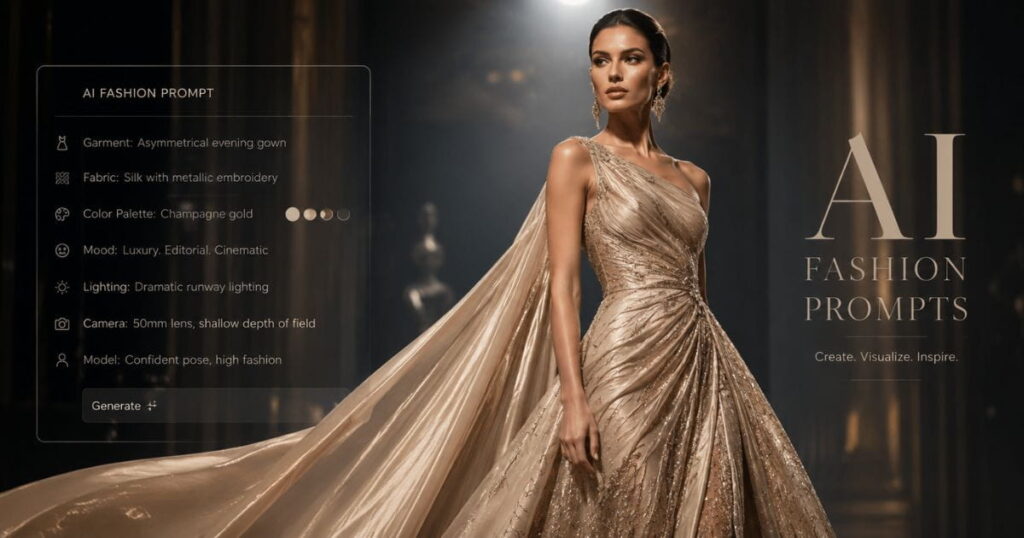
How to write AI fashion prompts is one of the most valuable skills for designers, content creators, fashion students, and digital artists using AI image-generation tools today.
A well-written prompt can transform a simple idea into a realistic runway look, a luxury editorial campaign, or a complete fashion concept. On the other hand, vague prompts often produce generic results that require significant editing.
As AI tools continue to evolve, understanding how to write AI fashion prompts can help you create better visuals, save time, and unlock new creative possibilities.
If you’re completely new to prompt writing, our guide on AI Fashion Prompts for Beginners explains the fundamentals and provides simple examples to help you get started.
- What Are AI Fashion Prompts?
- Why Learning How to Write AI Fashion Prompts Matters
- How AI Interprets Fashion Prompts
- How to Apply It
- Secret #1: Start With the Fashion Category
- Secret #3: Add Fabric and Texture Details
- Secret #4: Choose a Strategic Color Palette
- Secret #5: Create a Clear Mood and Aesthetic
- Secret #6: Use Professional Lighting Descriptions
- Secret #7: Include Photography Details
- Secret #8: Define Model Representation
- Prompt Formula You Can Reuse
- Frequently Asked Questions
- What is an AI fashion prompt?
- The more specific your prompt is, the better the generated result typically becomes.
- Which AI tools are best for fashion image generation?
- Why do my AI fashion prompts produce poor results?
- Can beginners learn how to write AI fashion prompts?
- What is the ideal prompt length for AI fashion images?
- Should I use commas or full sentences?
- Can AI create original fashion designs?
- Which fabrics work best in AI fashion prompts?
- How do I generate realistic runway images?
- How can brands use AI fashion prompts?
- Can AI replace fashion designers?
- Final Thoughts
What Are AI Fashion Prompts?
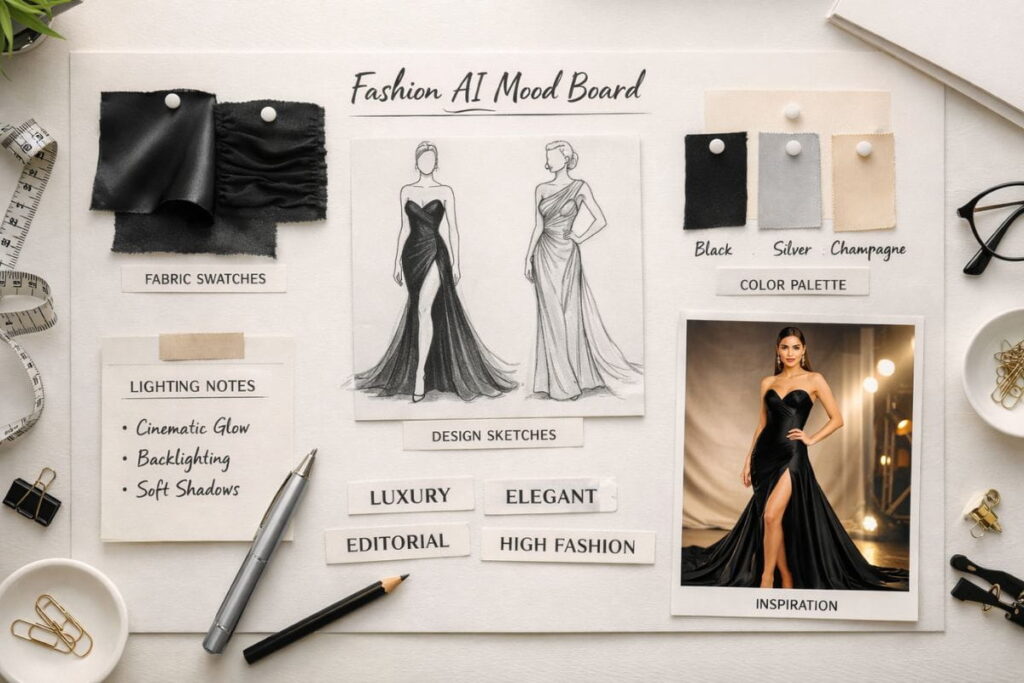
AI fashion prompts are text instructions used to guide image-generation platforms such as Midjourney and Stable Diffusion.
These prompts tell the AI exactly what you want to create, including
- Clothing category
- Silhouette
- Fabric
- Color palette
- Mood
- Lighting
- Camera settings
- Model styling
The more specific your instructions are, the more accurate and visually appealing the generated image becomes.
For beginners, prompt writing may seem complicated. However, once you understand the structure, learning how to write AI fashion prompts becomes much easier.
Why Learning How to Write AI Fashion Prompts Matters
Learning how to write AI fashion prompts is becoming increasingly important as AI tools become part of modern fashion workflows.
Many beginners type short descriptions such as:
“Fashion dress design”
While the AI may generate an image, the result is often inconsistent and lacks direction.
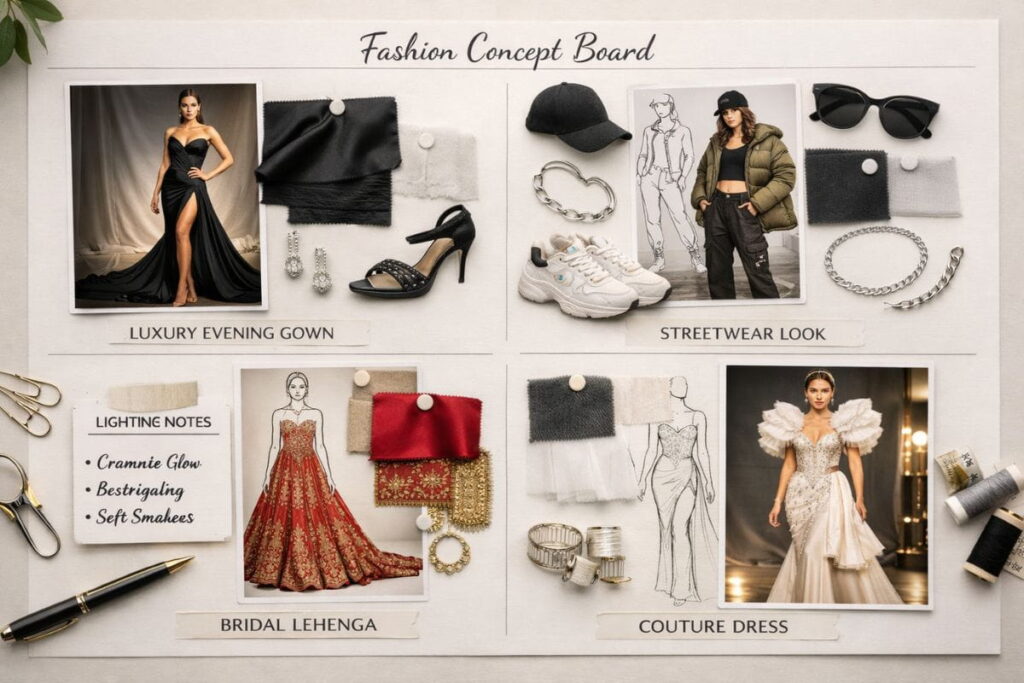
- Evening gown
- Streetwear outfit
- Capsule wardrobe
- Bridal lehenga
- Luxury couture dress
- Sustainable fashion collection
Professional-looking outputs start with professional-quality prompts.
How AI Interprets Fashion Prompts
Understanding how AI systems read prompts helps explain why some fashion prompts produce striking results while others feel random or inconsistent. Most image-generation models do not understand fashion the way a human designer does. Instead, they analyze the words and phrases in your prompt, break them into smaller units often called tokens, and use patterns learned from large image-and-text datasets. To master how to write AI fashion prompts, it helps to understand how AI models interpret words, styles, and visual descriptions.
When you write “emerald silk evening gown,” the AI associates emerald with color, silk with a shiny, flowing fabric, and evening gown with a formal garment category. These concepts are then combined into a visual prediction. The model is essentially estimating what images most often correspond to those tokens appearing together.
Specificity matters because it reduces ambiguity. A prompt like “fashion dress design” leaves the AI with many possible interpretations: casual dress, couture gown, vintage styling, studio lighting, outdoor photography, and more. A prompt like “emerald silk evening gown, asymmetrical silhouette, cinematic runway lighting, editorial fashion photography” narrows the possibilities dramatically.
Vague prompts fail because the AI has to guess. The model may default to common patterns in its training data, which often produces generic, repetitive imagery. Beginners sometimes mistake this for a limitation of the AI when the real issue is that the prompt does not provide enough direction.
Prompt order can influence results as well. Many creators place the most important visual elements early in the prompt, such as the garment type, silhouette, and fabric. Secondary details such as background, mood, or camera settings can follow. While different models weigh prompt elements differently, leading with the core fashion concept often improves consistency.
How to Apply It
- Put the garment category first.
- Add silhouette and fabric next.
- Specify color palette and mood.
- Finish with lighting, camera style, and model details.
- Remove words that do not contribute meaningful visual information.
Secret #1: Start With the Fashion Category
The first step in learning how to write AI fashion prompts is identifying the fashion item.
The result is usually generic or unrealistic because the AI lacks direction.
Learning how to write AI fashion prompts properly helps the AI understand:
- Clothing style and design
- Fabric and textures
- Lighting and mood
- Model representation
- Camera perspective
How to Apply It
Instead of writing:
“Fashion outfit”
Write:
“Luxury editorial evening gown”
Use:
“Luxury evening gown with an asymmetrical silhouette and flowing train.”
This creates a clearer visual structure.
Secret #3: Add Fabric and Texture Details
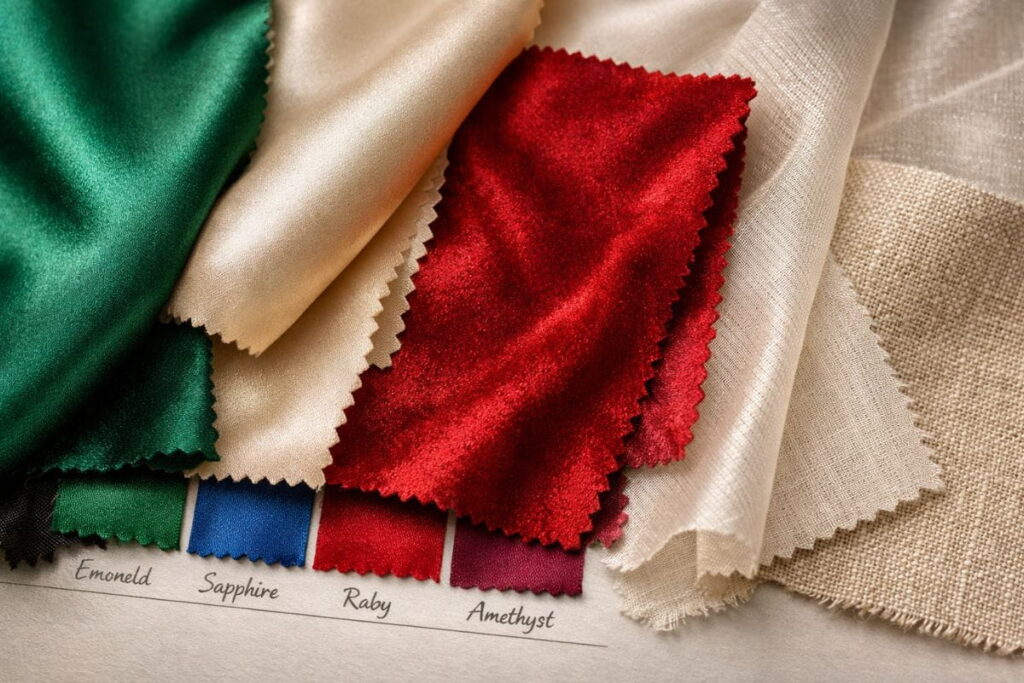
Fabric is one of the most overlooked aspects of how to write AI fashion prompts because materials strongly influence realism and texture.
Different fabrics reflect light differently and create unique visual effects.
Examples:
- Silk
- Satin
- Velvet
- Organza
- Linen
- Denim
- Leather
How to Apply It
Describe the fabric specifically:
“Emerald silk fabric with a subtle sheen and soft draping.”
The AI can then render texture more realistically.
Secret #4: Choose a Strategic Color Palette
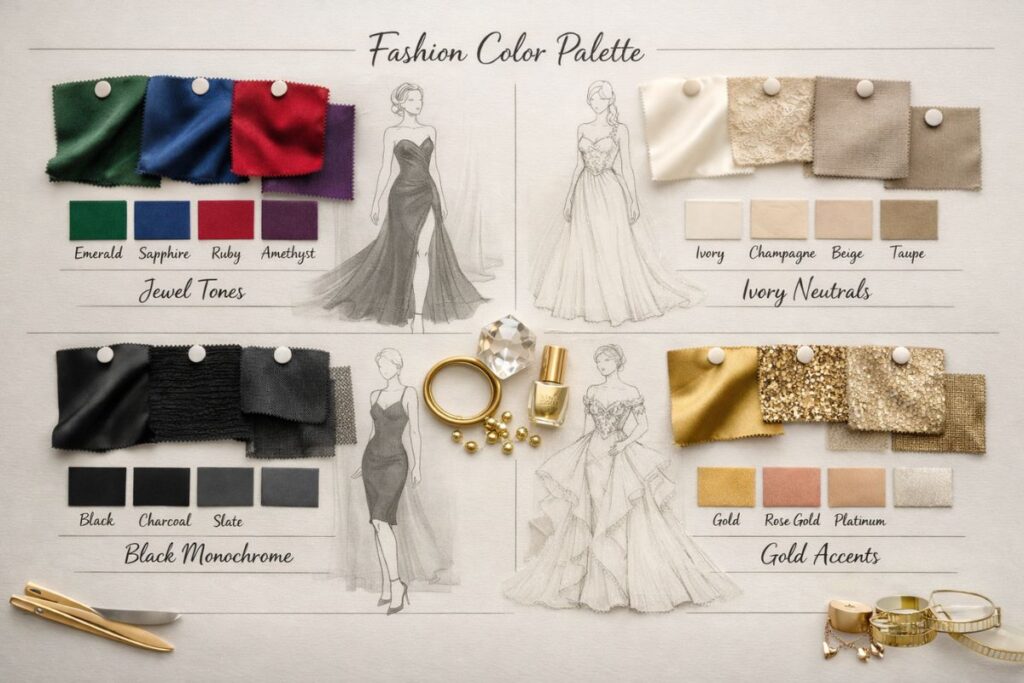
Color affects mood, branding, and visual impact. Another important element of how to write AI fashion prompts is selecting a strategic color palette. The colors you choose can influence how luxurious, modern, dramatic, or approachable a design appears. A carefully selected palette helps create visual harmony and ensures that the AI generates images that align with your creative vision.
Examples include:
- Ivory and gold
- Earth tones
- Pastel colors
- Monochrome black
- Jewel tones
How to Apply It
Instead of:
“Colorful dress”
“Emerald green and gold color palette with metallic accents.”
This provides a stronger visual direction.
Secret #5: Create a Clear Mood and Aesthetic
Fashion imagery is not just about clothing. It is also about emotion and storytelling.
Popular aesthetics include:
- Minimalist
- Romantic
- Futuristic
- Editorial
- Vintage
- Dark academia
- Ethereal
How to Apply It
Try:
“High-fashion editorial aesthetic with dramatic luxury styling.”
The image becomes more cohesive and visually compelling.
Secret #6: Use Professional Lighting Descriptions
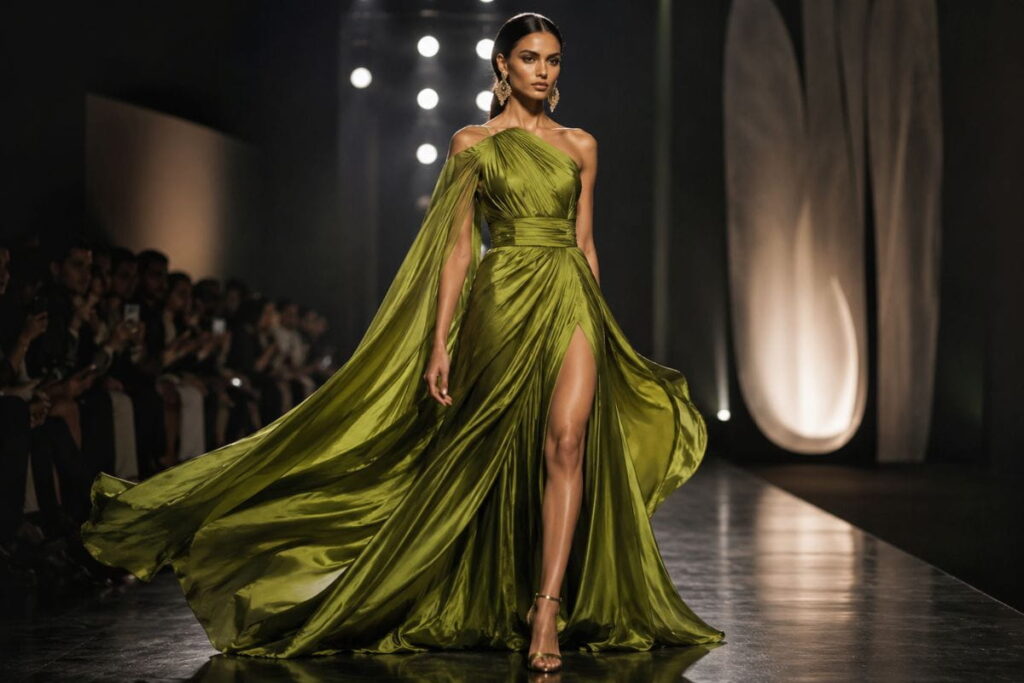
Professional lighting descriptions are essential when mastering how to write AI fashion prompts. Lighting is one of the most powerful tools in fashion photography because it influences mood, highlights fabric textures, and shapes the overall visual impact of an image. Whether you choose soft studio lighting, dramatic runway spotlights, or golden hour illumination, the right lighting description can significantly improve the realism and quality of AI-generated fashion visuals.
Popular options include:
- Soft studio lighting
- Golden hour lighting
- Runway spotlight
- Cinematic lighting
- High-contrast lighting
How to Apply It
Instead of ignoring lighting, specify:
“High-contrast runway lighting with cinematic shadows.”
This dramatically improves realism.
Secret #7: Include Photography Details
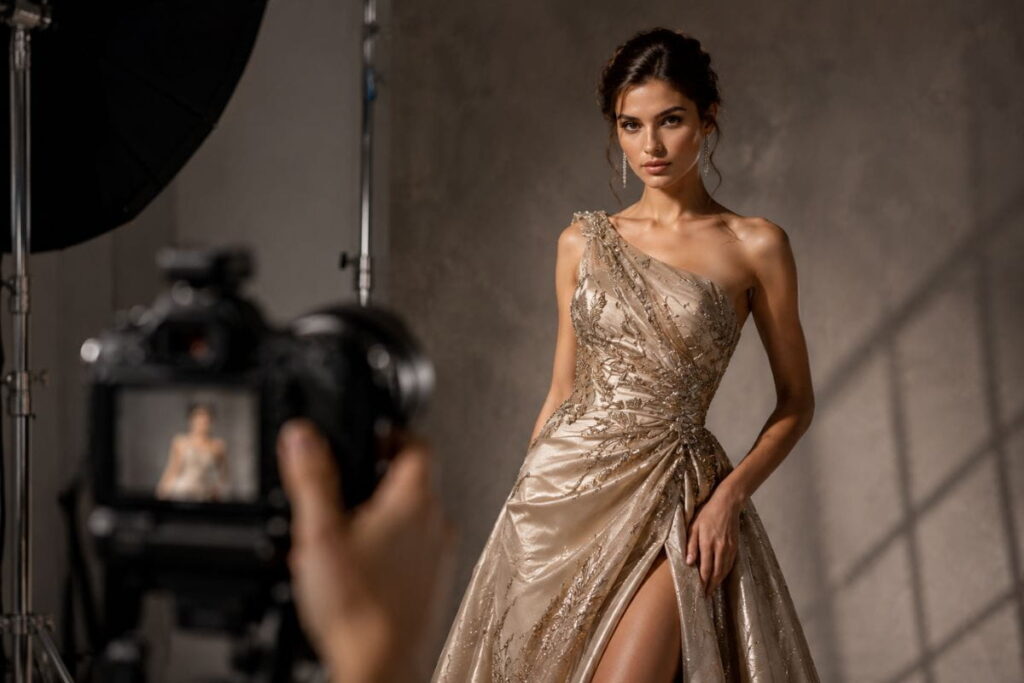
Photography details can significantly improve the results of how to write AI fashion prompts. Professional camera descriptions help the AI understand the intended composition, focus, and overall visual style of the image. Elements such as lens type, depth of field, camera angle, and editorial photography techniques can elevate AI-generated fashion visuals from basic renderings to magazine-quality images that feel more realistic and polished.
Useful descriptions include:
- Editorial photography
- Vogue-style photoshoot
- 50mm lens
- Shallow depth of field
- Ultra-realistic fashion photography
How to Apply It
Example:
“Editorial fashion photography, 50mm lens, shallow depth of field.”
These details help create magazine-quality visuals.
If your focus is creating editorial shoots, campaign imagery, or runway visuals, you can find additional inspiration in our collection of AI Fashion Photography Prompts.
Secret #8: Define Model Representation
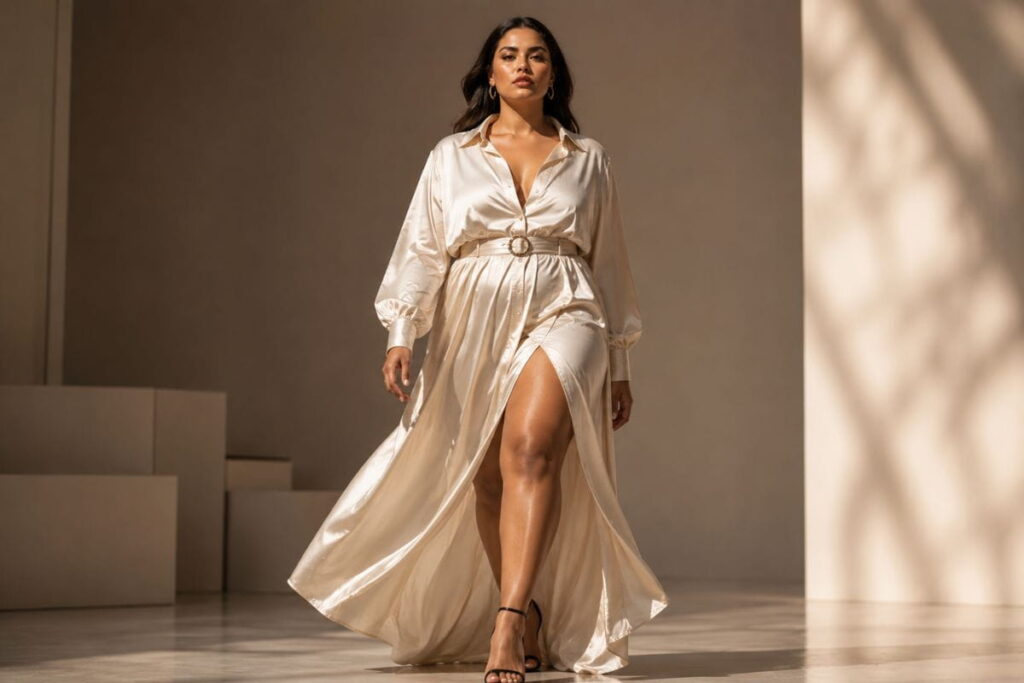
Model representation is another important component of how to write AI fashion prompts. Modern fashion imagery celebrates diversity, inclusivity, and a wide range of personal styles, making model descriptions an essential part of the prompt-writing process. By specifying details such as a confident runway model, a plus-size model, a mature model, or a natural lifestyle pose, you provide the AI with additional context that helps create more realistic and visually engaging fashion images.
You can specify:
- Plus-size models
- Mature models
- Diverse representation
- Runway poses
- Natural expressions
How to Apply It
Example:
“Confident plus-size model walking the runway.”
This helps create more intentional and inclusive visuals.
Prompt Formula You Can Reuse
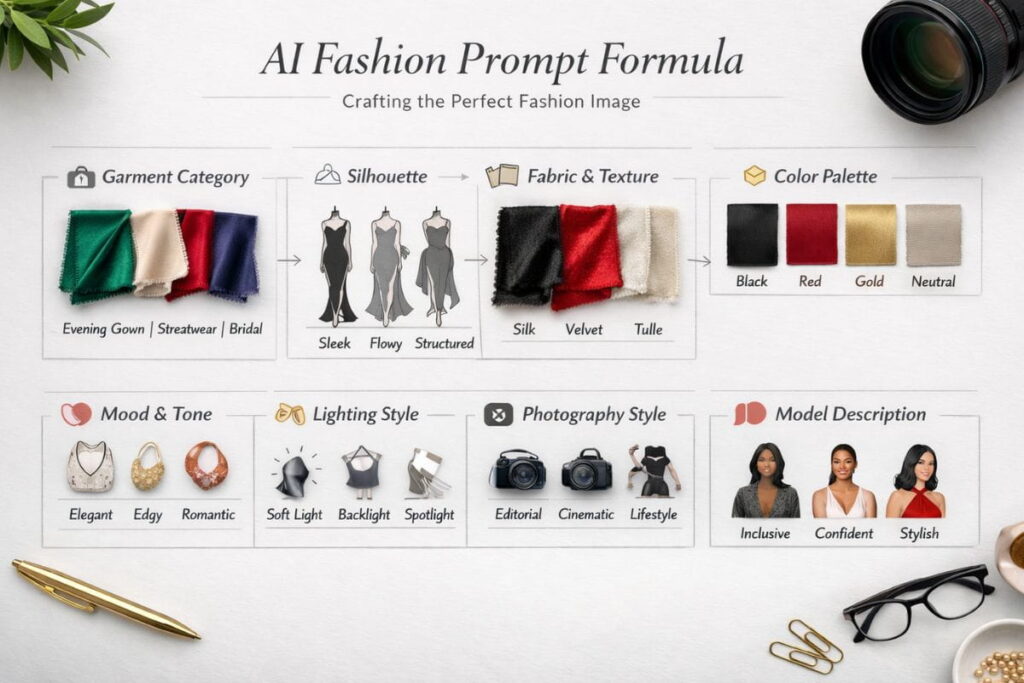
When learning how to write AI fashion prompts, use this formula:
Fashion Item + Silhouette + Fabric + Color Palette + Mood + Lighting + Photography Style + Model Description
Example:
“Luxury evening gown, asymmetrical silhouette, emerald silk fabric, metallic details, dramatic editorial aesthetic, cinematic runway lighting, editorial fashion photography, 50mm lens, confident runway model.”
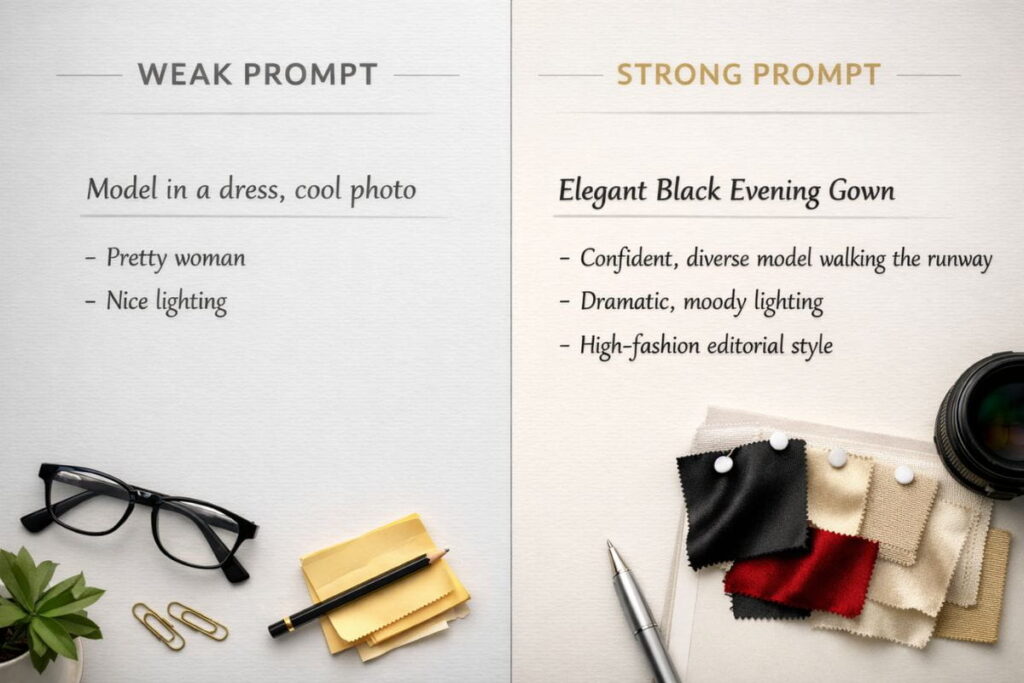
Weak Prompt vs Strong Prompt
Weak Prompt
Fashion dress design
Strong Prompt
Luxury couture evening gown featuring an asymmetrical silhouette, emerald silk fabric, subtle metallic embellishments, dramatic editorial styling, cinematic runway lighting, ultra-realistic fashion photography, 50mm lens, confident runway model.
The stronger prompt provides context, materials, styling, and photography details.
Common Mistakes to Avoid
Even experienced creators can make mistakes when learning how to write AI fashion prompts.
Being Too Vague
Short prompts rarely deliver consistent results.
How to Apply It
Always include fabric, color, mood, and lighting.
Mixing Too Many Styles
Combining unrelated aesthetics often creates confusing images.
How to Apply It
Choose one primary aesthetic and stay consistent.
Ignoring Lighting
Lighting heavily influences realism.
How to Apply It
Include a specific lighting style in every prompt.
Real-World Applications of AI Fashion Prompts
Understanding how to write AI fashion prompts has practical applications throughout the fashion industry.
Fashion Concept Development
How to Apply It
Generate multiple design variations before sketching.
Social Media Content
How to Apply It
Create Pinterest and Instagram visuals quickly.
Mood Boards
How to Apply It
Experiment with color palettes and styling concepts.
Editorial Campaigns
How to Apply It
Visualize campaign ideas before production.
Trend Forecasting
How to Apply It
Explore emerging styles and future fashion concepts.
Recommended Resources
Stable Diffusion Documentation
Frequently Asked Questions
What is an AI fashion prompt?
An AI fashion prompt is a text instruction that guides image-generation software to create fashion-related visuals.
The more specific your prompt is, the better the generated result typically becomes.
The more specific your prompt is, the better the generated result typically becomes.
Which AI tools are best for fashion image generation?
Popular choices include Midjourney and Stable Diffusion.
Why do my AI fashion prompts produce poor results?
Poor results often come from vague descriptions, missing fabric details, or unclear lighting instructions.
Can beginners learn how to write AI fashion prompts?
Yes. Following a structured framework makes prompt writing accessible for beginners.
What is the ideal prompt length for AI fashion images?
There is no perfect word count. In practice, prompts that clearly describe the garment, silhouette, fabric, color palette, mood, lighting, and photography style tend to perform better than extremely short prompts. Many effective fashion prompts fall in the range of one detailed sentence or a compact multi-part description.
Should I use commas or full sentences?
Both can work. Comma-separated descriptors are common in many image-generation workflows because they keep related concepts grouped together. Full sentences can improve readability. The key is clarity and logical organization rather than punctuation style.
Can AI create original fashion designs?
AI can generate novel combinations of shapes, materials, colors, and styling cues. However, it does not replace the creative judgment of a fashion designer. The originality of the final concept depends on the prompt, curation, editing, and design decisions made by the human creator.
Which fabrics work best in AI fashion prompts?
Fabrics with distinctive visual properties often produce clearer results. Examples include silk, satin, velvet, organza, denim, leather, and linen. Each material has recognizable texture, drape, or reflectivity that helps the AI render the garment more convincingly.
How do I generate realistic runway images?
Include runway-specific cues: full-body runway shot, spotlight runway lighting, editorial fashion photography, shallow depth of field, and confident model walking pose. Combining garment details with lighting and camera instructions usually improves realism.
How can brands use AI fashion prompts?
Brands can use AI-generated fashion imagery for mood boards, concept exploration, campaign ideation, social content, lookbook drafts, and internal presentations. Many teams use AI to iterate quickly before investing in physical samples or photo shoots.
Can AI replace fashion designers?
AI is best viewed as a creative tool rather than a replacement for fashion designers. Designers still provide trend interpretation, brand direction, material knowledge, fit expertise, technical development, and creative decision-making that AI cannot independently replicate.
Final Thoughts
Learning how to write AI fashion prompts is one of the most valuable skills for anyone using AI-generated fashion imagery.
Learning how to write AI fashion prompts is a skill that combines creativity with clear communication. By describing the fashion category, silhouette, fabric, color palette, mood, lighting, photography style, and model representation, you provide AI tools with the information they need to generate professional-quality fashion imagery.
As AI continues to influence the fashion industry, strong prompt-writing skills will become increasingly valuable for designers, creators, marketers, and fashion enthusiasts alike.