
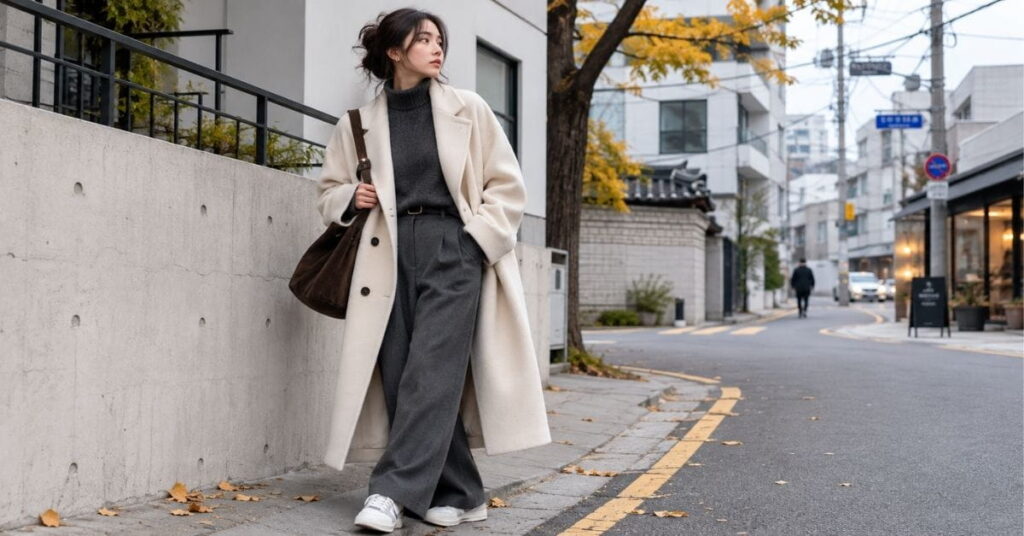
If you’ve spent any time on Pinterest or TikTok lately, you’ve probably noticed the same aesthetic popping up over and over: soft neutrals, oversized blazers, clean lines, and that effortless “I didn’t try too hard but somehow look amazing” vibe. That’s Korean minimalist style, and right now it’s one of the most searched fashion looks online. This guide is built entirely around Korean minimalist fashion AI prompts — the exact wording you can drop into tools like Midjourney, DALL-E, or Adobe Firefly to generate clean, chic outfit ideas in seconds instead of scrolling for hours.
I’ve spent the last few months testing prompts across different AI image generators, tweaking wording, and taking notes on what actually produces usable, on-trend results versus what just spits out generic fashion-catalog junk. Below you’ll find 30 tested prompts, grouped into six practical categories, plus tips on how to tweak them for your own style, body type, or season.
What Is Korean Minimalist Fashion?
Korean minimalist fashion, sometimes just called “Korean style” or “K-fashion minimalism,” leans on a small handful of principles: neutral color palettes (think oatmeal, sand, charcoal, ivory), clean tailoring, oversized-but-structured silhouettes, and a near-total avoidance of loud logos or clashing patterns. Where a lot of Western minimalism can feel a little cold or corporate, the Korean take usually adds one soft, deliberate detail—a slightly puffed sleeve, a cropped hem, a barely-there color accent—that keeps the whole outfit feeling human and considered rather than sterile.
It’s become one of the most influential aesthetics coming out of Seoul’s street style scene, and outlets like Vogue Korea and Highsnobiety have covered it extensively as the look has spread from Seoul to global street style feeds. That popularity is exactly why so many people are now searching for Korean minimalist fashion AI prompts — they want to visualize the look before committing to buying anything.
The style itself didn’t appear overnight. It grew out of a broader shift in Seoul street fashion over the last decade, where the exaggerated, logo-heavy looks that dominated a lot of 2010s streetwear gradually gave way to quieter, more considered dressing. Instagram and, later, TikTok accelerated that shift by rewarding outfits that photographed well in neutral, well-lit settings — the kind of clean backdrop you see all over Seoul’s Seongsu-dong and Hannam-dong neighborhoods. Fashion students and independent designers picked up on the trend, and within a few years it had become one of the defining looks associated with Korean fashion internationally, alongside K-pop-driven trends and Korean skincare culture.
What separates genuine Korean minimalist style from generic “minimalist fashion” is really in the details. A plain white shirt and black trousers is minimalist, technically, but it’s not necessarily Korean minimalist unless the proportions are doing something intentional—an oversized shoulder, a cropped or dropped hem, or trousers that are slightly wider than expected. That’s also why writing a good AI prompt for this look takes a bit more precision than just typing “minimalist outfit.” You’re not just asking for the absence of color and pattern; you’re asking for a specific relationship between fit, fabric, and restraint.
Why Use AI Prompts for Korean Minimalist Fashion
There are three real reasons this has taken off:
- Speed. A good prompt gets you a usable outfit concept in under a minute, versus 20+ minutes of scrolling and screenshotting.
- Customization. You can specify body type, season, occasion, and color palette in a single sentence, which a Pinterest search simply can’t do.
- Idea generation for creators. Stylists, fashion illustrators, and small clothing brands are using Korean minimalist fashion AI prompts to storyboard lookbooks and mood boards before a single garment is sewn or photographed.
If you’re a content creator, this also solves a real bottleneck: original, on-trend fashion visuals without hiring a photographer or licensing stock photos.
How to Write Better Korean Minimalist Fashion AI Prompts
Before jumping into the list, it helps to understand the anatomy of a prompt that actually works. Most weak prompts fail for the same reason—they’re too vague (“Korean minimalist outfit”) and leave the AI to guess at color, setting, and mood, which usually produces something generic.
A strong prompt generally includes:
- Subject — who’s wearing it (age range, build, gender-neutral if you want flexibility)
- Garments—specific pieces, not just “outfit” (e.g., “wide-leg trousers” instead of “pants”)
- Palette — 2–3 named colors, ideally neutrals
- Mood/setting — studio, street, café, minimal backdrop
- Style modifiers — “clean lines,” “soft tailoring,” “no visible logos,” “editorial lighting”
Here’s a simple before-and-after:
Weak: “Korean minimalist fashion outfit” Strong: “A young woman in her 20s wearing an oversized ivory wool coat over a charcoal turtleneck and wide-leg trousers, standing on a quiet Seoul street, soft overcast lighting, clean minimalist styling, no logos, editorial photography”
That second version is a genuine Korean minimalist fashion AI prompt you could paste directly into Midjourney or DALL-E right now.
The Korean Minimalist Color Palette Explained
How to Apply It
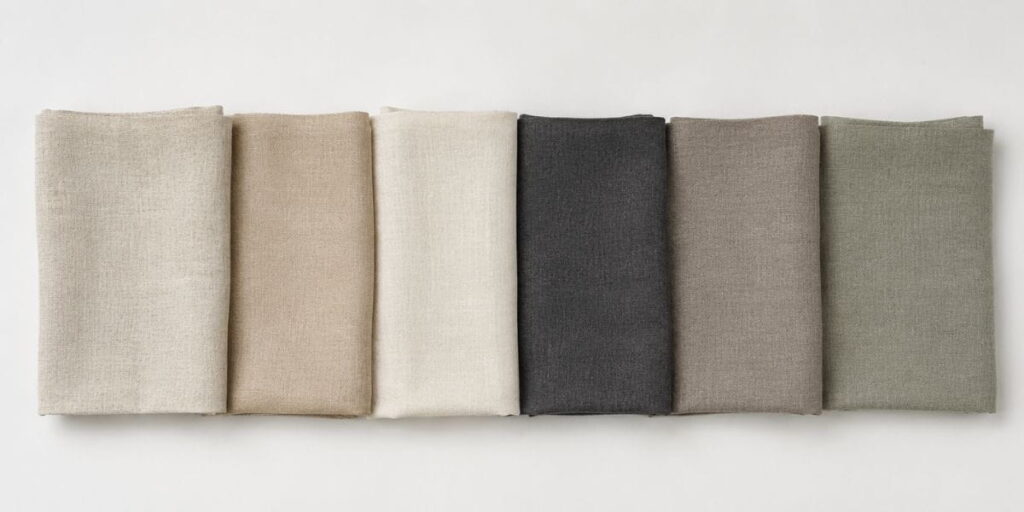
Color choice is probably the single biggest lever you have when writing Korean minimalist fashion AI prompts, because it’s the fastest way to push a render toward or away from the aesthetic. The core palette leans heavily on warm and cool neutrals rather than true black-and-white contrast: think oatmeal, sand, stone, ivory, charcoal, taupe, and the occasional muted sage or dusty blue as an accent. Pure black is used, but usually as a grounding color rather than the star of the outfit.
When you’re writing a prompt, name two or three colors from this palette explicitly rather than leaving color choice up to the AI. “Neutral tones” as a phrase is too vague and often defaults to whatever the model has seen most in its training data, which skews toward black and white rather than the warmer, sandier palette that actually defines the look. Instead, try combinations like:
- Ivory + charcoal + a hint of camel
- Oatmeal + black + soft grey
- Sand + white + muted olive
- Taupe + cream + dusty blue
If you want a bit of visual interest without breaking the minimalist rule, one soft accent color is usually enough—sage green, dusty rose, or a muted terracotta all work well as a single accent against a neutral base. Two accent colors in the same prompt tends to push the result toward “colorful casual” rather than Korean minimalist, so it’s worth resisting the urge to add more.
Common Mistakes When Writing Korean Minimalist Fashion AI Prompts
How to Apply It
Even with a solid list of Korean minimalist fashion AI prompts to start from, it’s easy to accidentally nudge a generator away from the look you actually want. Here are the mistakes that come up most often when writing Korean minimalist fashion AI prompts, and simple ways to apply a fix.
Mistake 1: Overloading the prompt with adjectives. Piling on words like “elegant, chic, stylish, gorgeous, trendy” in a single prompt doesn’t add precision — it just gives the model conflicting signals about mood. Pick one or two mood words at most and let the garment and color descriptions do the rest of the work.
Mistake 2: Forgetting the setting. A prompt with no background context often defaults to a plain white studio backdrop, which can look flat and stock-photo-like. Naming a setting — a quiet street, a café window, a concrete wall — grounds the outfit and usually produces a more editorial, believable result.
Mistake 3: Mixing seasons accidentally. Asking for a “wool coat” and “sandals” in the same prompt confuses the model and often produces an inconsistent, slightly uncanny result. Keep garments seasonally consistent, and if you want a transitional look, say so explicitly (for example, “early autumn, still mild weather”).
Mistake 4: Being too specific about pose or expression. Over-directing body language (“laughing while looking over shoulder, hand on hip, one leg forward”) tends to distract the model from the clothing itself, which is usually the part you actually care about. Simpler poses — standing, walking, sitting — let the outfit stay the focal point.
Mistake 5: Skipping the lighting description entirely. This is probably the most common oversight across weak Korean minimalist fashion AI prompts. Lighting affects mood more than almost any other single word in the prompt, and Korean minimalist fashion photography in particular tends to favor soft, slightly overcast or golden-hour light rather than harsh, high-contrast studio lighting.
Category 1: Everyday Office & Errand Looks
How to Apply It
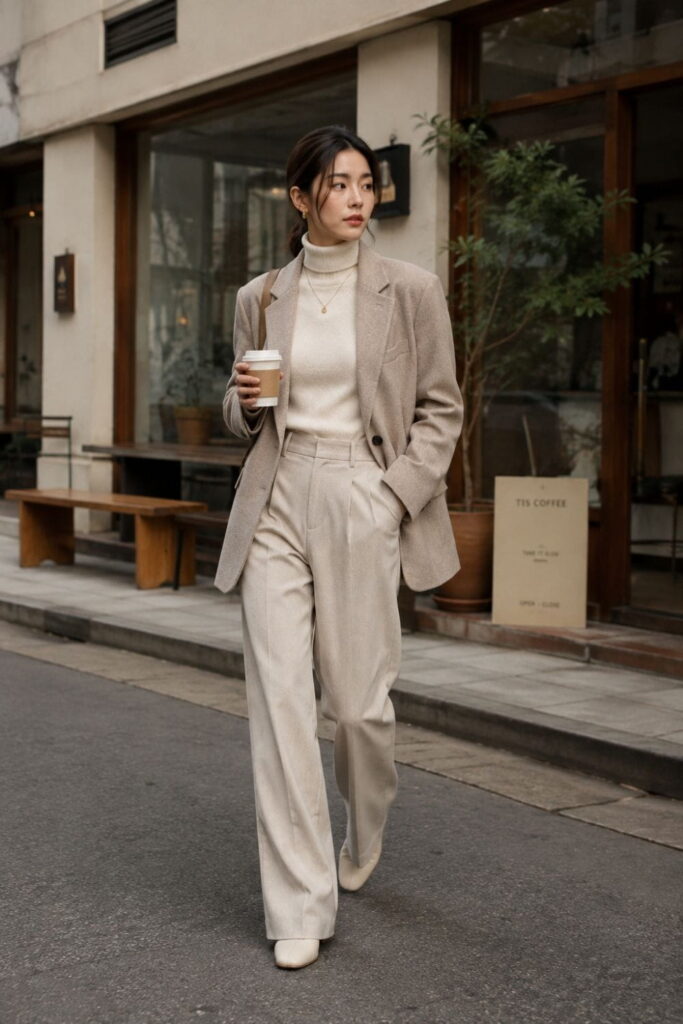
These Korean minimalist fashion AI prompts are built for low-key, wearable outfits — the kind you’d actually throw on for work or a coffee run. Keep the color count to two or three neutrals and avoid asking for “formal business attire,” which tends to push the AI toward stiff corporate suiting instead of the relaxed tailoring these Korean minimalist fashion AI prompts are meant to capture.
Category 2: Date Night & Dinner Looks
How to Apply It
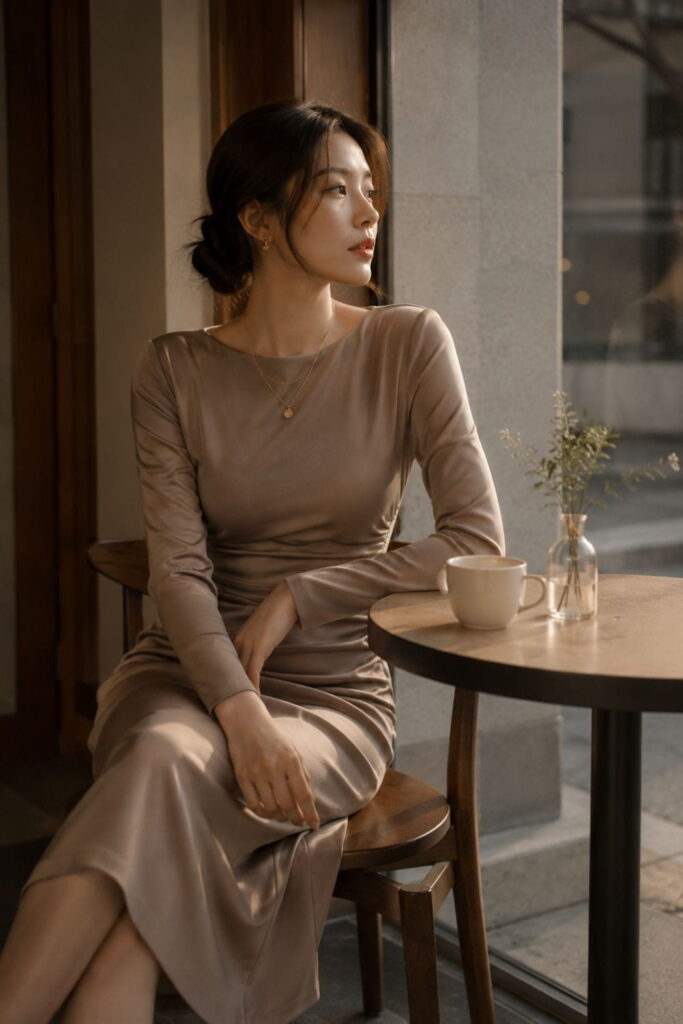
For evening-ready Korean minimalist fashion AI prompts, swap “editorial lighting” for “warm ambient lighting” or “golden hour” — it noticeably softens the render and matches the mood better than harsh studio light. You can also add “subtle shine fabric” for a dressier finish without going flashy.
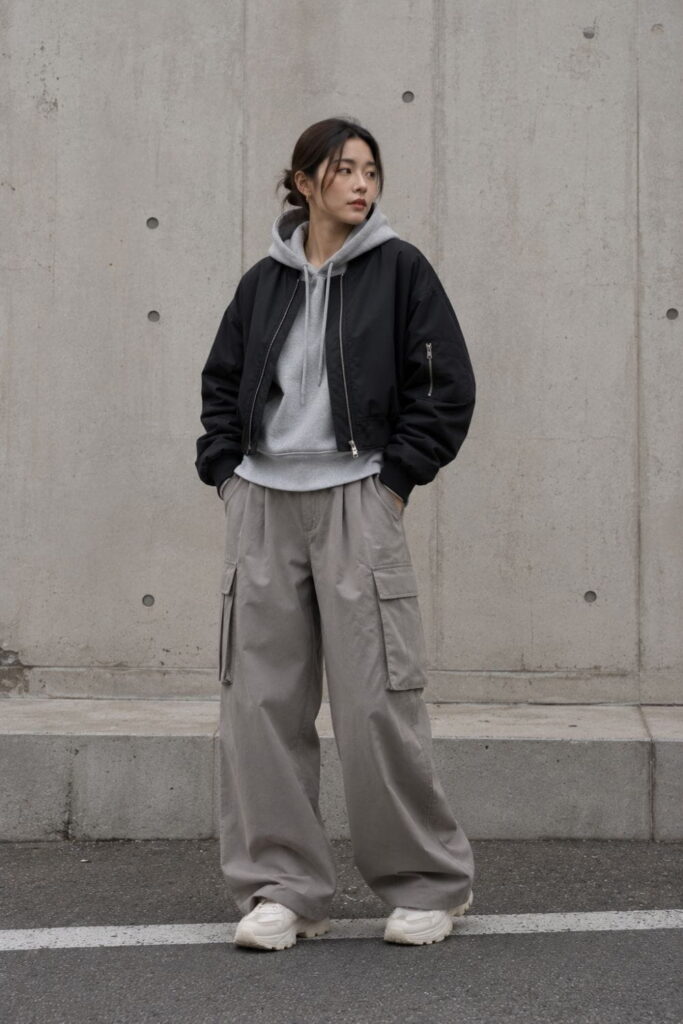
Category 3: Streetwear-Meets-Minimalism
How to Apply It
This is where a lot of people get their Korean minimalist fashion AI prompts wrong by adding too many streetwear buzzwords (“graffiti,” “bold logos,” “loud patterns”), which cancels out the minimalist part of the prompt. Keep silhouette words (“oversized,” “cropped,” “boxy”) but strip out anything about prints or branding.
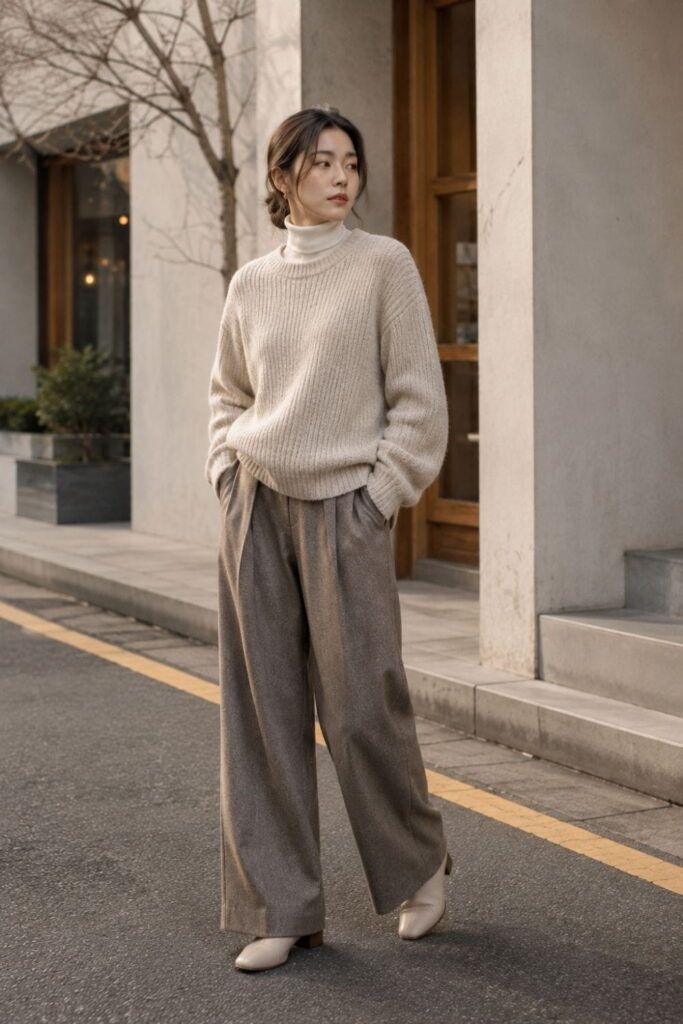
Category 4: Cozy Layered Autumn/Winter Looks
How to Apply It
Layered Korean minimalist fashion AI prompts work best when you name the layers in order, from innermost to outermost. This stops the AI from merging pieces together into one garment, which is a common failure point with vague layering requests.
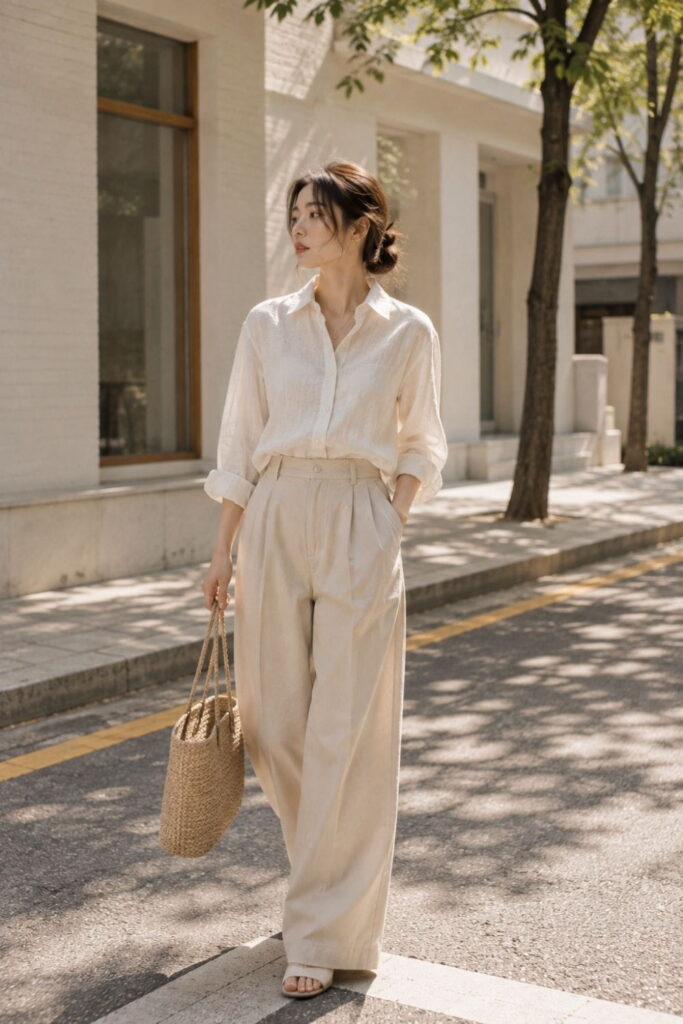
Category 5: Airy Spring/Summer Looks
How to Apply It
Summer-focused Korean minimalist fashion AI prompts benefit from lighter fabric words like “linen,” “cotton poplin,” or “lightweight” — these keep silhouettes airy instead of structured, which matches the season better than the heavier wool language used above.
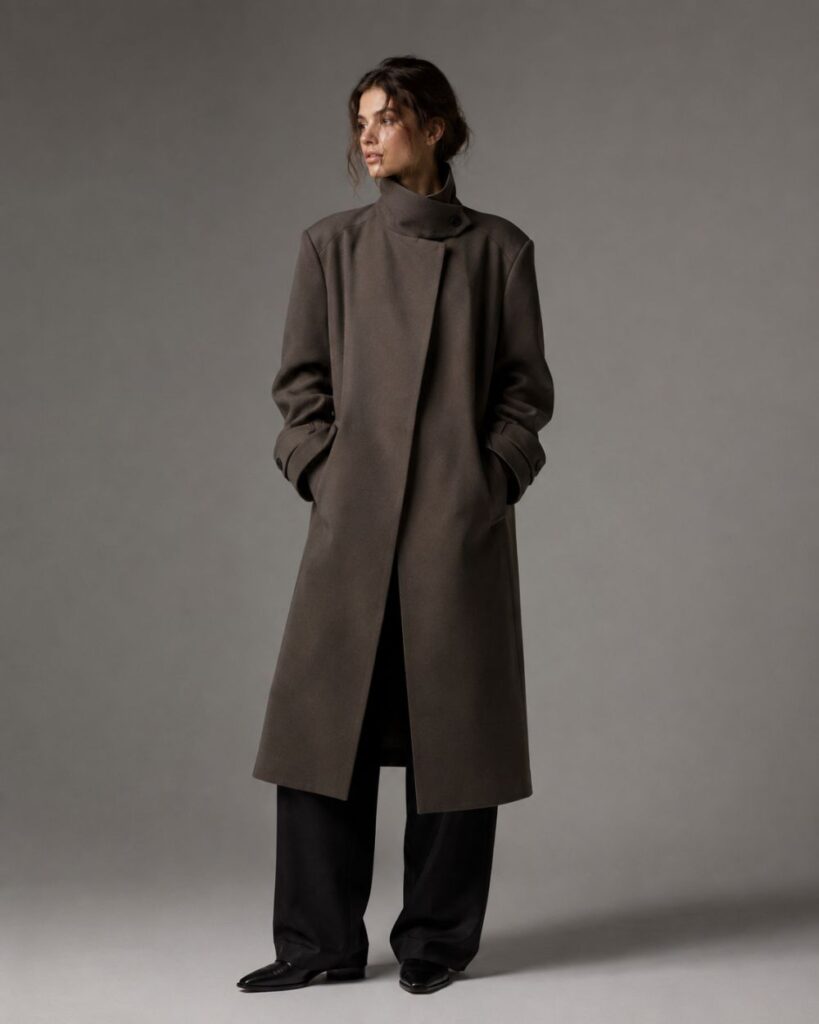
Category 6: Monochrome & Statement-Free Looks
How to Apply It
Monochrome Korean minimalist fashion AI prompts are the easiest to get consistently right — just specify one color family and let texture do the work by naming at least two different fabrics (like “knit” and “wool” or “satin” and “cotton”) so the outfit doesn’t look flat.
Tips for Getting Better Results
A few small adjustments make a big difference once you start generating your own Korean minimalist fashion AI prompts regularly, so keep these in mind every time you sit down to write a new batch:
- Anchor the lighting. “Soft overcast daylight” and “editorial studio lighting” consistently outperform vague terms like “nice lighting.”
- Name fabrics, not just colors. “Wool coat” renders more convincingly than “beige coat.”
- Limit yourself to three colors max. Korean minimalism relies on restraint — more colors pull the render toward a busier, less authentic look.
- Add camera/style language sparingly. Terms like “editorial photography” or “lookbook style” help tools like Midjourney understand the intended polish level, but stacking too many at once can confuse the composition.
- Iterate, don’t restart. If a result is close but not quite right, adjust one variable (lighting, garment, or setting) at a time rather than rewriting the whole prompt.
For a deeper dive into general prompt structure, OpenAI’s prompt engineering guidance and Midjourney’s official documentation are both worth reading — the fundamentals apply just as well to fashion prompts as they do to any other image category. If you’re new to AI art tools generally, our beginner’s guide to AI image prompting covers the basics before you dive into a style-specific list like this one.
FAQ
What makes a prompt “Korean minimalist” instead of just “minimalist”?
Good Korean minimalist fashion AI prompts usually include a specific set of details on top of general minimalism: oversized-but-tailored silhouettes, neutral palettes with the occasional soft accent color, and a slightly relaxed, unpretentious posture in how the outfit is worn. General minimalist prompts can skew stiffer or more corporate without those cues.
Which AI tool works best for Korean minimalist fashion AI prompts?
Midjourney tends to handle fabric texture and lighting nuance the best for fashion renders. DALL-E is a solid choice if you want faster iteration and don’t need ultra-photorealistic texture. Adobe Firefly is worth trying if you plan to use the output commercially, since its licensing terms are generally more straightforward for that use case.
Can I use these prompts for a clothing brand’s lookbook?
Yes, many small brands already do this for early concept boards. Just double-check the specific AI tool’s commercial licensing terms before using generated images in paid marketing, since policies vary between platforms.
How do I make the outfit fit a specific body type?
Add a short body description early in the prompt (for example, “petite frame” or “tall and broad-shouldered”) right after the subject description. Keep it brief — one phrase is usually enough to steer the render without overriding the rest of the prompt.
Why do my results sometimes look too “corporate” instead of minimalist?
This usually happens when the prompt includes words like “business attire” or “formal suit.” Swap those for softer terms like “relaxed tailoring” or “oversized blazer,” which the AI associates more with the Korean minimalist look than with traditional office wear.
Do I need to mention “Korean” in every prompt, or does it change the result if I leave it out?
Leaving out “Korean” usually pulls the result toward a more generic, Western-leaning minimalist look — often stiffer tailoring and a narrower color range. Keeping the word in the prompt, even just once, is a simple way to nudge the model toward the softer silhouettes and warmer neutral palette that define the style.
How many prompts should I test before settling on one image?
There’s no fixed number, but three to five variations of the same core prompt — changing one variable at a time — is usually enough to land on something you’re happy with. If you’re still not getting close after five attempts, the issue is more likely the underlying prompt structure than bad luck, so it’s worth revisiting the garment and lighting wording rather than just regenerating endlessly.
Final Thoughts
Korean minimalist fashion AI prompts are really just a shortcut — a way to skip the hours of manual moodboarding and get straight to a visual you can react to, tweak, or build a real outfit around. Start with the 30 Korean minimalist fashion AI prompts above, adjust the color, season, or setting to match what you actually need, and don’t be afraid to run the same prompt two or three times with small wording changes. The version that finally clicks is usually one small tweak away.
The bigger takeaway, though, is that the underlying structure matters more than any single prompt on this list. Once you understand why certain words push a result toward the Korean minimalist look and others push it away — neutral palette over saturated color, relaxed tailoring over stiff formality, soft natural light over harsh studio flash — you can write new prompts on the fly for whatever specific outfit, season, or mood you have in mind, without needing to come back to a reference list at all. That’s really the end goal here: not memorizing 30 exact phrases, but understanding the pattern well enough to generate the 31st, 50th, or 100th prompt yourself.
If you’re building out a broader content library around AI fashion tools, you might also want to check our related post on AI prompt formulas for product photography for a complementary set of techniques.