
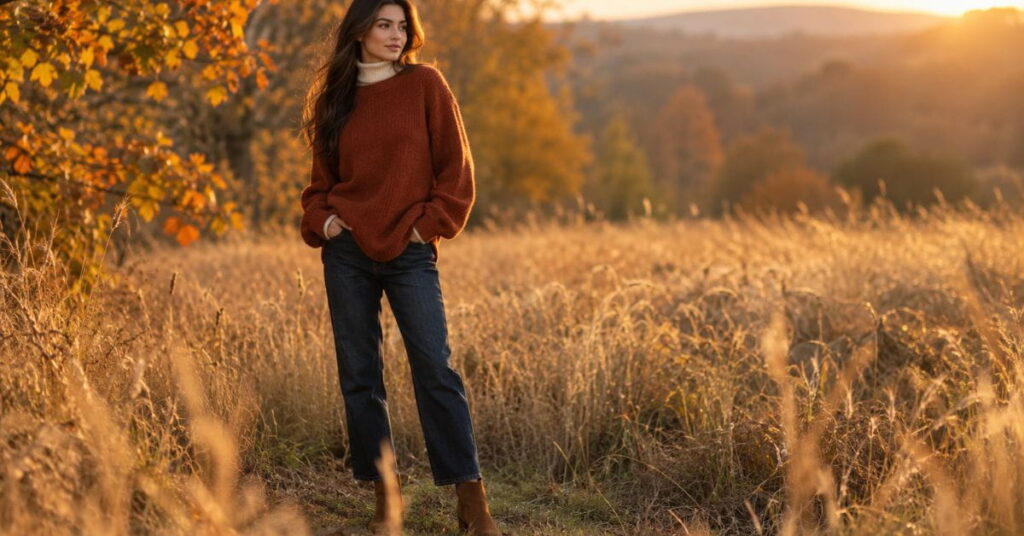
If you’ve ever stood in front of your closet at 6 a.m., pulling out sweater after sweater before a shoot, you already know that putting together a fall fashion photoshoot outfit is a different beast than dressing for a normal Tuesday. A great fall fashion photoshoot outfit isn’t just about looking cute—it’s about how the fabric catches the light, how the colors read on camera, and how the whole look holds together across fifty different poses in changing wind and sun. This guide breaks down nine practical, tested hacks that will help you plan, style, and photograph a fall fashion photoshoot outfit that actually looks as good in the final gallery as it did in your head.
Whether you’re a content creator building out your feed, a bride-to-be planning engagement photos, a small business owner shooting product photography for a boutique, or just someone who wants killer photos for the holiday card, these hacks apply. We’ll cover everything from color theory and layering tricks to accessories, hair and makeup timing, and the small styling details that separate an amateur-looking photo from an editorial one.
Let’s get into it.
Why Your Outfit Choice Makes or Breaks a Fall Photoshoot
Cameras are unforgiving. A shirt that looks perfectly fine in the mirror can wash you out, wrinkle strangely, or clash with a background the second a lens is pointed at it. That’s why so many “outfit of the day” posts and family photo sessions fall flat — the outfit was chosen for comfort or trend, not for how it performs in front of a camera.
A well-planned fall fashion photoshoot outfit does three things at once: it complements your skin tone and the season’s natural backdrop, it photographs cleanly without distracting patterns or glare, and it tells a story — cozy, polished, adventurous, romantic — that matches the mood you’re going for. Get this right, and even an iPhone photo in a pumpkin patch can look like it belongs in a magazine. Get it wrong, and even a professional photographer with $10,000 of gear will struggle to save the shot in editing.
The good news is that none of this requires a stylist or a huge budget. It requires a bit of planning, an understanding of a few core principles, and the hacks below.
Hack #1: Build Your Fall Fashion Photoshoot Outfit Around a Color Story
The single biggest lever you can pull for a cohesive fall fashion photoshoot outfit is color—get the palette right and the rest of your fall fashion photoshoot outfit tends to fall into place. Fall backdrops — turnings leaves, wheat fields, brick walls, string lights — tend to sit in a warm, muted palette: rust, mustard, olive, chocolate brown, cream, burgundy, and deep forest green. When your outfit pulls from that same palette, the whole photo feels intentional instead of accidental.
Pantone’s Fashion Color Trend Report tracks the seasonal colors most frequently seen on runways in New York, London, Milan, and Paris each fashion week, and autumn collections consistently lean into these earthy, saturated tones—which is exactly why they photograph so beautifully against natural fall scenery.
How to Apply It
- Pick one dominant color (say, rust or camel) and build the rest of the outfit around two or three supporting neutrals like cream, black, or dark denim.
- Avoid neon brights, pure white, and busy prints — they tend to pull the eye away from your face and clash with a natural fall background.
- If you’re shooting with a group, assign each person a color from the same family rather than forcing identical outfits (more on that in Hack #9). For more curated color-and-mood pairings, our editorial fashion AI prompts for luxury photography roundup is a useful reference even if you’re shooting on location rather than generating images.
- Test your palette against your actual location beforehand. A photo of the trees, the wall, or the field on your phone will tell you instantly whether your planned colors will pop or blend in.
- When in doubt, warm tones (rust, olive, mustard, burgundy) almost always outperform cool tones (icy blue, lavender, bright pink) in a fall setting.
Hack #2: Layer for Texture, Not Just Warmth
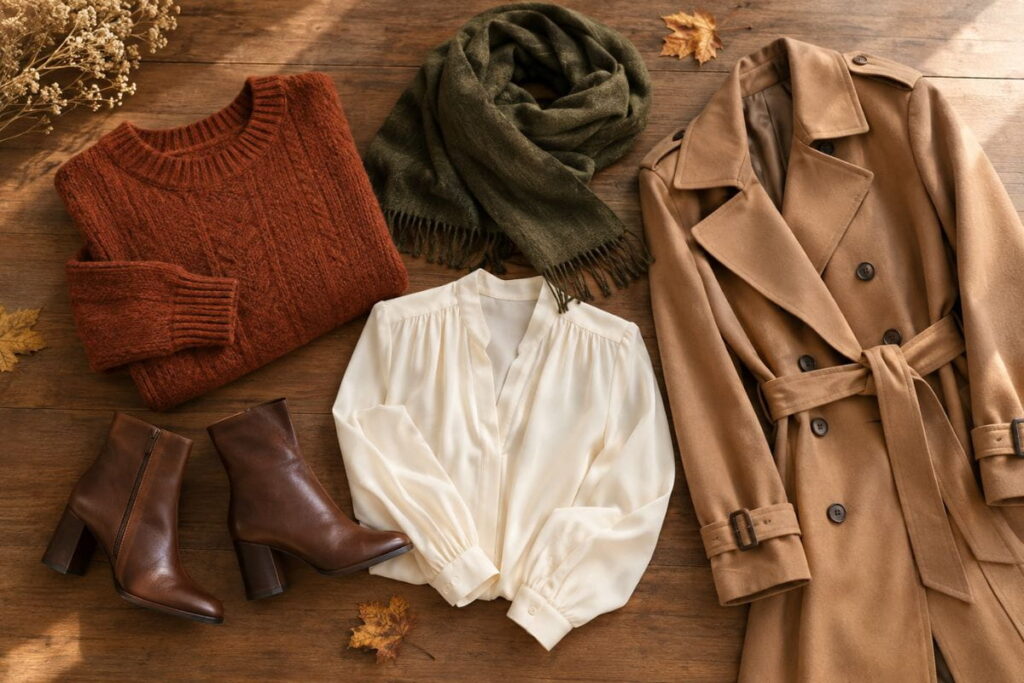
Layering is the heart and soul of any fall fashion photoshoot outfit, but most people layer for temperature and forget that layering is also a styling tool for a fall fashion photoshoot outfit. A single flat sweater photographs as one visual block. A sweater with an open jacket, a scarf, and a peek of collar underneath photographs as depth — your eye moves through the outfit instead of skimming past it.
How to Apply It
- Start with a fitted base layer (turtleneck, button-down, or fitted knit) so the silhouette doesn’t get lost under bulk.
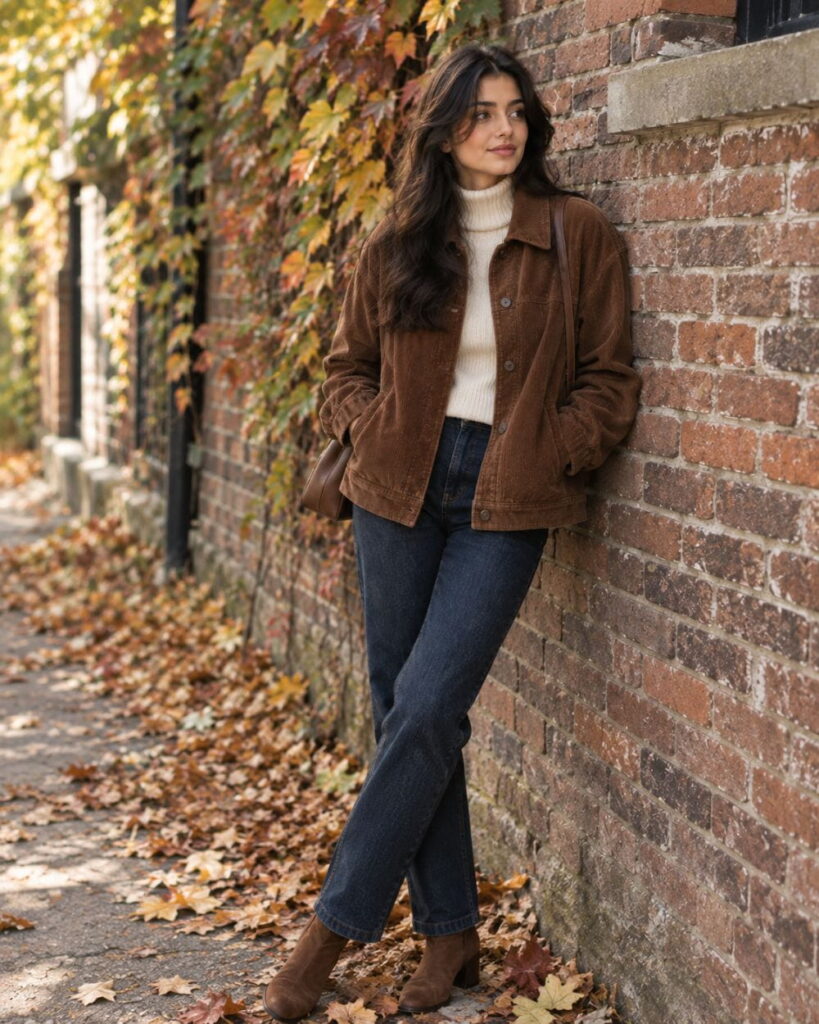
- Add a mid-layer with a different texture — a chunky cardigan over a smooth blouse, or a corduroy jacket over a cotton tee.
- Finish with one outer piece that can be worn open, like a wool coat, denim jacket, or trench, so it moves naturally in photos instead of hanging stiffly.
- Leave layers slightly undone (an unzipped jacket, a loosely draped scarf) — perfectly buttoned-up layers can look stiff on camera.
- Three layers is usually the sweet spot. More than that and you risk looking bulky in photos, especially in close, three-quarter shots.
Hack #3: Choose Fabrics That Photograph Well
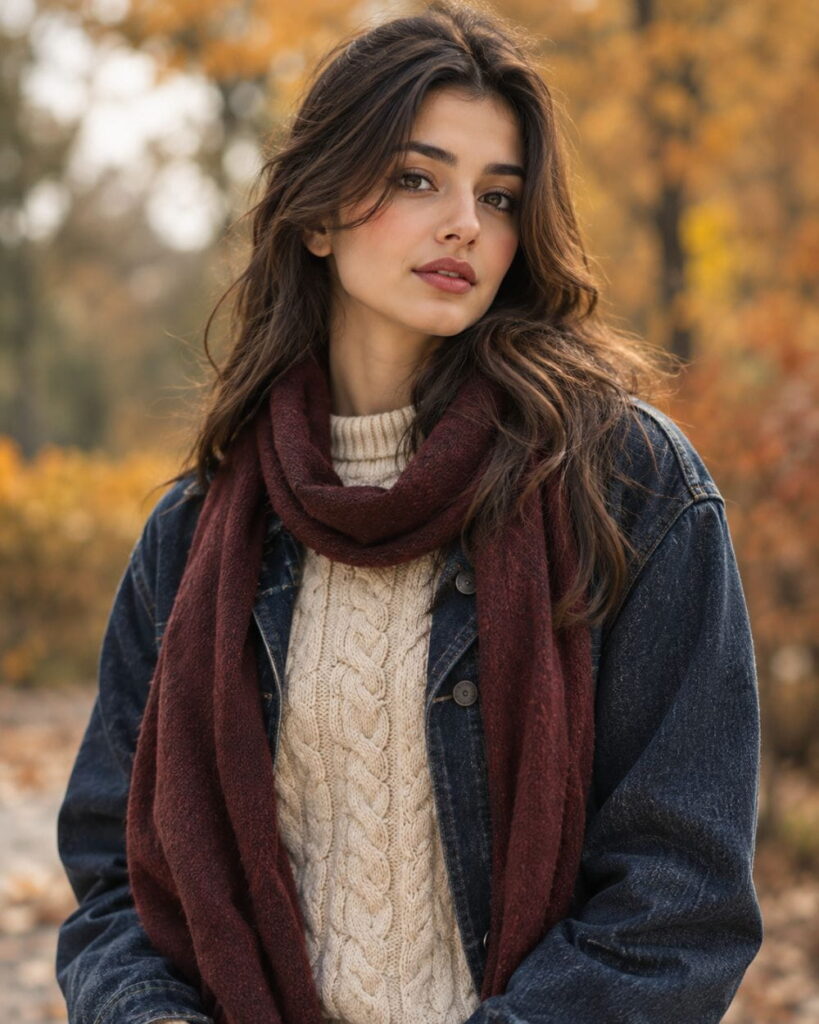
Not all fabrics behave the same way under a lens, and fabric choice is one of the most underrated parts of a fall fashion photoshoot outfit. Shiny, synthetic fabrics like polyester or cheap satin tend to reflect light unpredictably, creating odd hot spots in photos, especially outdoors. Meanwhile, fabrics with visible texture — wool, corduroy, suede, chunky knits, tweed — catch and diffuse light more evenly, which reads as rich and expensive even if the piece wasn’t.
How to Apply It
- Prioritize matte, textured fabrics: cable-knit sweaters, wool coats, suede boots, corduroy pants, and flannel.
- Avoid anything overly shiny or slippery unless you’re intentionally going for a glam, editorial look with controlled studio lighting.
- Steer clear of fabrics that wrinkle badly in a bag or car seat — you often don’t get a chance to steam an outfit on location.
- If you love a shinier piece, use it as a small accent (a silky scarf, a leather bag) rather than the main fabric of your fall fashion photoshoot outfit.
- Do a quick “wrinkle test” the night before: scrunch a corner of the fabric in your fist for ten seconds and see how fast it bounces back.
Hack #4: Match Your Outfit to Your Location
A flowy midi dress looks incredible in a golden wheat field and slightly out of place on a gritty urban rooftop — which is exactly why location matters so much when planning a fall fashion photoshoot outfit. A structured blazer and boots feel right on a city street and slightly overdressed on a hiking trail. Matching the formality and silhouette of your outfit to your location is one of the most overlooked parts of planning a fall fashion photoshoot outfit.
Who What Wear regularly publishes seasonal lookbooks broken down by setting, covering trends and styling advice across workwear, casual, and occasion dressing — their location-specific breakdowns are a fast way to sanity-check whether an outfit idea fits a given backdrop before you commit to it.
How to Apply It
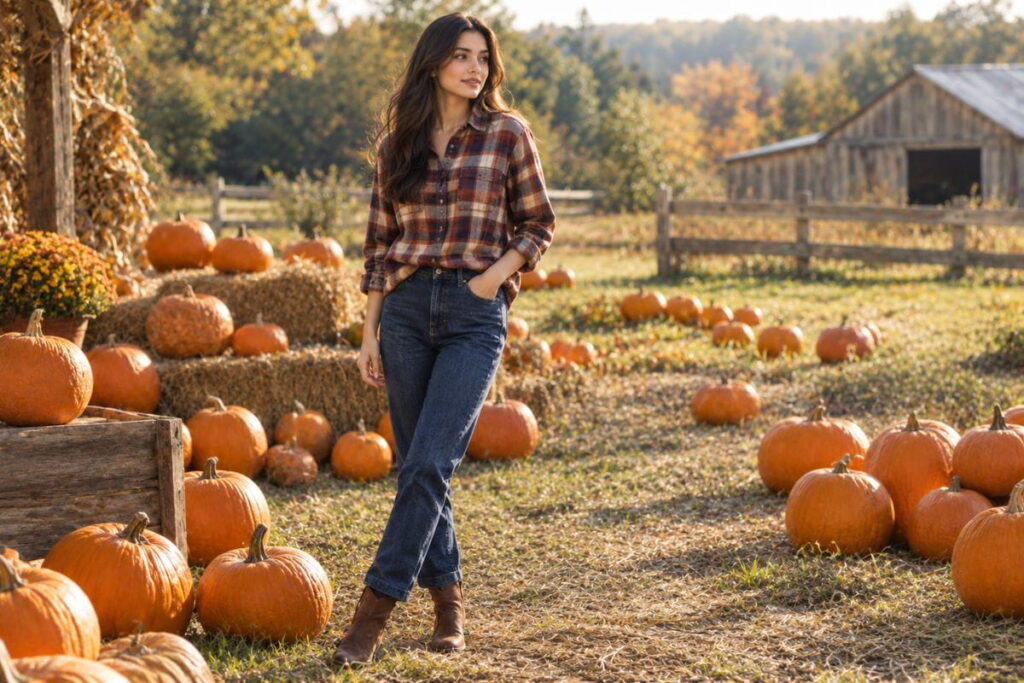
- Orchards, farms, pumpkin patches: flowy dresses, denim, plaid, boots — casual and textured.
- City streets, cafés, brick backdrops: tailored coats, structured bags, ankle boots — polished and editorial.
- Forests, trails, mountains: layered knitwear, utility jackets, sturdy footwear — functional but still styled.
- Vineyards, golden fields: flowing fabrics, warm neutrals, minimal accessories — romantic and soft.
- Scout your location (even just via Google Street View or Instagram geotags) before finalizing your outfit, not after.
Hack #5: Use Accessories as Focal Points
Accessories do double duty in a fall fashion photoshoot outfit: they add visual interest to a fall fashion photoshoot outfit without adding bulk, and they give you something to do with your hands in photos, which instantly makes poses look more natural.
How to Apply It
- A structured bag, a wide-brim hat, or a statement scarf gives you a prop to hold, adjust, or interact with mid-shoot.
- Layered necklaces or a single bold ring photograph better in close-up shots than lots of small, busy jewelry.
- Sunglasses can be a great “in-between poses” prop, but take them off for at least half your shots — eyes carry a lot of the emotion in a photo.
- Choose one “hero” accessory and keep the rest minimal so the eye has a clear focal point instead of competing details.
- Boots, in particular, are worth the investment for a fall shoot — they show up in almost every full-body and walking shot.
Hack #6: Plan for Movement
Static photos of someone standing stiffly, arms at their sides, rarely look good — and a fall fashion photoshoot outfit that can’t move with you will make every shot in your fall fashion photoshoot outfit look stilted. Skirts that twirl, coats that flap slightly in the wind, and scarves that flutter all add energy and life to a photo.
How to Apply It
- Choose at least one piece with movement potential: a flowy skirt, an open coat, a long scarf, or wide-leg pants.
- Practice a few simple movements beforehand — a slow spin, a walking shot, tossing a scarf over one shoulder — so they feel natural rather than posed.
- Ask your photographer (or set a timer if shooting solo) to capture a burst of frames during movement rather than a single static shot; the best frame is often mid-motion, not at the start or end.
- Avoid outfits that are too tight to walk or move comfortably in — restriction shows up as tension in your shoulders and face.
- Wind is your friend for a fall shoot. Don’t fight a slightly breezy day; work with it.
Hack #7: Dress for the Golden Hour Light
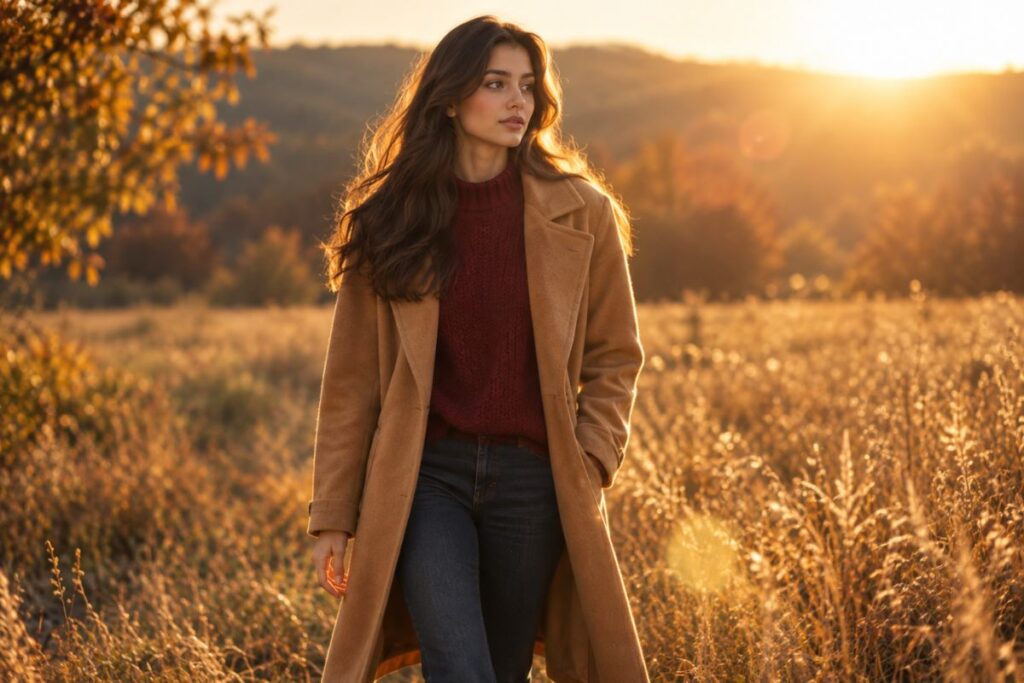
Fall’s low afternoon sun creates the kind of warm, soft light photographers chase all year, but it also changes how the colors and fabrics in your fall fashion photoshoot outfit appear. Deep jewel tones and warm neutrals glow beautifully in golden hour light, while stark white or icy pastels can look flat or overexposed.
Photography resources like PetaPixel widely note that golden hour lighting near sunrise and sunset produces a warm, soft, diffused quality of light considered the most flattering time of day to photograph people, which is exactly why so many professional fall shoots are scheduled for the last hour before sunset.
How to Apply It
- Schedule your shoot for the last hour before sunset (or first hour after sunrise) whenever possible.
- Lean into warm-toned clothing — camel, rust, burgundy, olive — which harmonizes with the golden light rather than fighting it.
- Avoid stark white tops in direct golden-hour sun; they can blow out and lose detail in photos.
- If shooting midday, look for shaded areas (under trees, near buildings) and adjust your outfit’s brightness accordingly — slightly deeper tones handle harsh midday light better than pale ones.
- Bring a light cardigan or jacket you can remove as the temperature drops — comfort affects your expression far more than people realize.
Hack #8: Bring a Backup Outfit (Or Two)
Even the most carefully planned fall fashion photoshoot outfit can go sideways on shoot day — a coffee spill, a broken zipper, a sudden weather shift, or simply realizing on location that the color isn’t working with the background. Professional stylists almost always pack backups, and you should too.
How to Apply It
- Pack one full backup outfit in a different but complementary color palette.
- Bring a couple of accessory swaps (a second scarf, alternate jewelry) that can shift the mood of your main outfit without a full change.
- Keep a small emergency kit: safety pins, a lint roller, stain wipes, and a travel-size iron or wrinkle-release spray.
- If shooting with a group, coordinate backups too — a solo outfit change can throw off the whole color story if others don’t adjust.
- Test both outfits in your actual shoot lighting (or similar natural light) before the day of the shoot, not just under indoor bulbs.
Hack #9: Coordinate — Don’t Match — with Your Group
Family and couple fall fashion photoshoot outfit choices often go wrong the same way: everyone wears the exact same shade of plaid, and the photo ends up looking like a uniform instead of a family. The stronger approach is coordinating within a shared palette while letting each person’s outfit have its own personality.
How to Apply It
- Choose two or three colors for the whole group (for example, rust, cream, and denim) and let each person mix and match within that palette.
- Vary textures and silhouettes across the group — one sweater, one flannel, one solid color — rather than putting everyone in identical pieces.
- Keep patterns to one or two people max; if everyone wears plaid, the photo becomes visually noisy.
- Kids’ outfits can be simpler versions of the adults’ palette rather than exact matches, which reads more natural in candid shots.
- Do a final “lineup check” — literally stand everyone together — before leaving the house to catch any colors that clash more than expected.
Hair, Makeup, and Timing: The Details Around Your Outfit
Even the most carefully chosen fall fashion photoshoot outfit can be undercut by rushed hair, smudged makeup, or bad timing. These details don’t get their own hack number, but they matter enough that skipping them will show up in every single frame.
Fall weather is unpredictable — a light drizzle, a gust of wind, or humidity can all affect hair and makeup differently than they would in summer. If your outfit includes a hood, hat, or scarf that touches your hairline, do a test run to see how it affects your style before the actual shoot. A loose, slightly tousled hairstyle tends to photograph more naturally than something overly sleek, since fall settings (leaves, wind, uneven ground) rarely produce perfectly still conditions anyway.
Makeup-wise, matte finishes generally hold up better outdoors than dewy or shimmery ones, especially if you’re shooting midday when the sun is stronger. A little extra bronzer or a warm blush can help your skin tone read well against cooler fall light, particularly in the early morning or on overcast days. If your fall fashion photoshoot outfit leans into deep, saturated colors like burgundy or forest green, a slightly bolder lip or eye look will keep your face from getting visually “flattened” by the strength of the outfit’s color.
Timing your look is just as important as timing the shoot itself. Plan to have hair and makeup finished at least 15–20 minutes before you need to be dressed, so you have a buffer to fix static, touch up powder, or steam out a stubborn wrinkle. Rushing this stage is one of the most common reasons people look tense or distracted in their first several shots.
How to Apply It
- Do a full hair-and-makeup trial run at least once before the actual shoot day, especially if you’re trying a new style.
- Choose matte over shimmer for outdoor shoots in strong daylight; save shimmer for shaded or golden-hour shots.
- Keep a small touch-up kit on hand: blotting papers, a travel mirror, bobby pins, and a mini hairbrush.
- Build in a buffer of at least 15 minutes between finishing hair/makeup and starting the shoot so nothing feels rushed.
- If you’re shooting in humidity or wind, ask about (or invest in) a long-wear setting spray and a stronger-hold hair product than you’d normally use.
Editing Tips That Complement Your Fall Fashion Photoshoot Outfit
Choosing the right outfit does most of the heavy lifting, but a light editing pass can help the final photos feel even more cohesive. The goal isn’t to change what you wore — it’s to make sure the colors and tones in your fall fashion photoshoot outfit are represented accurately and beautifully in the final image.
Start by adjusting white balance so skin tones and fabric colors look true to life; fall light can sometimes skew slightly cool or slightly orange depending on the time of day, and correcting that first makes every other adjustment easier. From there, a small boost in warmth and a slight reduction in highlights can enhance the golden-hour glow without overdoing it. If you shot with a strong color story (say, rust and cream), a subtle warm-toned preset or filter will usually reinforce that palette rather than fight it.
Resist the urge to oversaturate autumn leaves in the background at the expense of your outfit — if the background colors are pumped up too far, they can compete with or overwhelm the clothing you spent time choosing. Editing should support the outfit, not distract from it.
Resist the urge to oversaturate autumn leaves in the background at the expense of your outfit — if the background colors are pumped up too far, they can compete with or overwhelm the clothing you spent time choosing. Editing should support the outfit, not distract from it.
How to Apply It
- Correct white balance first, before adjusting color grading or filters.
- Add warmth gradually and check skin tones after each adjustment — a little goes a long way.
- Match your editing style across the whole set so the outfit’s color story stays consistent from photo to photo.
- Avoid oversaturating background foliage to the point where it competes with your outfit for attention.
- If you’re not confident editing yourself, look for a preset pack designed specifically for fall or autumn tones rather than a generic, all-purpose filter.
Budget-Friendly Ways to Build a Fall Fashion Photoshoot Outfit
You don’t need a designer wardrobe to pull together a great fall fashion photoshoot outfit on any budget — you need the right pieces in the right colors, and a bit of creativity about where they come from. Some of the most photogenic fall outfits are built from thrifted coats, borrowed scarves, and a single well-chosen new piece rather than an entirely new wardrobe.
Secondhand and thrift stores are particularly good sources for outerwear — wool coats, corduroy jackets, and leather bags tend to hold up well over time and often look even better with a bit of natural wear. If you’re shopping new, focus your budget on one or two “hero” pieces (a statement coat, a great pair of boots) and fill in the rest with basics you likely already own, like a plain turtleneck, dark denim, or a simple midi skirt.
Renting is another underused option, especially for a single event like engagement photos or a milestone birthday shoot, where you want a standout piece you may not wear again for months. A handful of clothing rental services now specialize in exactly this kind of one-time styling need.
How to Apply It
- Start with what’s already in your closet and identify gaps in your color palette before shopping for anything new.
- Shop secondhand for outerwear and accessories first — coats, bags, and boots often photograph just as well (or better) than brand-new pieces.
- Spend your budget on one or two hero pieces and build the rest of the outfit around basics you already own.
- Consider renting a single statement piece for a one-time shoot rather than buying something you’ll only wear once.
- Borrow before you buy — a scarf, jacket, or piece of jewelry from a friend or family member can complete a look for free.
Common Mistakes to Avoid
Even with all nine hacks in place, a few small missteps can still undercut an otherwise great fall fashion photoshoot outfit:
- Overpacking accessories. More isn’t always better — too many statement pieces compete with each other.
- Ignoring shoe comfort. You’ll be walking, posing, and standing for an hour or more; blisters show up as tension in your face.
- Forgetting the back view. Photographers love back-facing and over-the-shoulder shots, so make sure the back of your outfit is as considered as the front.
- Skipping a trial run. Wearing the full outfit around the house for an hour reveals wrinkling, chafing, and fit issues before it’s too late to fix them.
- Not checking weather-appropriate layering. A gorgeous coat is useless if you’re shivering and it shows in every frame.
FAQ: Fall Fashion Photoshoot Outfit Questions, Answered
What colors work best for a fall fashion photoshoot outfit?
Warm, earthy tones — rust, mustard, olive, burgundy, camel, and chocolate brown — tend to photograph best because they complement natural fall backdrops like changing leaves and golden fields.
How many outfit changes should I plan for a fall photoshoot?
One main outfit plus one backup is usually enough for a standard one-hour session. For longer sessions or multiple locations, two to three outfit changes give you variety without overcomplicating logistics.
Should I match with my partner or family for fall photos?
Coordinate rather than match exactly. Choose a shared color palette and let each person’s outfit vary in texture and silhouette within that palette for a more natural, editorial look.
What fabrics photograph best in the fall?
Textured, matte fabrics like wool, corduroy, suede, and chunky knits photograph better than shiny or synthetic materials, which can reflect light unpredictably.
What time of day is best for a fall fashion photoshoot?
The hour before sunset, often called golden hour, provides warm, soft, flattering light that pairs especially well with autumn color palettes.
Do I need professional styling to get good fall photoshoot photos?
No. Following a simple color story, layering thoughtfully, and choosing weather- and location-appropriate pieces will get you 90% of the way there without a stylist.
Final Thoughts
At the end of the day, a great fall fashion photoshoot outfit comes down to a handful of decisions made ahead of time for your fall fashion photoshoot outfit: a cohesive color palette, textured layers, fabrics that photograph cleanly, and accessories that add interest without overwhelming the frame. None of these hacks require designer pieces or a professional stylist — they just require a little intention.
Before your next shoot, revisit this checklist, do a quick trial run in your actual outfit, and trust that the small details—a well-chosen scarf, a warm color palette, a backup outfit in your bag — are what will make the difference between photos you tolerate and photos you actually love.
If you’re planning to recreate any of these looks with AI-generated moodboards or reference shots first, our guide to 100 powerful AI fashion photography prompts for editorial and commercial photoshoots walks through prompt structures that pair well with these same fall color stories, and our breakdown of the best Midjourney prompts for fashion photography is a solid next stop if you want pro-level reference images before shoot day.