
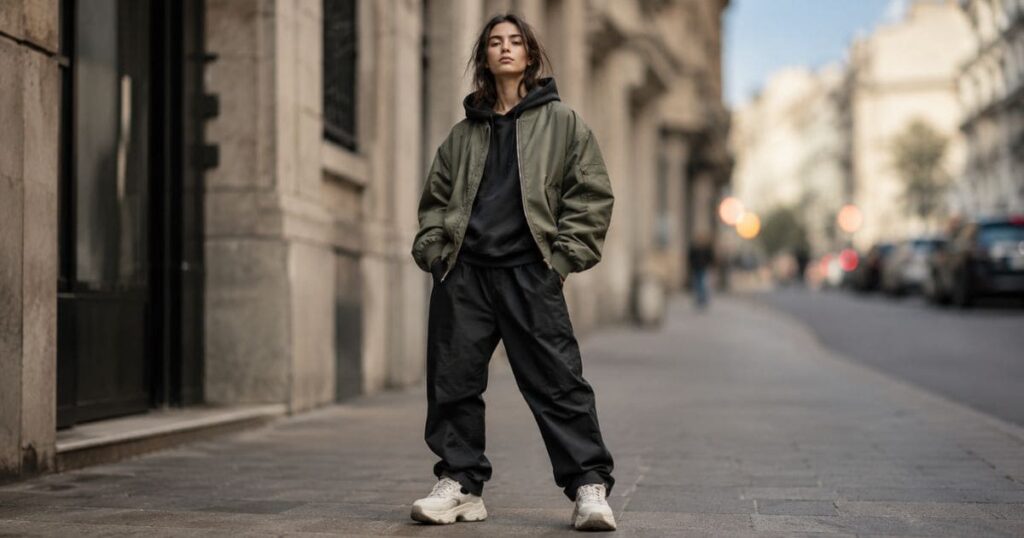
AI streetwear fashion prompts are quietly changing how designers, content creators, and everyday fashion lovers dream up outfits. Instead of staring at a blank moodboard for hours, you type a few well-chosen words into an AI image generator and watch a full urban look appear in seconds. If you’ve ever felt stuck trying to describe “cool streetwear” to Midjourney or DALL-E and gotten back something generic and lifeless, this guide is for you.
Below you’ll find 100 tested AI streetwear fashion prompts, grouped into ten practical categories, plus a short “how to apply it” section under each one so you’re not just copying and pasting — you actually understand why the prompt works. By the end, you’ll have a repeatable system for writing your own AI streetwear fashion prompts long after you’ve worked through this list.
Why AI Streetwear Fashion Prompts Actually Work
Here’s the honest truth: most people’s AI outfit generations look flat because their prompts are lazy. “Streetwear outfit, cool, urban” tells the model almost nothing. Good AI streetwear fashion prompts describe fabric, silhouette, color story, footwear, accessories, lighting, and setting—the same details a real stylist would think about before a shoot.
If you’re new to writing AI streetwear fashion prompts in general, it helps to first browse our full AI Fashion Prompts library, since the underlying structure—subject, style, detail, and mood—carries over from one creative use case to another. Once that groundwork clicks, this whole process becomes far less trial-and-error and much more of a formula you can repeat.
For readers who want to go deeper on the visual side, our AI Fashion Photoshoot Prompts collection breaks down the lighting and backdrop terms used throughout this list, and our Midjourney Fashion Prompts page is a handy reference if you’re generating these looks specifically in Midjourney.
The 100 prompts below are split into ten “hacks,” or style families. Streetwear isn’t one look—it’s a whole universe of subcultures, and each one needs a slightly different formula to come out right.
The Six-Part Formula Behind Every Prompt on This List
Before you dive into the categories, it helps to know what’s actually happening under the hood. Every prompt in this guide follows roughly the same six-part structure, and once you can spot the pattern, you can build your own without ever running out of ideas.
- Outer layer — the coat, jacket, or vest that frames the silhouette. This is usually the first thing the AI “reads,” so put it first.
- Base layer — the shirt, tee, hoodie, or top worn underneath. This is where texture words like “ribbed,” “waffle-knit,” or “mesh” earn their keep.
- Bottoms — trousers, jeans, shorts, or skirts. Fit words matter more than fabric here: “tapered,” “wide-leg,” “straight,” and “cropped” all produce very different results.
- Footwear — sneakers, boots, or loafers. Vague terms like “shoes” get ignored; specific ones like “low-top canvas sneakers” or “chunky combat boots” get rendered accurately.
- One accessory or detail—a bag, hat, jewelry piece, or belt. One is usually enough; three or four accessories tend to clutter the output.
- Setting and light — where the outfit is shown and how it’s lit. This single element does more to sell realism than anything else on the list.
Notice that none of the 100 prompts above skip a category entirely, even when a piece is implied rather than named. That consistency is what separates a prompt that reads like a real fashion brief from one that reads like a random word list, and it’s the single most repeatable habit you can build if you plan on writing your own prompts after this guide.
Common Mistakes to Avoid When Writing Your Own Prompts
Even with a solid formula, a few habits quietly wreck otherwise good ideas. Here’s what to watch for.
Stacking too many adjectives on one item. “Oversized, distressed, faded, vintage, worn denim jacket” confuses the model more than it helps. Pick the one or two descriptors that matter most and let the rest of the outfit carry the story.
Forgetting the setting entirely. A perfectly described outfit floating on a blank white background rarely looks convincing. Even a short cue—”concrete alley,” “foggy morning,” or “rooftop at golden hour”—anchors the whole image and makes it feel like a real photograph instead of a cutout.
Mixing conflicting silhouettes. Pairing “skin-tight leggings” with “oversized boxy blazer” isn’t wrong on its own, but if you don’t specify how they relate, the AI has to guess, and it often guesses wrong. Be explicit about proportion: “fitted bottoms under an oversized top” reads very differently than either term alone.
Using brand names. Most AI image generators either ignore brand names or produce inconsistent, sometimes legally murky results. Describe the aesthetic instead — “Carhartt-style jacket” instead of the brand itself, which is exactly the phrasing used throughout the vintage workwear section above.
Writing one long run-on sentence. Short, comma-separated phrases (the same style used in all 100 prompts on this page) are easier for most AI models to parse than a flowing paragraph. Structure beats prose when you’re prompting for fashion.
Hack 1: Minimalist Streetwear Prompts
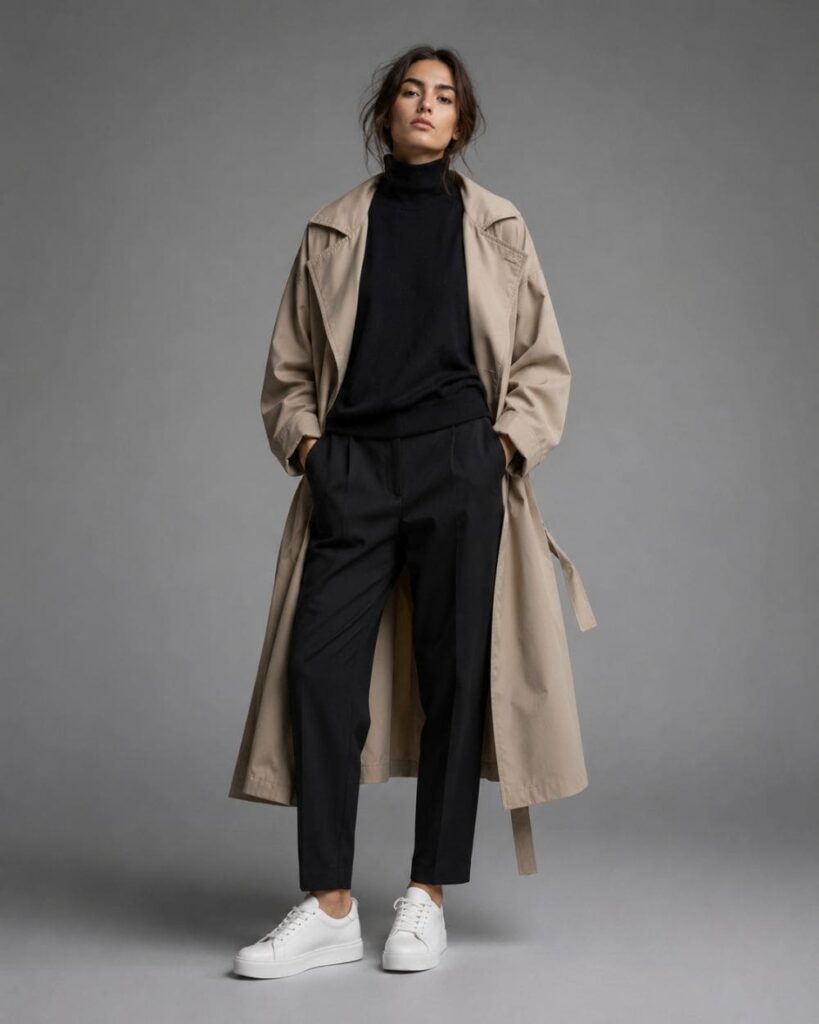
Minimalist streetwear leans on clean lines, muted tones, and quality over logos. These AI streetwear fashion prompts are built for anyone who wants a “quiet luxury meets sidewalk” aesthetic.
How to Apply These AI Streetwear Fashion Prompts
Keep your color palette to two or three tones max — think beige, black, and white, or grey and cream. Add one lighting cue (“soft studio lighting” or “overcast daylight”) because minimalist looks live or die on how clean the light feels. Avoid words like “bold” or “graphic” here; they pull the AI toward a busier result than you want. If you want more clean, editorial-leaning AI streetwear fashion prompts in this same tone, our Editorial Prompts collection is a great next stop.
Hack 2: Y2K Revival Streetwear Prompts
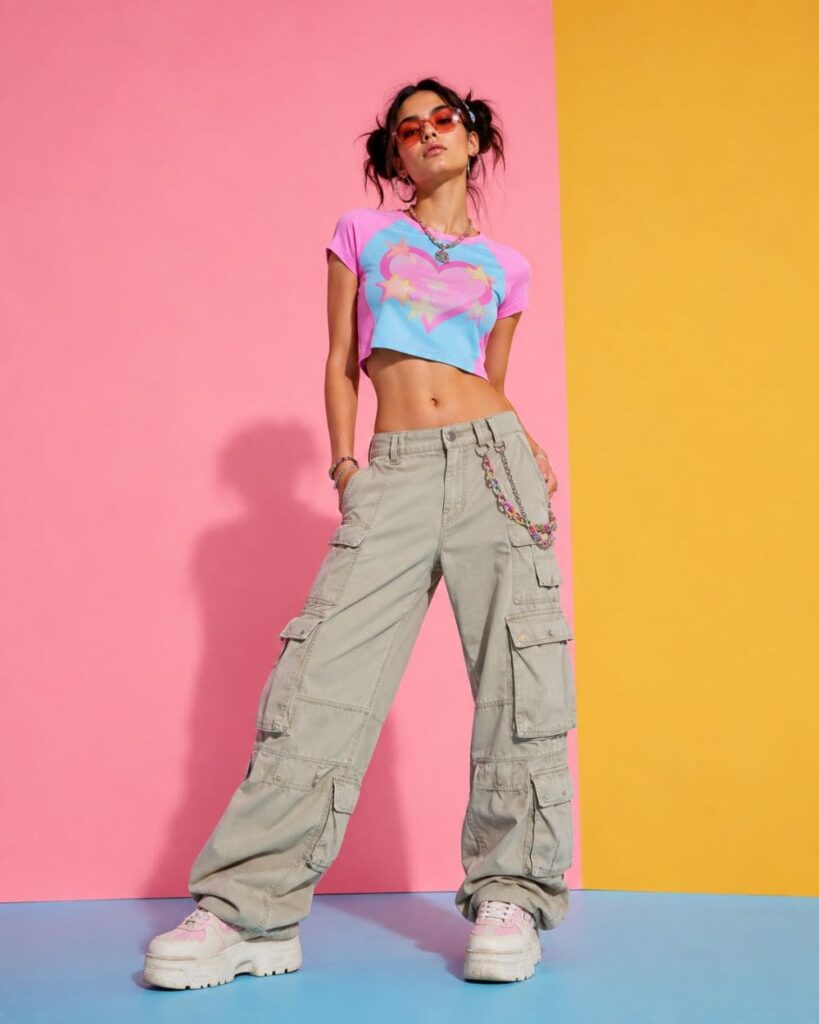
Low-rise jeans, baby tees, and butterfly clips are back, and AI streetwear fashion prompts in this category should lean playful, bright, and a little chaotic on purpose.
How to Apply These AI Streetwear Fashion Prompts
Y2K prompts need texture words—”velour,” “metallic,” “mesh,” “shiny”—because that era was obsessed with surface finish. Throw in an accessory detail (butterfly clips, tiny sunglasses, layered necklaces) since accessories carry most of the Y2K identity. Bright, slightly saturated lighting sells the mood better than moody shadows. Our Women Fashion AI Prompts page has more AI streetwear fashion prompts built around this same playful, accessory-heavy energy.
Hack 3: Techwear Streetwear Prompts
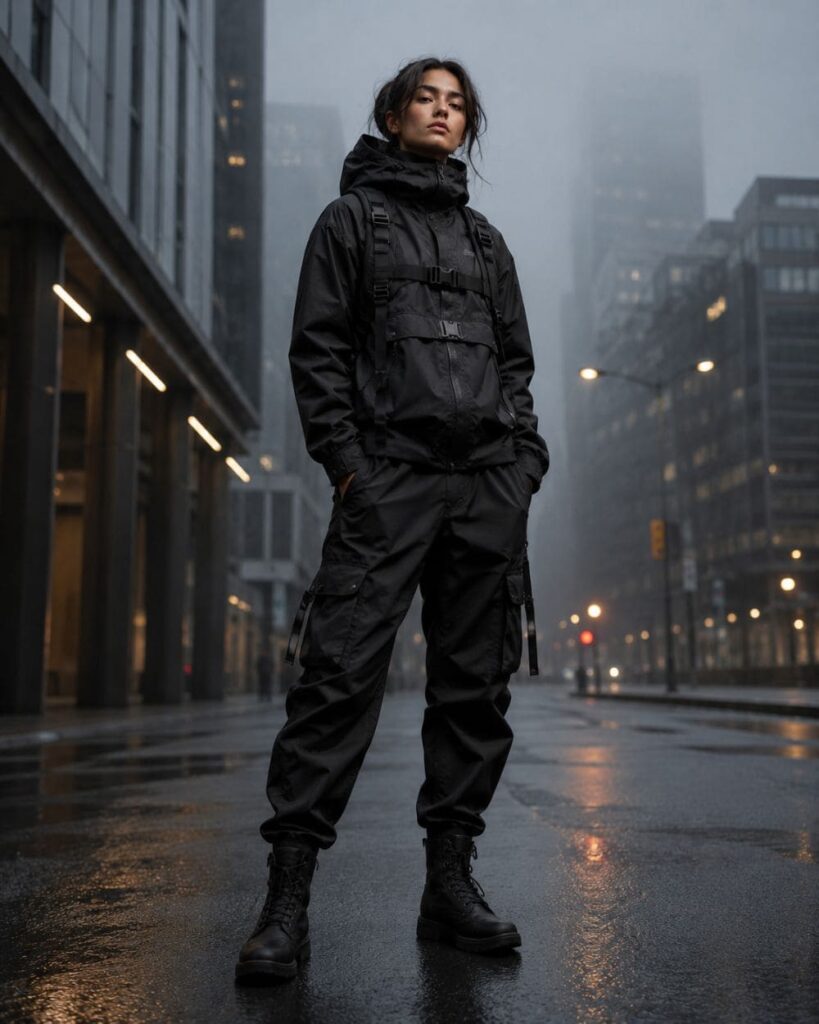
Techwear is function-first: waterproof shells, tactical straps, and a monochrome or gorpcore palette. These AI streetwear fashion prompts work best with technical fabric language.
How to Apply These AI Streetwear Fashion Prompts
Always mention fabric behavior — “waterproof,” “matte,” “reflective”—because techwear is defined by function, not just shape. Add environmental detail like rain, fog, or night lighting; techwear photography almost always lives in gritty, weather-heavy settings, and giving the AI that context makes the whole scene feel authentic instead of staged. Our Midjourney Fashion Prompts page has more tool-specific phrasing tips if you want to keep expanding this category.
Hack 4: Vintage Workwear Streetwear Prompts
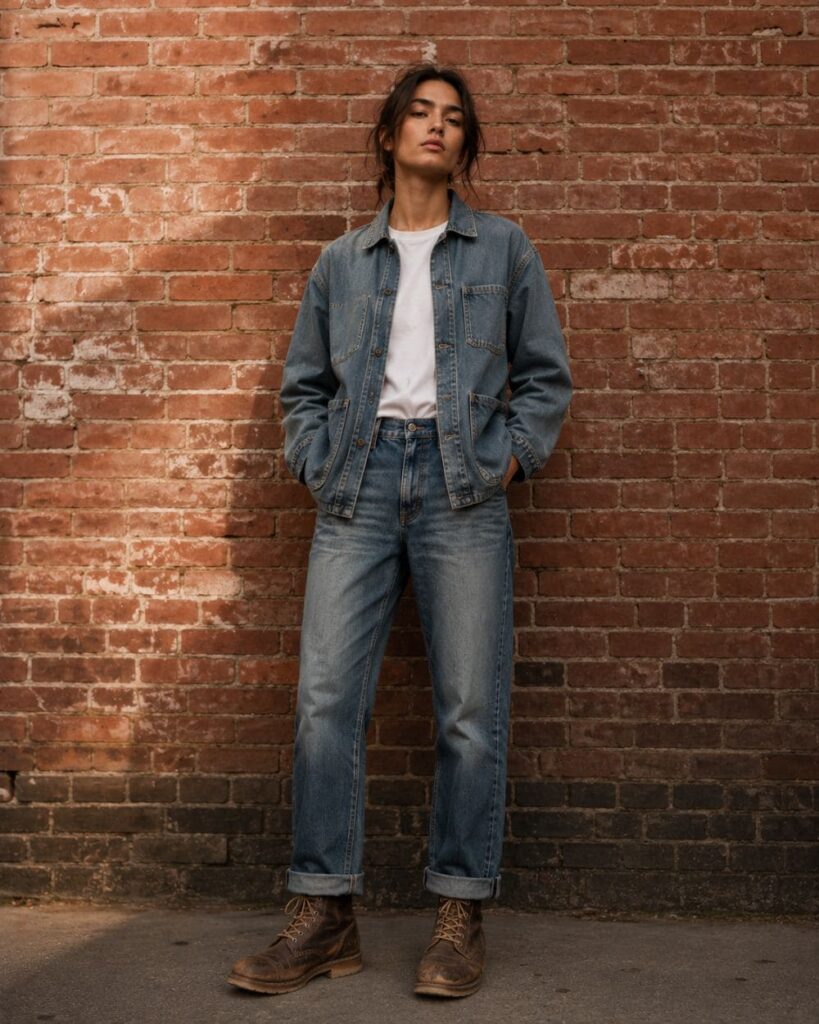
Carhartt-style jackets, denim, and rugged boots define this look. These AI streetwear fashion prompts borrow from utility fashion history.
How to Apply These AI Streetwear Fashion Prompts
Lean on texture and wear: “faded,” “distressed,” “worn,” and “scuffed.” Vintage workwear photography avoids anything that looks brand new, so telling the AI the fabric is aged or weathered is the single most important detail here. Pair it with an industrial or outdoor backdrop — a loading dock, brick wall, or warehouse — for authenticity. For more AI streetwear fashion prompts in this exact lane, check our Vintage Fashion Prompts collection.
Hack 5: Monochrome Streetwear Prompts
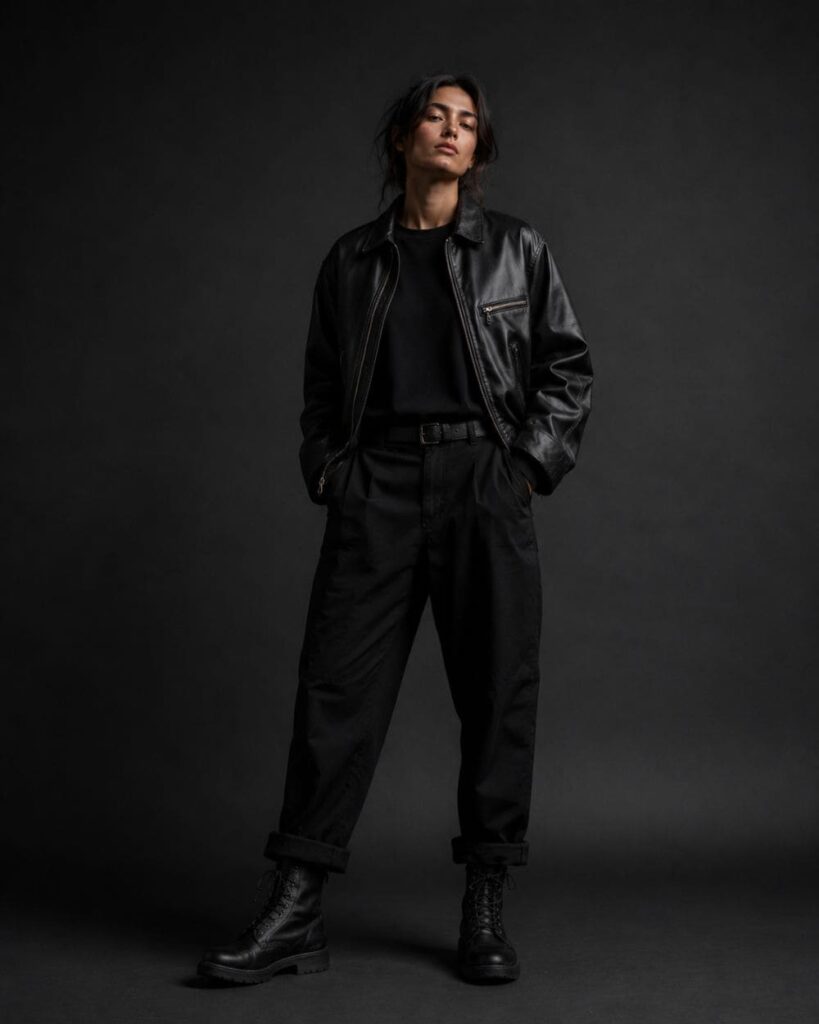
One color, multiple textures. These AI streetwear fashion prompts create a striking, editorial look that photographs beautifully.
How to Apply These AI Streetwear Fashion Prompts
The trick with monochrome prompts is contrasting texture, not color. Mention at least two different fabrics—leather with cotton, suede with denim—so the AI doesn’t render a flat, single-material blob. Lighting matters a lot here too: moody lighting suits black and navy, while soft natural light works best for white and beige palettes. Our AI Fashion Photoshoot Prompts collection has more lighting-driven AI streetwear fashion prompts if you want to keep exploring this effect.
Hack 6: Layered Streetwear Prompts
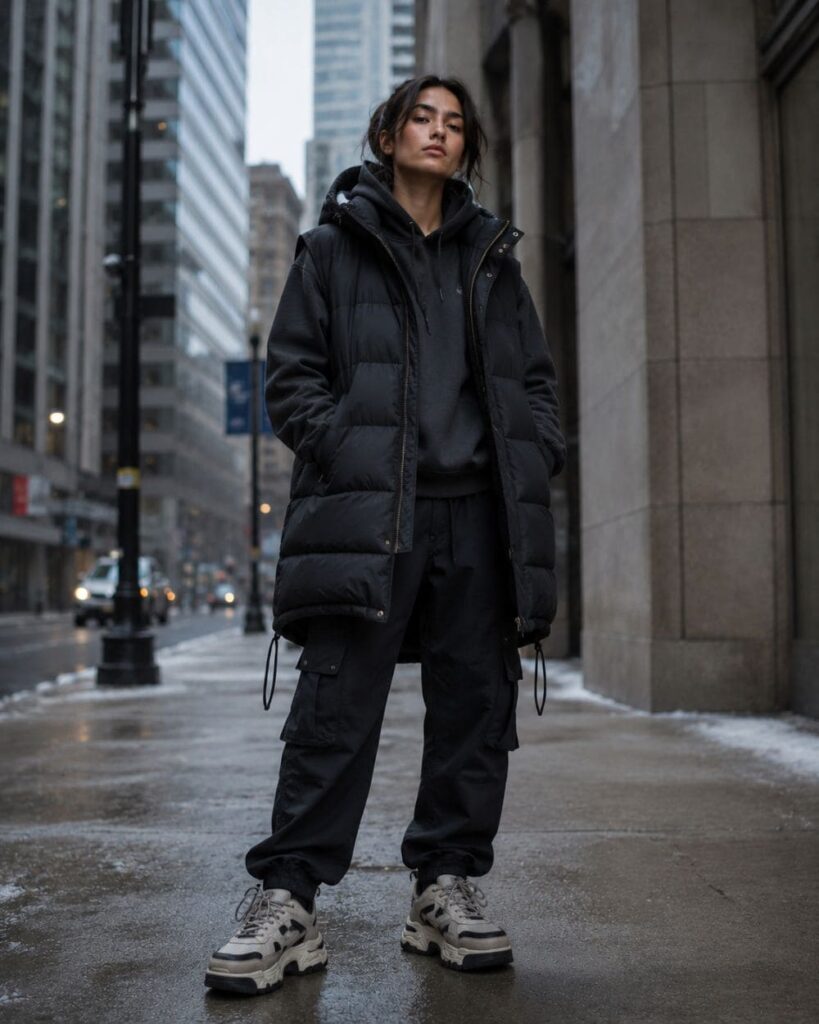
Layering is the backbone of cold-weather streetwear. These AI streetwear fashion prompts stack pieces the way real stylists do.
How to Apply These AI Streetwear Fashion Prompts
List layers in the exact order they’d be worn, outermost first. This helps the AI understand depth instead of flattening everything into one garment. Add a seasonal cue—”cold city street,” “snowy,” “autumn backdrop”—because layering only makes visual sense when the scene explains why someone’s wearing four pieces at once. Browse the full AI Fashion Prompts library for more layered looks across other categories.
Hack 7: Sporty Streetwear Prompts
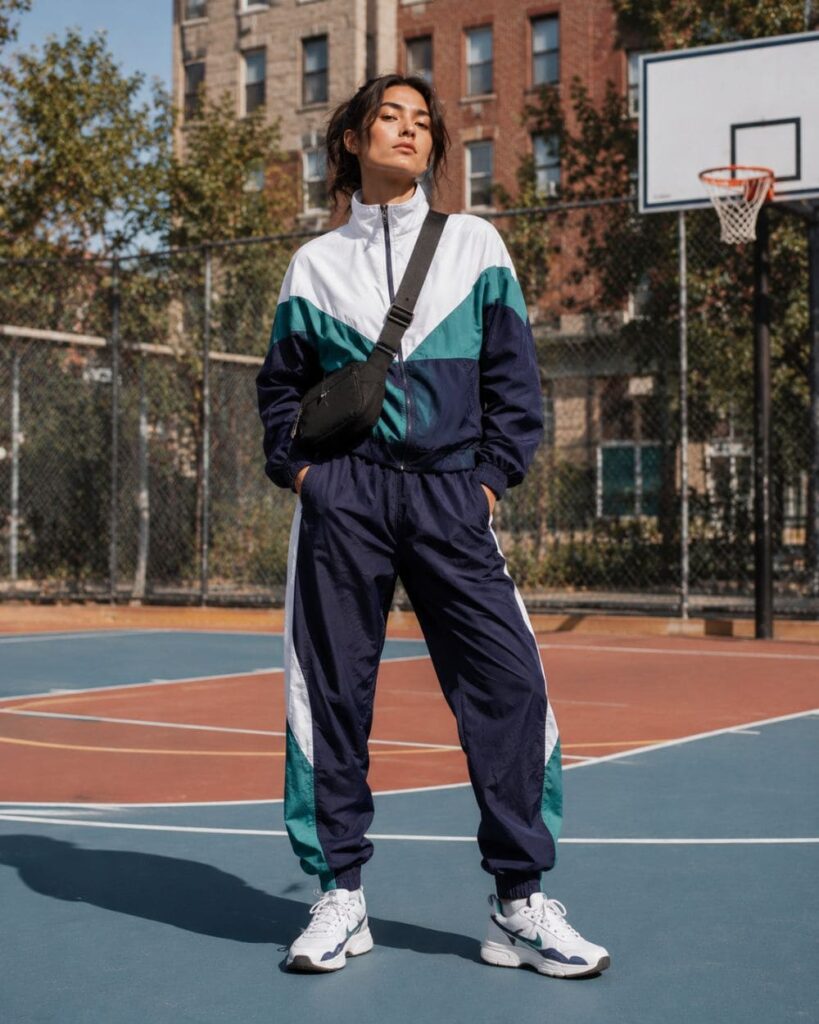
Trainers, tracksuits, and athletic silhouettes reimagined for the street. These AI streetwear fashion prompts blend gym culture with city style.
How to Apply These AI Streetwear Fashion Prompts
Sporty streetwear photographs best with movement implied—mention an action-adjacent backdrop like a basketball court, skate park, or stadium. Keep footwear specific (“retro running sneakers” or “high-top sneakers”) since sneaker silhouette is doing most of the styling work in this category. Our Menswear AI Prompts page has more sneaker-pairing AI streetwear fashion prompts if you want to branch out further.
Hack 8: Grunge Streetwear Prompts
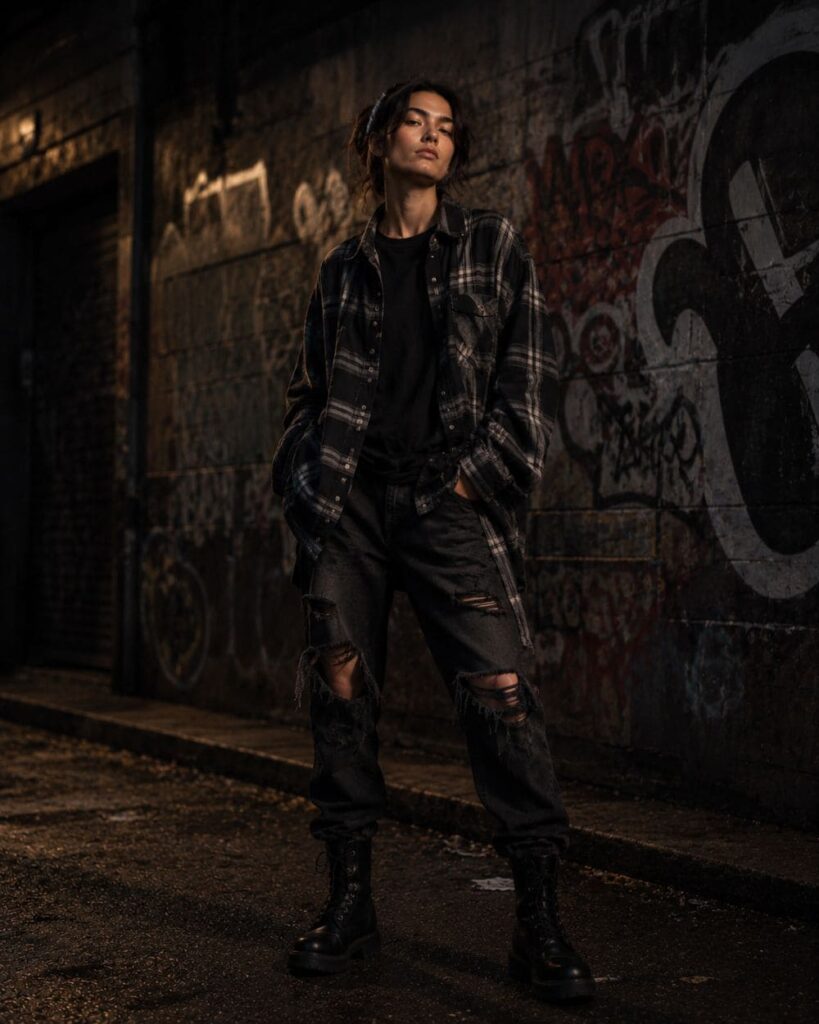
Ripped denim, flannel, and a deliberately undone finish. These AI streetwear fashion prompts channel 90s rebellion with a modern edge.
How to Apply These AI Streetwear Fashion Prompts
Use “distressed,” “ripped,” “torn,” and “worn” deliberately, but don’t overdo every single item—pick one or two hero pieces to look beat-up while the rest stays intact, or the outfit reads as costume rather than style. A graffiti wall, dim streetlight, or rainy night backdrop finishes the mood. Our Avant-Garde Prompts collection walks through more experimental, edge-leaning AI streetwear fashion prompts if you want to push this look further.
Hack 9: Luxury Streetwear Prompts
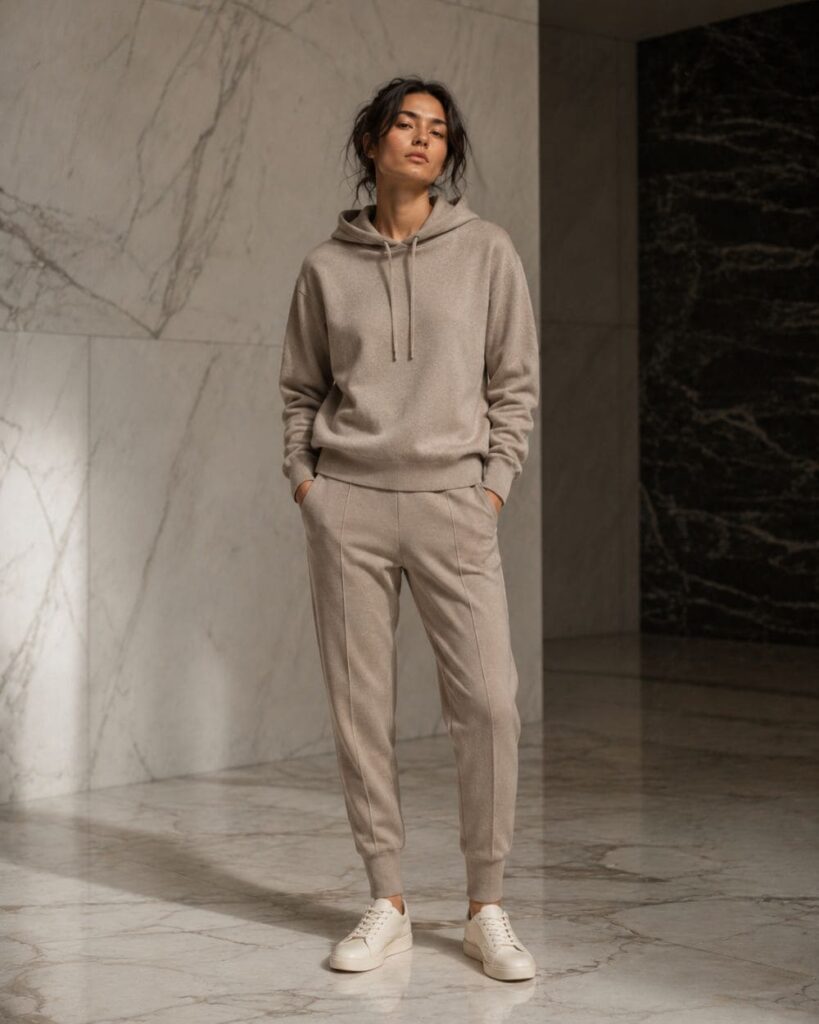
High-fashion fabrics meet street silhouettes. These AI streetwear fashion prompts are for a polished, high-end result.
How to Apply These AI Streetwear Fashion Prompts
Swap casual fabric words for premium ones—”cashmere,” “silk,” “leather,” and “tailored”—and use a refined backdrop like marble, a gallery, or a city skyline instead of a gritty street. Keep accessories minimal but specific (a silk scarf, gold jewelry) rather than piling on logos, since true luxury styling reads as restrained. Our Luxury Fabric AI Prompts page has more fabric-focused AI streetwear fashion prompts if this category is your favorite.
Hack 10: Genderless Streetwear Prompts
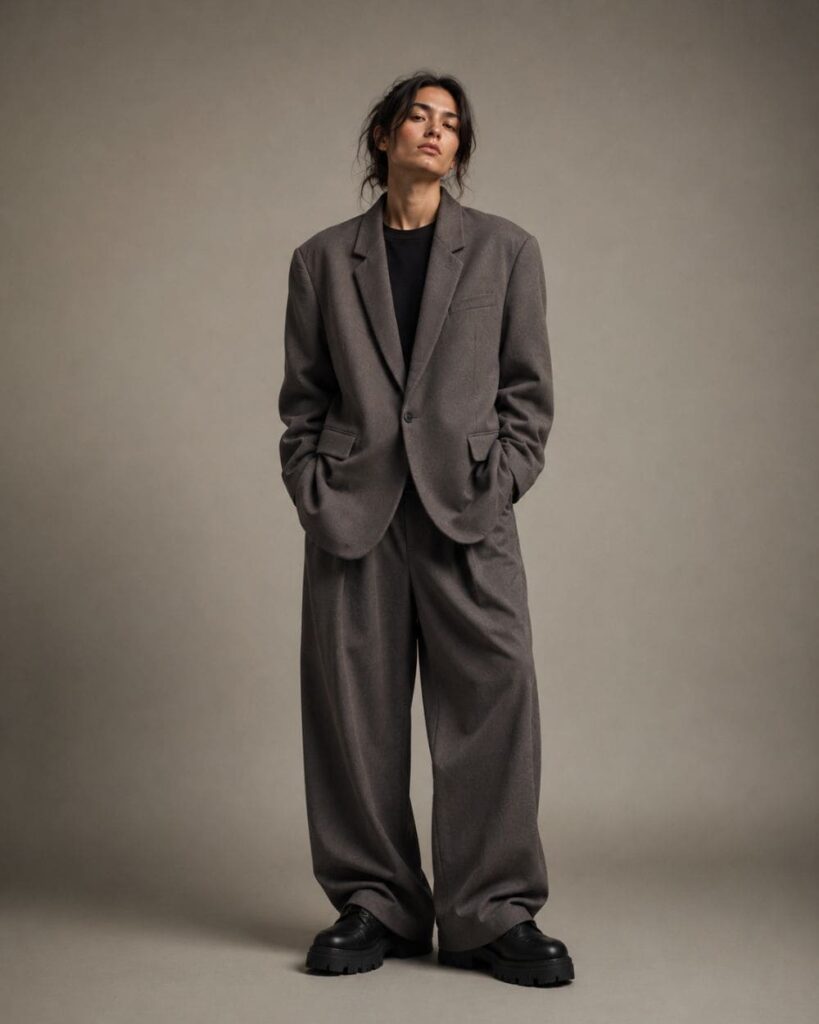
Fluid silhouettes that move beyond traditional menswear or womenswear categories. These AI streetwear fashion prompts favor oversized fits and neutral tones.
How to Apply These AI Streetwear Fashion Prompts
Focus on silhouette words like “oversized,” “boxy,” “draped,” and “wide-leg” rather than gendered terms. Neutral color palettes and minimal accessories keep the AI from defaulting to a traditionally masculine or feminine styling cue, which is the most common mistake people make when trying to generate genderless looks. Our Women Fashion AI Prompts and Menswear AI Prompt pages are both useful starting points if you want to keep exploring silhouette-first AI streetwear fashion prompts.
FAQ: AI Streetwear Fashion Prompts
What makes a good AI streetwear fashion prompt?
A strong AI streetwear fashion prompt describes garment, fabric, color, footwear, and setting in one sentence. The more specific the fabric and lighting details, the more realistic the output looks. Our Midjourney Fashion Prompts page covers this structure in more general terms.
Which AI tools work best for streetwear image generation?
Midjourney and OpenAI’s DALL-E are currently the most popular choices for fashion image generation, and both respond well to the detailed prompt style used in this guide.
Can I use these prompts for commercial design work?
Yes, most designers use AI streetwear fashion prompts purely for moodboarding and early concept work before moving into original sketches or actual garment production. Always check your specific AI tool’s licensing terms before using outputs commercially.
Do I need to add camera or lighting terms to my prompts?
It helps a lot. Adding terms like “studio lighting,” “overcast daylight,” or “golden hour” gives the AI a clearer sense of mood and makes the output feel like a real photoshoot rather than a flat render.
How long should an AI streetwear fashion prompt be?
Somewhere between 15 and 30 words tends to work best. Short enough to stay focused, long enough to include garment, color, footwear, and setting.
Where can I find more streetwear trend inspiration?
Fashion trend reports from sources like Vogue Business and WGSN are useful for staying current on what’s actually trending on the street versus what’s just trending on social media. Our own free AI fashion prompts page is a good companion download while you write your own AI streetwear fashion prompts.
Final Thoughts
The difference between a flat AI fashion render and one that actually looks like a magazine editorial almost always comes down to prompt detail. These 100 AI streetwear fashion prompts give you a starting library across ten distinct style families, but the real skill is learning to mix and match — pulling a techwear jacket into a minimalist outfit, or adding Y2K accessories to a sporty look.
If you want to keep building your prompt library, browse the full AI Fashion Prompts collection for more advanced categories like runway and editorial looks, or grab the free AI fashion prompts pack to start experimenting right away. You can also read more about how this site’s prompts are built on our About page.
Start with one category, tweak the color and fabric words until the output matches your vision, and build from there. That’s really the whole trick to writing your own AI streetwear fashion prompts once you’ve worked through this list of AI streetwear fashion prompts.