
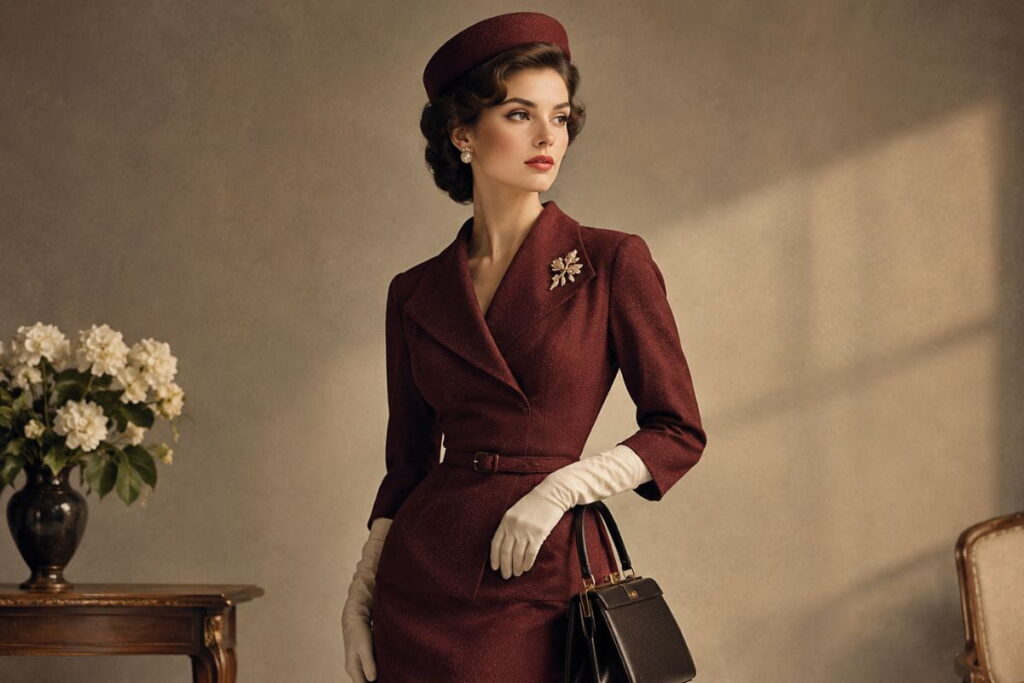
If you’ve ever typed a decade into an AI image generator and gotten back something that looks vaguely retro but not quite right, you already know the problem: generic prompts produce generic results. The best vintage fashion AI prompts aren’t just decade names — they combine texture, light, silhouette, and a photographer’s eye baked right into the text. That’s the difference between an image that looks like a costume party and one that looks like it was pulled from a 1962 issue of Vogue. If you’re just getting started, our full guide to vintage fashion AI prompts covers the foundational techniques — this article builds on that with the specific prompts that consistently outperform the rest.
I’ve spent a lot of time testing prompt structures across Midjourney, DALL-E, and Stable Diffusion, and what I’ve found is that a handful of repeatable techniques — I’m calling them “hacks” here because that’s really what they are — consistently push results from “close enough” to “genuinely convincing.” This guide walks through seven of them, with a plain-English explanation of why each one works and exactly how to apply it in your own prompts.
Whether you’re a fashion illustrator, a content creator building a retro-themed Pinterest board, a novelist who wants reference art for characters, or just someone who loves the look of old Hollywood glamour, these best vintage fashion AI prompts will get you there faster and with far less trial and error.
I want to be upfront about something: none of this is about tricking an AI model or finding some secret “magic word.” It’s closer to learning how to talk to a very well-read but slightly literal-minded collaborator. The model has seen an enormous amount of fashion photography, film stills, and archival imagery — the trick is giving it precise enough language that it pulls from the right slice of that knowledge instead of an average, blurred-together idea of “vintage.” Once you understand that distinction, writing strong best vintage fashion AI prompts stops feeling like guesswork and starts feeling like directing a shoot.
Why Best Vintage Fashion AI Prompts Need a Different Approach
Most people write best vintage fashion AI prompts the same way they’d write any other prompt: describe the subject, describe the clothes, hit generate. The problem is that “clothes from the 1950s” means almost nothing to a model that has seen millions of images tagged loosely with that decade — some accurate, some not, some just modern clothes with a filter slapped on top.
What actually works is treating the prompt like a brief you’d hand to a real photographer and stylist. You’re not just describing an outfit; you’re describing an era, a mood, a camera, and a set of lighting conditions all at once. That’s the real secret behind convincing best vintage fashion AI prompts — and it’s the thread that runs through every hack below.
Think about what a real photo from, say, 1958 actually contains. It’s not just the dress. It’s the way tungsten studio lighting rendered skin tones slightly warm. It’s the slight grain from the film stock. It’s the posture models were trained to hold, the makeup trends of that specific year, even the way fabric caught light differently before synthetic blends became common. A prompt that only says “1958 dress” throws away all of that context, and the model has to fill in the gaps with whatever “vintage-ish” data it has on hand — which is often a mushy composite of several decades at once.
That’s why every technique in this guide pushes in the same direction: replace vague nouns with specific, sensory, historically grounded language. The more of that context you hand over, the less the model has to improvise, and the more your best vintage fashion AI prompts will look like they came from an actual archive rather than a costume rental catalog.
Hack #1: Anchor Every Prompt to a Specific Year, Not Just a Decade
How to Apply It
The single biggest upgrade you can make to your best vintage fashion AI prompts is swapping out the decade for a specific year, or even a season within a year. Fashion moved fast — a 1961 silhouette isn’t the same as a 1968 silhouette, even though both technically fall under “the sixties.”
Here’s how to apply it in practice:
- Instead of “1960s dress,” try “early 1961 Jackie Kennedy-era daywear” or “late 1968 mod mini dress.“
- Pair the year with a cultural reference point the model likely has strong visual data for — a First Lady, a film release, a major design house’s runway season.
- If you’re not sure which year fits your aesthetic, search “[year] fashion trends” before you prompt, so your vintage fashion AI prompts are grounded in something real rather than a guess.
Example prompt:
“Full-body portrait, woman in early 1961 tailored daywear, boxy jacket, pillbox hat, gloves, soft indoor lighting, Kodachrome color rendering”
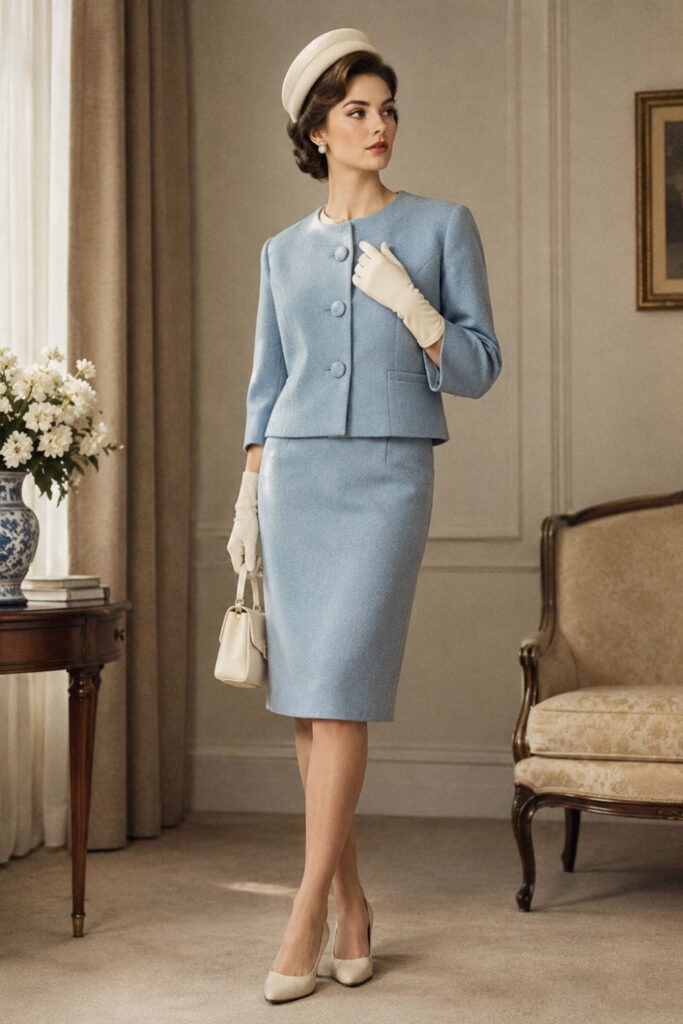
This single change — year instead of decade — is responsible for more improvement in output accuracy than almost any other adjustment I’ve tested.
There’s a practical reason this works so well. AI models are trained on captioned image data, and a huge amount of that captioning comes from museum archives, fashion history sites, and auction listings — all of which tend to date items by year, sometimes even by season or collection. A decade is really a bucket containing ten years of very different silhouettes squeezed together. When you say “1960s,” the model has to average across the boxy Jackie Kennedy tailoring of 1961, the space-age Courrèges shapes of 1964, and the psychedelic mini dresses of 1968 — three genuinely different visual languages. Naming a year (or even better, an early/mid/late qualifier within that year) removes that averaging problem entirely.
A good habit is to pick your year before you think about the outfit at all. Decide “I want early 1955,” then ask yourself what was happening in fashion at that exact moment — New Look silhouettes were still dominant, waistlines were cinched, skirts were full — and only then start describing the garment. This ordering matters more than it sounds like it should, because it keeps every other word in your best vintage fashion AI prompts anchored to the same historical moment instead of drifting toward whatever the model’s “default vintage” happens to be.
Hack #2: Borrow the Vocabulary of Film Photography
How to Apply It
AI models associate certain words with certain visual textures almost as strongly as they associate words with objects. This is where best vintage fashion AI prompts really come alive, because film photography terms carry enormous weight in how “old” or “authentic” an image feels.
To apply this hack:
- Add a film stock name — Kodachrome, Ektachrome, Agfa, Ilford HP5 — depending on the decade and whether you want color or black-and-white.
- Include a camera format cue like “35mm,” “medium format,” or “large format studio camera” to influence depth of field and grain.
- Mention grain, vignette, or light leak for a physically photographed look rather than a digital illustration.
- Specify whether the shot is a studio portrait or candid street photography, since lighting behaves very differently in each.
Example prompt:
“1970s bohemian maxi dress, paisley print, 35mm film photography, Kodachrome color palette, natural film grain, soft vignette, golden hour sunlight”
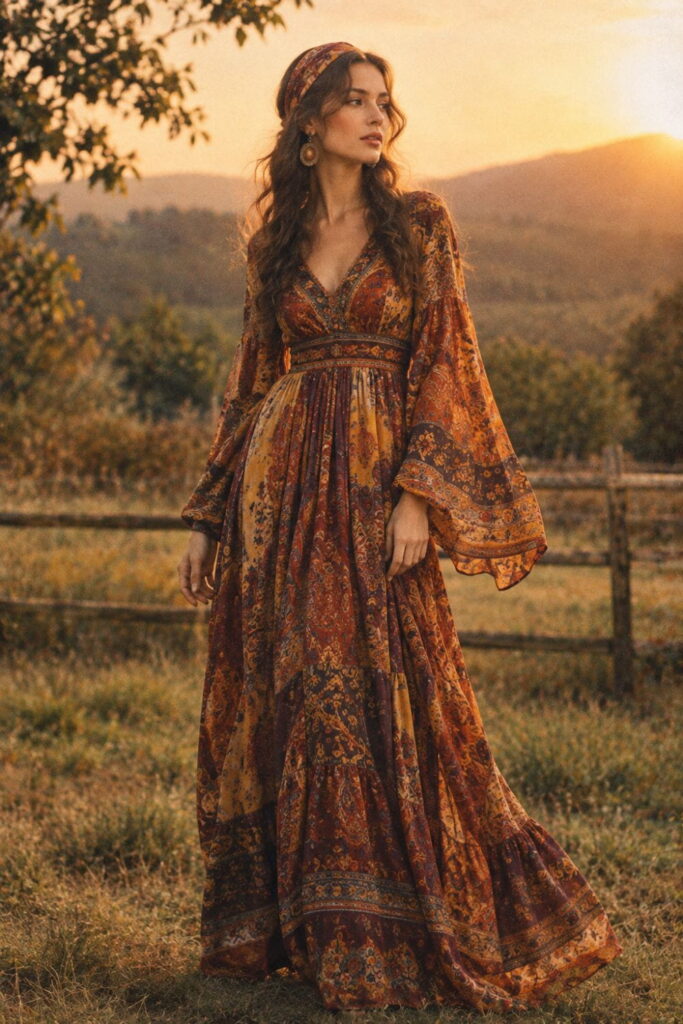
Film vocabulary is arguably the fastest win in this entire list. If you only take one technique away from this guide, this is the one to start using in your best vintage fashion AI prompts today.
It also helps to match the film stock to the correct decade rather than picking one at random. Kodachrome, for instance, was the dominant color film from the late 1930s through the 1970s and has a very specific look — deep, saturated reds and blues with relatively muted greens. Using it for a 1990s prompt will actually work against you, because by then most editorial photography had shifted to different stocks (or gone fully digital by the late 90s), with flatter, cooler color rendering. A quick pairing guide:
- 1920s–1930s: black-and-white silver gelatin print, soft focus, high-contrast studio lighting
- 1940s–1950s: early Kodachrome color, or black-and-white with dramatic Hollywood glamour lighting
- 1960s: Kodachrome or Ektachrome, punchy saturated color, high-contrast editorial lighting
- 1970s: Kodachrome or Agfa, warm earthy tones, natural outdoor light, visible grain
- 1980s: glossy saturated color, studio strobe lighting, sharper contrast, less grain
- 1990s: cooler color grading, minimal grain, flash photography or soft natural light
Slotting the correct film era into your best vintage fashion AI prompts does more for believability than almost any adjective you could add to the clothing description itself.
Hack #3: Describe Fabric and Silhouette Like a Costume Designer
How to Apply It
Generic clothing descriptions (“a dress,” “a suit”) give the model almost nothing to work with. Costume designers think in fabric weight, drape, and construction — and borrowing that mindset dramatically sharpens your best vintage fashion AI prompts.
Apply this hack by including:
- Fabric type: velvet, tweed, chiffon, taffeta, wool crepe, rayon
- Silhouette name: drop-waist, A-line, hourglass, empire waist, sheath
- Construction details: boning, pleating, godets, bias-cut, structured shoulders
- Closures and trims: covered buttons, piping, fringe, beading, lace overlay
Example prompt:
“Woman in a bias-cut 1930s satin gown, cowl neckline, fluid drape, hand-beaded shoulder detail, soft Hollywood studio lighting, black-and-white glamour photography”
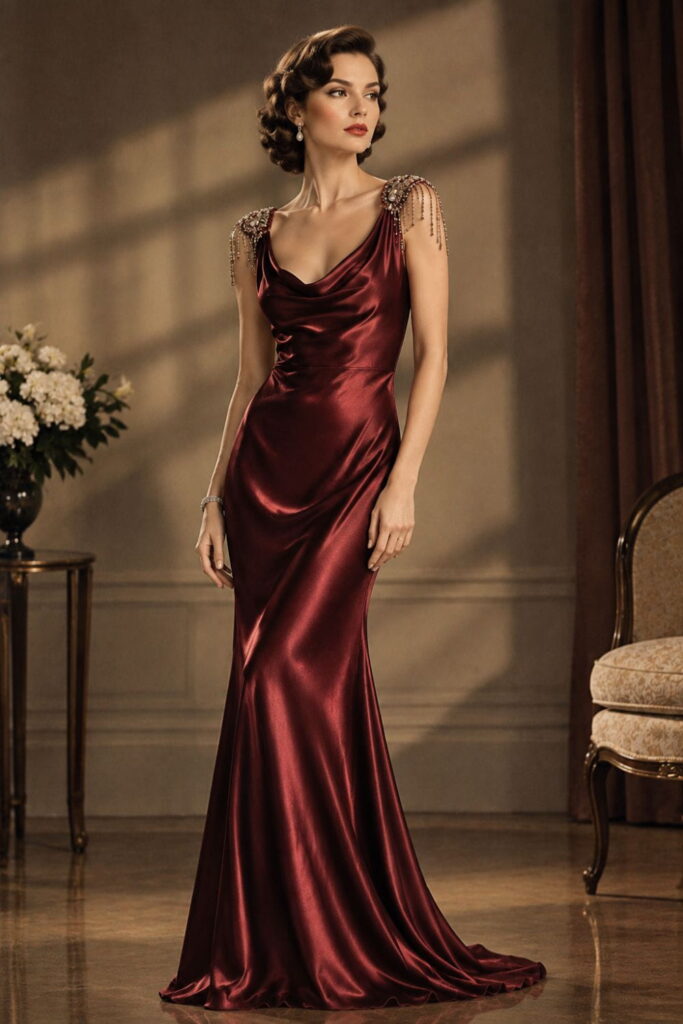
The more specific and tactile your fabric language, the less the AI has to “guess,” and guessing is exactly where modern fabric textures and modern cuts creep back into otherwise well-intentioned best vintage fashion AI prompts.
It’s worth building yourself a small reference list of silhouette names by decade, because these terms carry a huge amount of visual information in just one or two words:
- 1920s: drop-waist, chemise, garçonne silhouette
- 1930s: bias-cut, cowl neckline, fluid drape
- 1940s: padded shoulders, nipped waist, A-line skirt (wartime utility cuts)
- 1950s: New Look full skirt, hourglass, sweetheart neckline, wiggle dress
- 1960s: shift dress, A-line mini, structured shift with bold trim
- 1970s: bell sleeves, empire waist, maxi length, fringe detailing
- 1980s: structured shoulder pads, peplum, power-dressing blazer
- 1990s: slip dress, bias-cut minimalism, boxy tailoring
Dropping one of these terms into your best vintage fashion AI prompts does more work than a full sentence of generic description, because these are the exact terms fashion historians and archivists use to catalog garments — which means they’re strongly represented in the training data the model draws from.
Hack #4: Reference Real Editorial Photographers and Publications
How to Apply It
Fashion publications and photographers developed such distinct visual signatures that naming them acts almost like a style preset. This is one of the most underused techniques in best vintage fashion AI prompts, and it’s remarkably effective.
How to apply it:
- Reference a publication and decade together — “in the style of a 1960s Vogue editorial” or “styled like a 1950s Harper’s Bazaar spread.”
- Name a photographic movement rather than a specific living person when you want to stay safely in the territory of general style rather than a named individual’s personal work.
- Combine this with lighting cues — “dramatic studio strobe lighting” for 1940s glamour shots, or “soft natural window light” for 1970s editorial realism.
Example prompt:
“Editorial fashion photography styled after 1960s Vogue spreads, mod geometric mini dress, bold color blocking, graphic eyeliner, minimalist studio backdrop, high-contrast lighting”
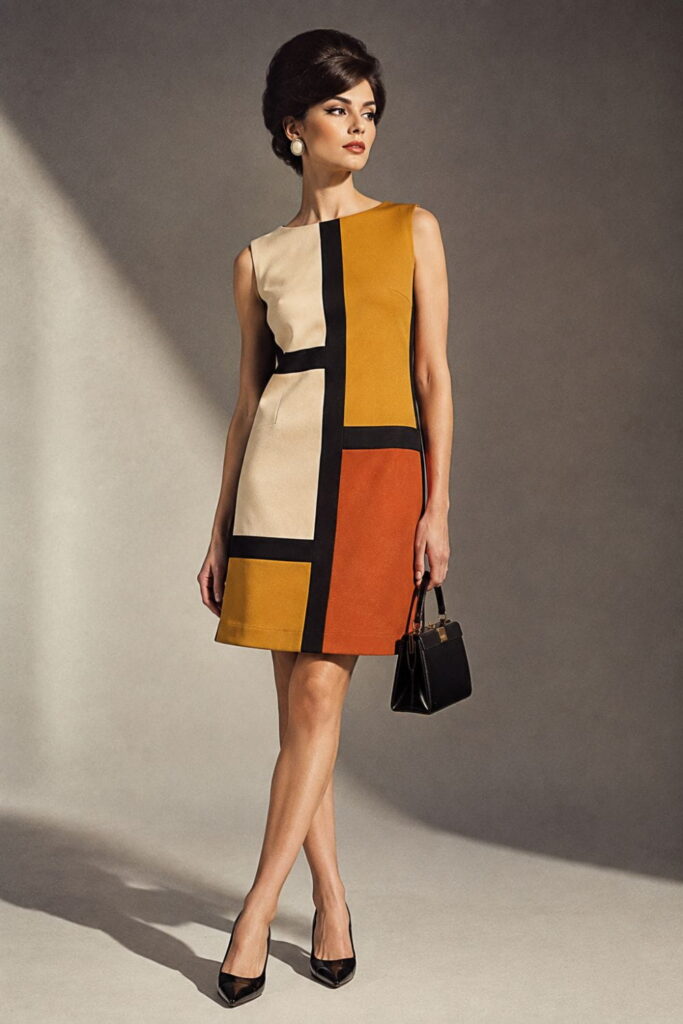
If you want to dig deeper into how editorial photography evolved decade by decade, the Vogue Archive and the Victoria and Albert Museum’s fashion photography collection are both excellent references for pulling accurate period detail into your best vintage fashion AI prompts.
A word of caution here: naming a specific, living photographer’s personal body of work can sometimes push a model toward mimicking that individual’s copyrighted style too closely, which raises its own set of ethical and legal questions depending on how you plan to use the output. A safer and honestly more useful approach for most people is to reference the publication, the decade, or a broader photographic movement — “styled like a 1970s Vogue editorial” gives you nearly all the stylistic benefit without tying your best vintage fashion AI prompts to any one person’s individual portfolio.
If you’re building a whole content series around this — say, a blog covering a different decade every week — it’s worth keeping a running swipe file of publication names paired with the decades they’re best known for. Harper’s Bazaar and Vogue both have decades-spanning archives; Life Magazine is excellent for candid 1940s–1960s street style rather than posed studio work; and The Face and i-D are strong references if you’re working in 1980s–1990s territory.
Hack #5: Control the Color Story Like a Period Colorist
How to Apply It
Every decade has a color fingerprint. The 1970s lean warm and earthy; the 1980s go saturated and neon; the 1950s favor pastels with the occasional bold red. Getting the color story right is one of the quiet superpowers of well-built best vintage fashion AI prompts, because color often registers as “authentic” or “off” before a viewer even consciously notices the clothing shape.
Apply this hack by:
- Naming 2–3 specific colors rather than saying “colorful” or “vintage colors.”
- Referencing the film stock’s natural color rendering (Kodachrome reds and blues, Agfa’s warmer tones, Polaroid’s faded pastels).
- Describing the light source’s color temperature — warm tungsten for indoor 1940s shots, cool overcast light for 1990s minimalism.
Example prompt:
“1980s power-dressing look, emerald green blazer with bold shoulder pads, mustard yellow blouse, saturated studio lighting, glossy magazine editorial color grade”
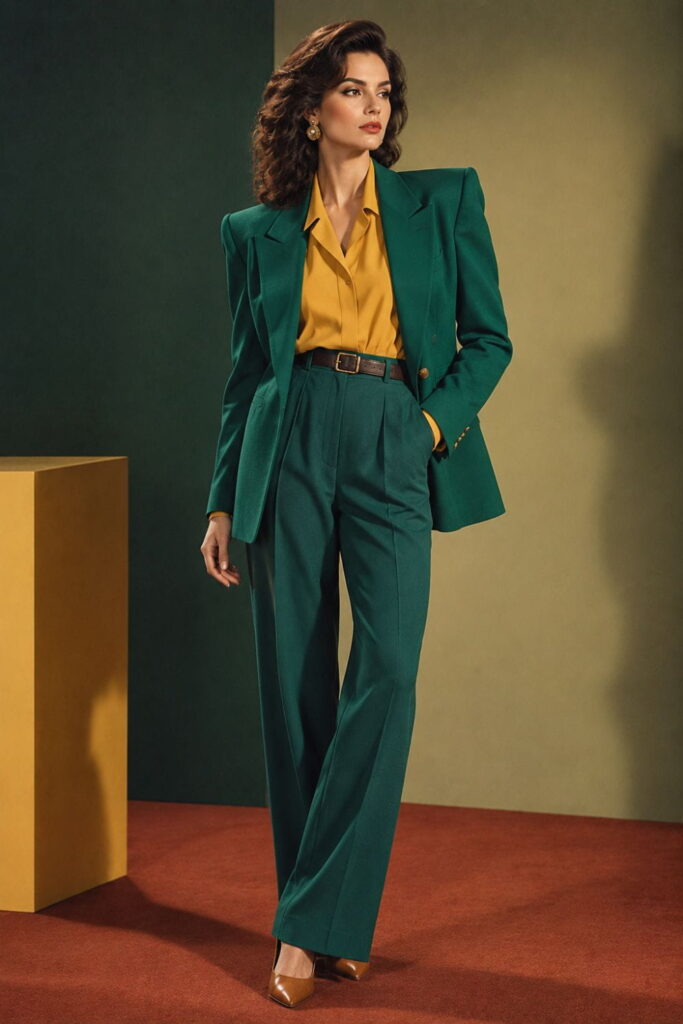
For reference, here’s a rough color fingerprint by decade that you can pull from when building your own best vintage fashion AI prompts:
- 1920s: black, ivory, champagne, deep jewel tones for evening wear
- 1930s: silver, blush pink, soft grey, Hollywood-glamour monochrome
- 1940s: olive, navy, burgundy — practical, wartime-influenced palettes
- 1950s: pastel pink, powder blue, buttery yellow, crisp white
- 1960s: mustard, avocado green, burnt orange, hot pink, psychedelic combinations
- 1970s: rust, mustard, chocolate brown, deep gold, earthy neutrals
- 1980s: neon pink, electric blue, emerald, saturated primary colors
- 1990s: muted beige, black, deep burgundy, minimalist monochrome
You don’t need to use every color in a single prompt — two or three, paired with the right lighting description, is usually enough to sell the era convincingly.
Hack #6: Use Negative Prompts to Kill Modern Artifacts
How to Apply It
Even a beautifully written prompt can get undermined by stray modern details — a smartphone-era manicure, contemporary makeup, a modern shoe silhouette hiding at the edge of frame. This is where negative prompts become essential to serious best vintage fashion AI prompts.
How to apply it (available in Midjourney via –no, and directly as a negative prompt field in Stable Diffusion):
- Exclude modern giveaways: “no smartphone, no modern sneakers, no digital watch, no modern logos”
- Exclude style contamination: “no contemporary makeup, no modern hairstyling products, no glossy modern skin retouching”
- Exclude rendering issues: “no cartoon style, no 3D render look, no oversaturated digital colors”
Example addition:
“–no modern sneakers, smartphone, digital watch, glossy CGI skin, contemporary makeup”
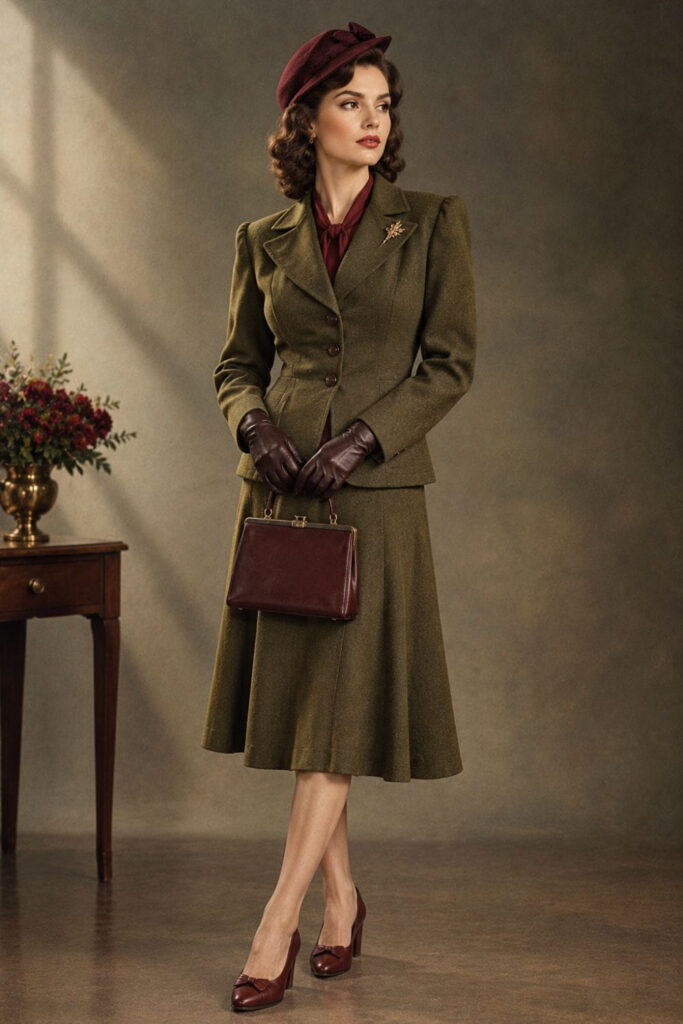
This single housekeeping step quietly fixes a huge share of the “almost right but something’s off” results people get from best vintage fashion AI prompts.
It helps to think of negative prompts as a checklist rather than a one-time addition. Before you generate, run through a short mental inventory: hair (is the styling era-appropriate, or does it have modern layering and balayage coloring?), hands and nails (modern gel manicures are a common giveaway), footwear (sneaker silhouettes sneak into background details more often than you’d expect), and skin retouching (a lot of AI models default to a glossy, over-smoothed “beauty filter” look that reads as distinctly modern, even in an otherwise perfect period outfit). Adding a line like “natural skin texture, no digital retouching, no modern beauty filter” alongside your other negative prompts can meaningfully improve how period-accurate the final image feels.
Different tools handle this syntax differently, so it’s worth knowing the basics:
- Midjourney uses the –no parameter at the end of your prompt, followed by a comma-separated list.
- Stable Diffusion (through most interfaces) has a dedicated negative prompt text field, separate from your main prompt.
- DALL-E doesn’t currently support a formal negative prompt syntax, so the workaround is to state exclusions directly in the main prompt — for example, “wearing era-appropriate footwear, no visible modern branding.”
Knowing which tool you’re using changes how you structure this part of your best vintage fashion AI prompts, so it’s worth checking your platform’s documentation if you’re switching between tools.
Hack #7: Iterate with Seed Locking and Controlled Variation
How to Apply It
Once you land on a prompt that nails the mood you’re after, don’t start from scratch for your next image — iterate on it. Seed locking (available in most major AI image tools) lets you keep the same underlying composition while you test small wording changes, which is exactly how professional prompt writers refine best vintage fashion AI prompts over time.
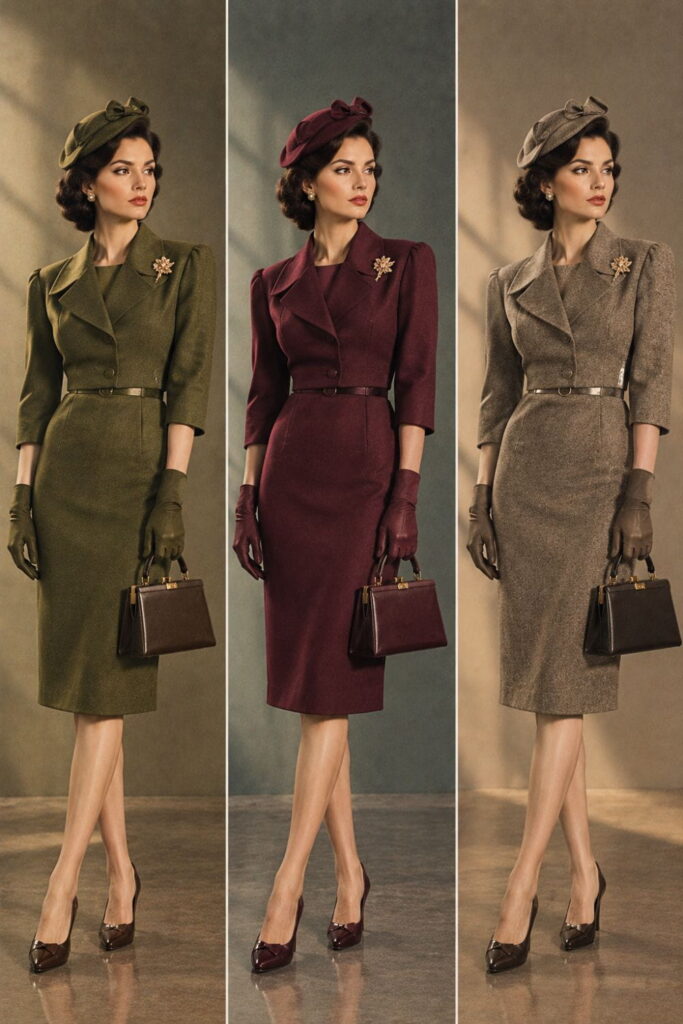
To apply it:
- Generate your base image and note the seed number.
- Lock that seed and change one variable at a time — swap the color, swap the fabric, swap the decade cue.
- Compare results side by side to learn which words are doing the heavy lifting in your prompt.
- Build a personal “style sheet” of phrases that reliably produce the look you want, and reuse them across future vintage fashion AI prompts.
This approach turns prompt writing from guesswork into something closer to a repeatable design process — which is really the goal of everything in this guide.
Putting It All Together: A Full Prompt Template
Here’s a template that combines all seven hacks into one structure you can adapt for any era:
“[Subject] in [specific year] [fabric + silhouette description], [color palette], photographed in the style of [publication/photographic movement], [film stock and camera format], [lighting description], [grain/texture cues] –no [modern artifact exclusions]”
Filled-in example:
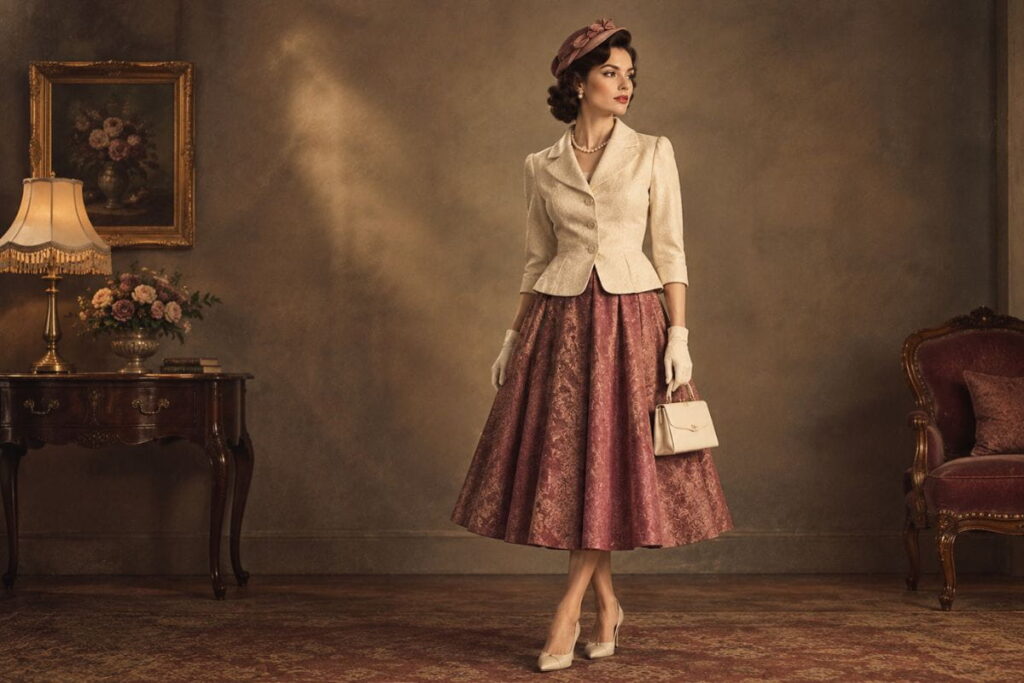
“Woman in early 1955 wool crepe hourglass-silhouette dress, dusty rose and cream color palette, photographed in the style of a 1950s Harper’s Bazaar editorial, 35mm Kodachrome film, soft studio softbox lighting, subtle film grain –no modern sneakers, smartphone, contemporary makeup”
If you’re building out a whole series — say, one look per decade — it helps to keep this template in a running document (our earlier decade-by-decade prompt breakdown is a good companion piece for that) so your best vintage fashion AI prompts stay consistent across the set.
Which AI Tool Handles Vintage Fashion AI Prompts Best?
This comes up constantly, so it’s worth addressing directly. There’s no single “best” tool — each has genuine strengths depending on what you’re trying to achieve.
Midjourney tends to produce the most painterly, editorial-feeling results out of the box, and it handles atmospheric lighting cues (golden hour, studio softbox, dramatic shadow) particularly well. It’s a strong default choice for mood-board-style vintage fashion AI prompts where you want something that feels like a magazine spread without a lot of manual tuning.
Stable Diffusion offers the deepest control, particularly through its negative prompt field and the availability of community-trained models fine-tuned specifically on historical fashion photography. If you’re producing a large volume of vintage fashion AI prompts and want consistency across a series, Stable Diffusion’s fine-grained settings (sampling steps, CFG scale, seed control) give you the most reliable repeatability.
DALL-E is often the fastest for quick concepting and tends to handle plain-language prompts gracefully even without heavy technical vocabulary, which makes it a reasonable starting point if you’re newer to prompt writing and want to test the core techniques in this guide before moving to a more technical tool.
If you’re serious about building out a whole library of best vintage fashion AI prompts, it’s worth testing the same prompt template across two tools side by side — you’ll quickly get a feel for which one matches your particular aesthetic goals.
Common Mistakes to Avoid
- Being too vague about the era. “Old-fashioned dress” gives the model almost nothing. Specificity is everything in vintage fashion AI prompts.
- Overloading a single prompt with too many decades at once. Mixing 1920s beading with 1980s shoulder pads confuses the model and muddies the output.
- Forgetting lighting. Clothing alone doesn’t sell an era — light does half the work.
- Skipping negative prompts. This is the fastest way to end up with a modern shoe or smartphone sneaking into an otherwise perfect 1940s scene.
- Not iterating. The first result is rarely the best one. Small wording tweaks compound quickly.
- Ignoring accessories and hair. A perfect dress paired with modern hairstyling or contemporary jewelry will still read as “off” to most viewers, even if they can’t immediately say why.
- Treating every tool the same way. A prompt structure that works beautifully in Midjourney may need adjusting for Stable Diffusion’s negative prompt field or DALL-E’s plainer syntax. Copy-pasting the exact same prompt across tools rarely produces equally strong results.
- Overusing a single reference photographer. Leaning too hard on one named individual’s style, repeatedly, can flatten your results into something that feels derivative rather than authentically period-accurate. Mixing publication references keeps things fresher.
Avoiding these pitfalls, combined with the seven hacks above, is really the whole formula. None of it is complicated on its own — it’s the combination and the consistency that makes the difference between best vintage fashion AI prompts that look convincing and ones that look like a Halloween costume shoot.
FAQ: Vintage Fashion AI Prompts
What are best vintage fashion AI prompts, exactly?
They’re written instructions given to an AI image generator — like Midjourney, DALL-E, or Stable Diffusion — designed to produce fashion imagery styled after a specific historical era, using details like silhouette, fabric, color, and photographic technique to make the result look period-accurate.
Which AI tool is best for best vintage fashion AI prompts?
All three major tools (Midjourney, DALL-E, and Stable Diffusion) can produce strong results. Midjourney tends to excel at painterly, editorial-feeling vintage looks; Stable Diffusion offers the most granular control through negative prompts and fine-tuned models; DALL-E is often fastest for quick, clean concepts.
How specific should the year be in vintage fashion AI prompts?
As specific as you can reasonably make it. A named year, paired with a cultural reference point from that year, consistently outperforms a vague decade reference.
Do I need to name a real photographer in my prompt?
It’s optional, and many people prefer referencing a publication or photographic movement (like “1960s Vogue editorial style”) rather than a specific named photographer, since that keeps the prompt focused on style rather than any one individual’s work.
Are these prompts useful for anything beyond image generation?
Yes. Many writers, costume designers, and content creators use best vintage fashion AI prompts purely for mood-boarding and reference art before sourcing real vintage pieces or briefing a human illustrator.
Why do my AI-generated vintage looks sometimes have modern hands, nails, or teeth?
This is a known quirk in most current image models, largely unrelated to your prompt wording — hands, nails, and teeth are simply harder for these systems to render accurately across the board. Adding “natural skin texture, no digital retouching” to your negative prompt helps somewhat, but generating a few extra variations and picking the cleanest result is usually the more reliable fix.
How specific should the year be in best vintage fashion AI prompts?
As specific as you can reasonably make it. A named year, paired with a cultural reference point from that year, consistently outperforms a vague decade reference.
Can I use these techniques for men’s vintage fashion too?
You can, but results are usually stronger if you commit to one dominant era and use a second only as an accent — for example, “1970s silhouette with subtle 1960s color influence” rather than blending two eras equally.
Final Thoughts
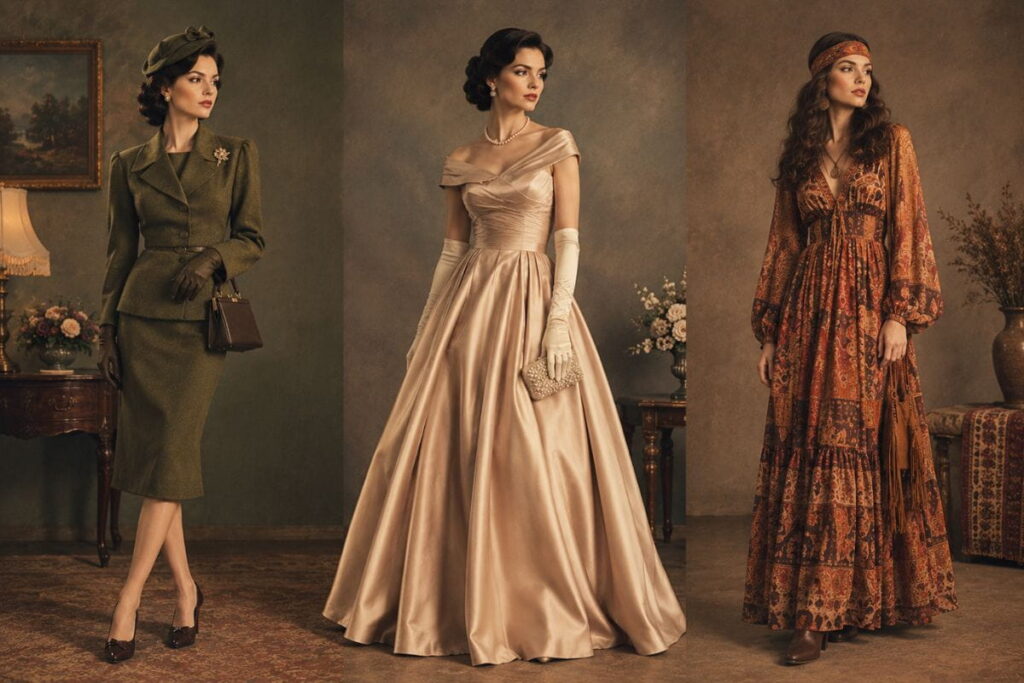
The gap between a flat, generic AI fashion image and one that genuinely feels like it stepped out of a specific year almost always comes down to specificity — a named year, real fabric language, a photographic reference, and a clean negative prompt to keep modern artifacts out. Once you start layering these seven techniques into your own best vintage fashion AI prompts, you’ll notice the difference almost immediately, and you’ll spend a lot less time regenerating images hoping for a lucky result.
If you want a deeper dive into decade-specific starter prompts, revisit our companion piece on 1920s through 1990s fashion prompt ideas for ready-to-use examples you can adapt with the techniques above.